夜明茶屋
Yoakejaya ◆ ヤマヒラ
3.51
Yanagawa, Okawa Area
「Regional Cuisine」
3,000-3,999円
1,000-1,999円
Opening hours: 11:30-15:00(L.O.14:30)17:00-22:00(L.O.21:30) Open Sunday
Rest time: Tuesdays (*Open on national holidays)
福岡県柳川市稲荷町94-1
Photos
(20)
Details
Reservation Info
can be reserved
Children
child-friendly
Payment Method
Credit cards accepted
(VISA, Master, JCB, AMEX, Diners)
Electronic money accepted
Number of Seats
100 seats
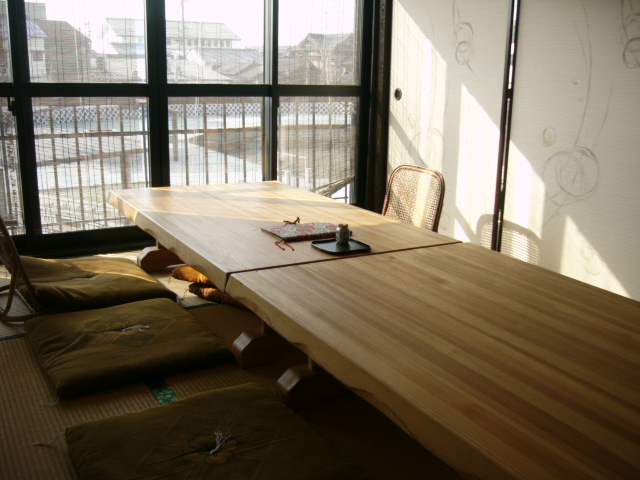
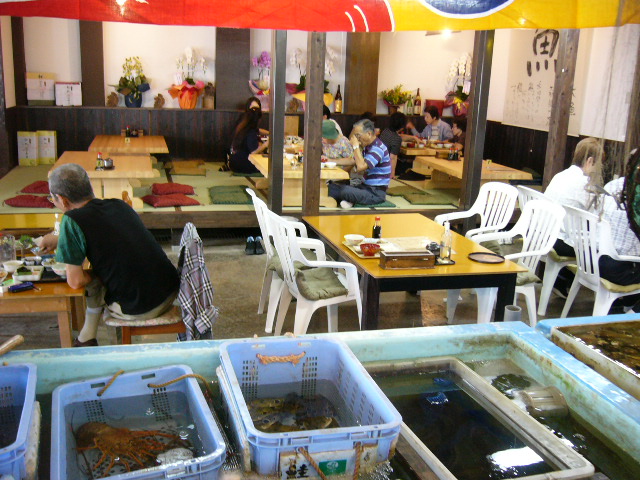
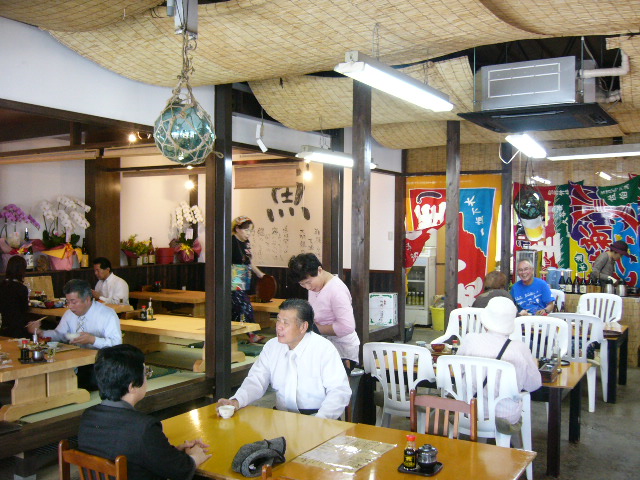
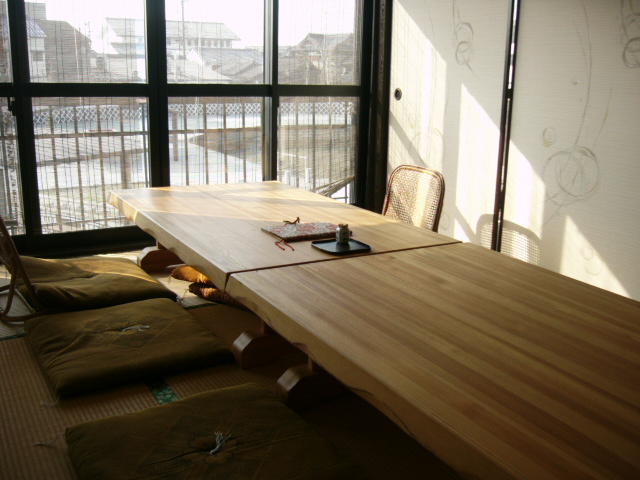
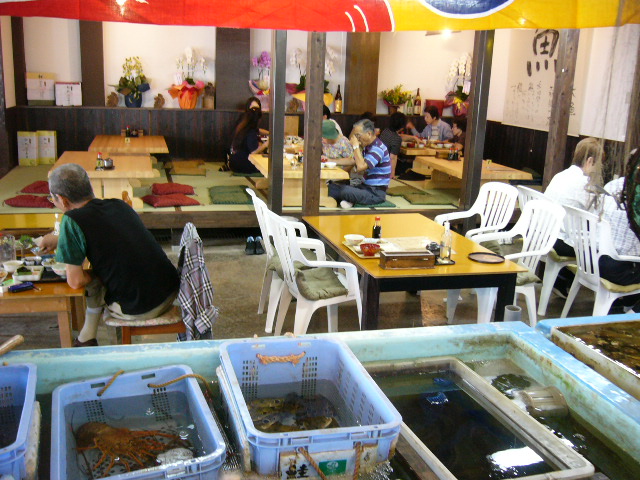
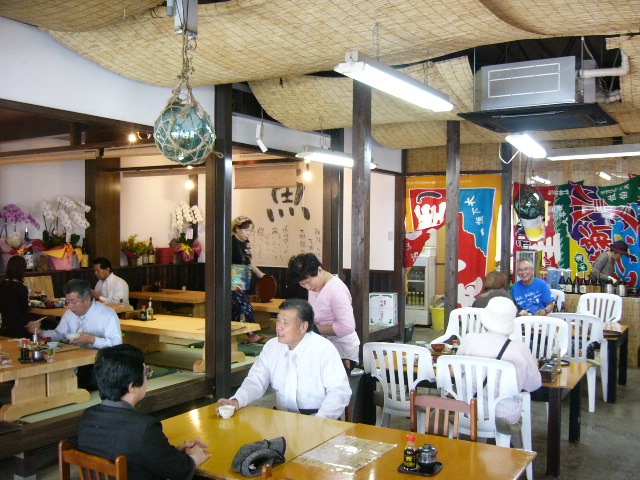
(Table seating and tatami rooms available. Private rooms and banquet rooms available on the 2nd floor (reservations only))
Private Dining Rooms
Yes
(2 persons may, 4 persons may, 6 persons may, 8 persons may, 10 to 20 persons may, 20 to 30 persons may, more than 30 persons may)
Smoking and Non-Smoking
Smoking is prohibited during lunch time (11:30-15:00). The Law Concerning Measures Against Passive Smoking (Revised Health Promotion Law) has been in effect since April 1, 2020. Please check with the restaurant before visiting as it may differ from the latest information.
Parking
having
Facilities
Calm space, counter seats available, tatami room available
Drink
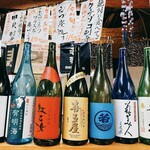
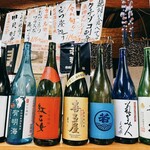
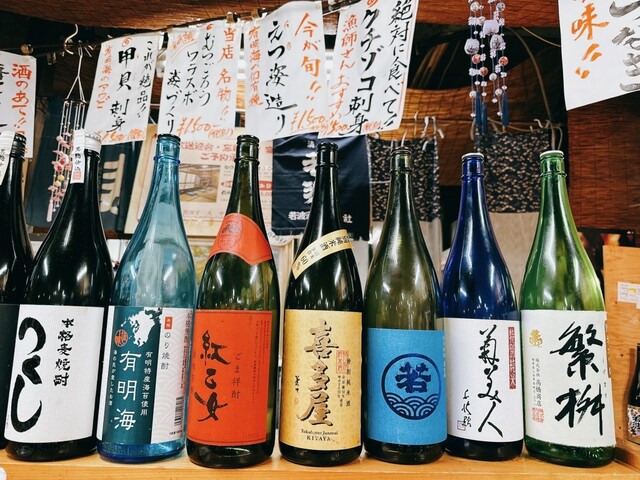
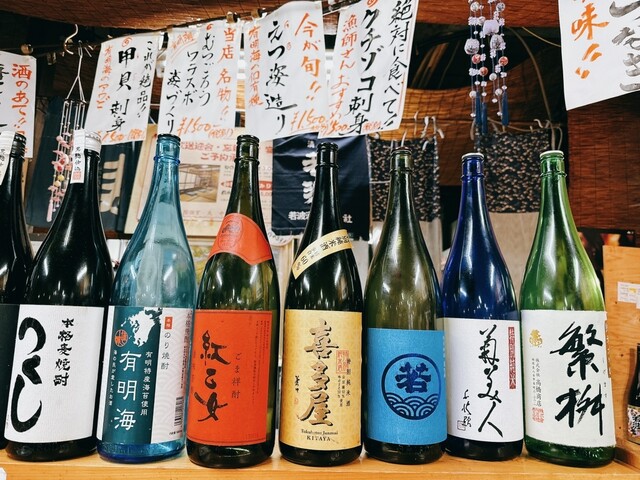
Sake available, shochu available, stick to sake, stick to shochu
Dishes
Focus on fish dishes
Comments
(21)

†きんのじ†
4.00
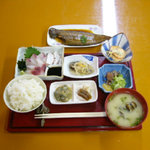
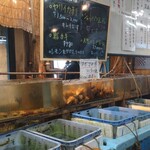
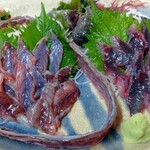
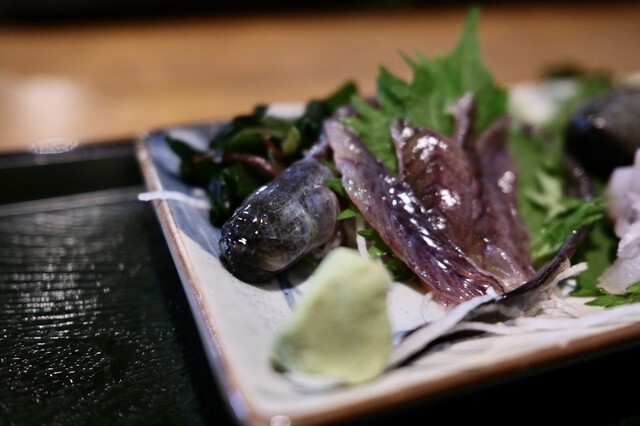
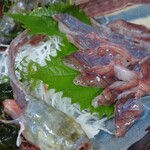
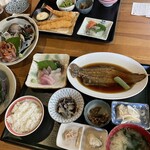
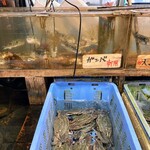
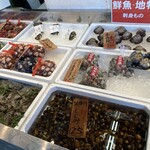
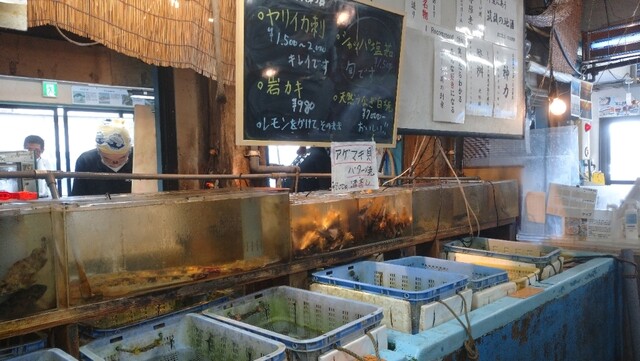
I had always wanted to visit this shop, a fishmonger with plenty of seafood from Ariake Sea. The back of the shop looks like a dining area. While unagi steamed in a bamboo basket is famous in Yanagawa, this shop lived up to its reputation. I ordered fried horse mackerel, live flathead grey mullet and Japanese sea bass sashimi, along with rice and miso soup. The fresh horse mackerel had a delicious aroma around the miso. The sashimi of the alien-like looking Japanese sea bass and the adorable flathead grey mullet were still moving slightly. Both had a crunchy texture and rich flavor, very tasty. The miso soup had small shrimp in it, adding to the deliciousness with its umami and broth. In the fishmonger corner, there were other fresh seafood from Ariake Sea like flatfish, clams, various shellfish, shrimp, crabs, jellyfish, etc. It made me want to try everything. Local customers seemed to be getting sashimi or assorted sashimi to go. I was very satisfied with a lunch full of fresh local ingredients in Yanagawa, the water town.

7にゃんずー
4.00
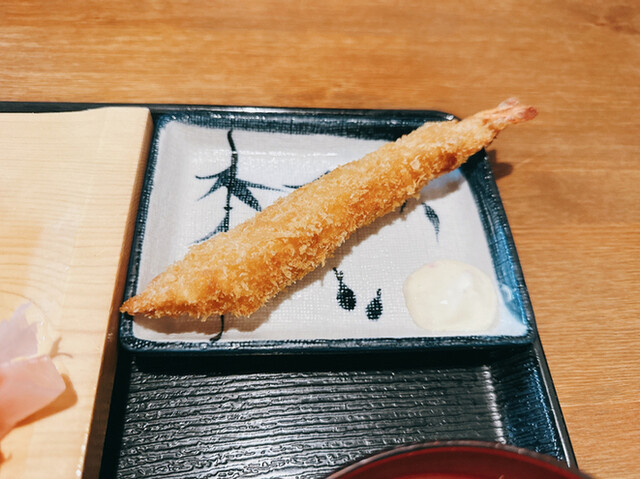
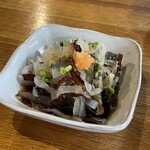
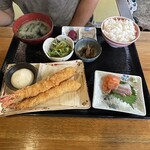
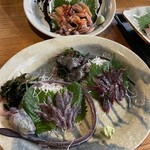
Yanagawa's lunch is decided here?! There were many reviews saying that the staff's service was bad, but I didn't find it bothersome, they were just matter-of-fact. On the contrary, they were kind. We arrived earlier than 11 o'clock, but the elderly staff told us it was okay to sit inside and drink water self-service. She also told us to take our time looking at the menu and deciding. It was our first time there, and we wanted to try a lot of things, so we ordered a lot for the two of us. We ordered the Ariake's bounty set meal, extra large shrimp fry set meal, live Murasoi fish sashimi, red clam sashimi, jellyfish vinegar, and non-alcoholic drinks. I was surprised by the live Murasoi fish sashimi! I heard they live for over 30 minutes after being served, and even after finishing it, it was still moving and wouldn't let go of the chopsticks. It was refreshing, but you have to avoid looking at the Murasoi fish or the Murasoi fish to enjoy it haha. I wasn't expecting much from the shrimp fry, but I was amazed by its deliciousness and size! It was the most delicious shrimp fry I've ever had, with a great chewy texture. The simmered fish was subtly flavored with a hint of ginger, very elegant. The rice in the set meal is a small portion. I think it might be a bit small for both men and women. I would like to visit this restaurant again. I highly recommend the shrimp fry!

lambo0621
1.00
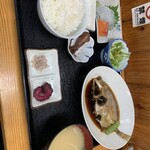
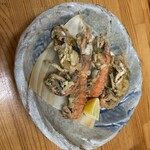
"Fish set meal and deep-fried horse mackerel. Together 2450 yen. I couldn't tell what kind of fish was in the simmered dish, but the meat was thin and the taste was weak. I'd rather eat simmered dish at a nearby diner. The deep-fried horse mackerel had a good volume from head to tail in tempura style, but it lacked flavor. It didn't taste like anything other than oil. In the end, this restaurant is better for sashimi. What I ate today was just expensive."
lambo0621
4.00
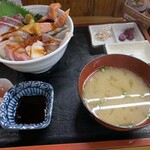
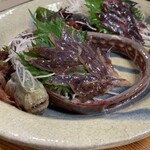
Seafood bowl with sashimi of filefish and leatherfish. The seafood bowl comes with miso soup. I was surprised by the amount of sashimi in the seafood bowl. It was very filling and satisfying. Delicious! The filefish and leatherfish sashimi were both slightly chewy with a nice texture. They had a light flavor and were easy to eat, but I was surprised that they were still alive. I saw other dishes on the menu that I want to try, so I might go back in the evening.

Traveling syokora
3.30
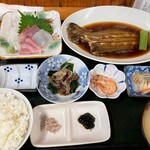
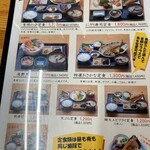
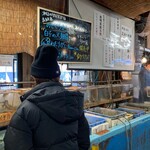
During my trip to Fukuoka, I extended my journey to Yanagawa and had lunch at Yoake Chaya. I was quite hungry after a one-hour boat ride on the donko boat. I chose the Ariake no Sachi Teishoku without hesitation, expecting to enjoy the seafood from Ariake Sea. The restaurant was crowded when I arrived for lunch, but luckily, I managed to find a seat at the counter. The restaurant was divided into a dining area and a retail store, with the dining area offering counter, raised tatami, table, and outdoor seating. It was packed, indicating its popularity. The simmered flounder was actually flounder, not a fish resembling it as the local name suggested. I enjoyed it while pondering on the misnomer. The man next to me was enjoying the Nigiri Sushi Teishoku. The salted Ami next to the rice on the tray was too salty for my taste. The vinegar seaweed salad in the middle was mixed with jellyfish. The waiter mentioned that jellyfish is called "Jerry fish" in English, which I found interesting. I didn't take any photos, but I bought Ariake seaweed from the restaurant, which was incredibly delicious. It had the pure and unadulterated taste of seaweed that I had enjoyed in the past. The flavor and taste were exceptional. My visit to Yanagawa, including the donko boat, the birthplace of Kitahara Hakushu, and Yoake Chaya, left unforgettable memories, and I would love to visit again. Thank you for the delicious meal.

エイサーちゃん
3.80
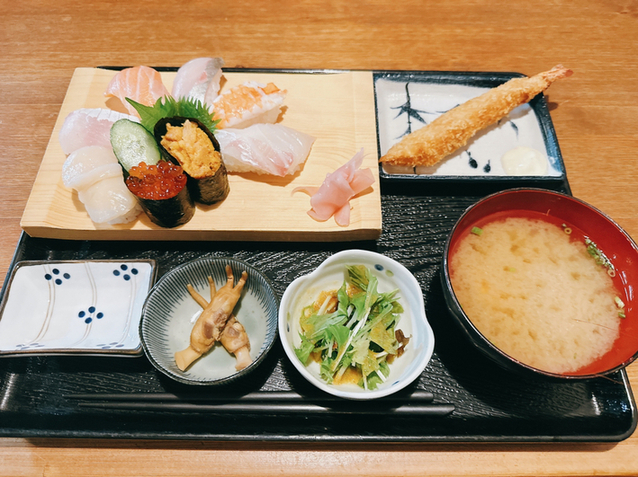
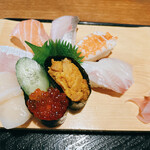
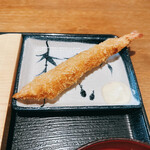
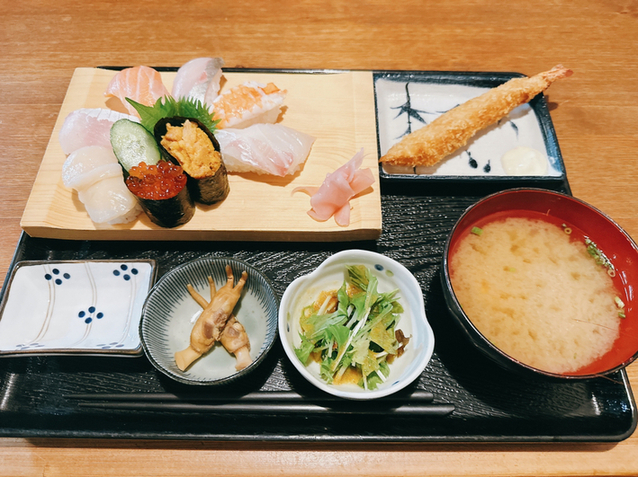
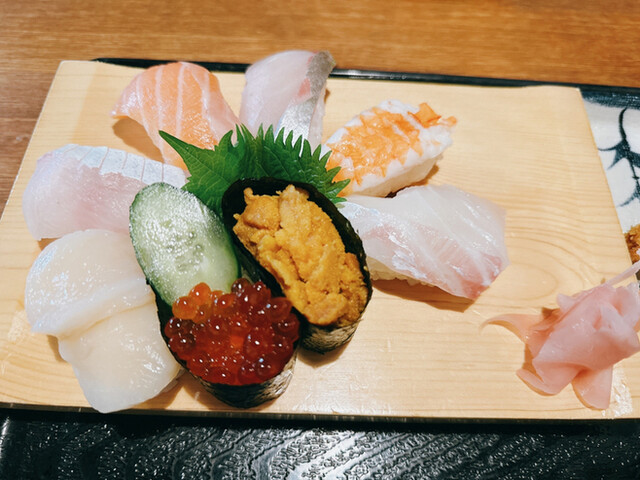
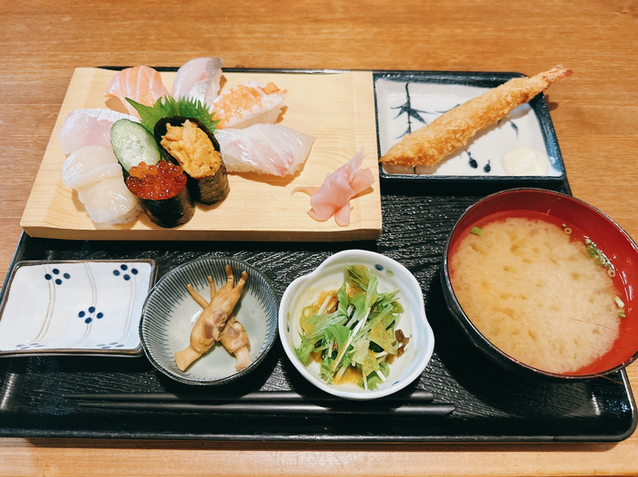
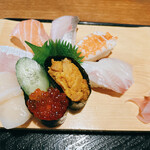
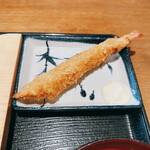
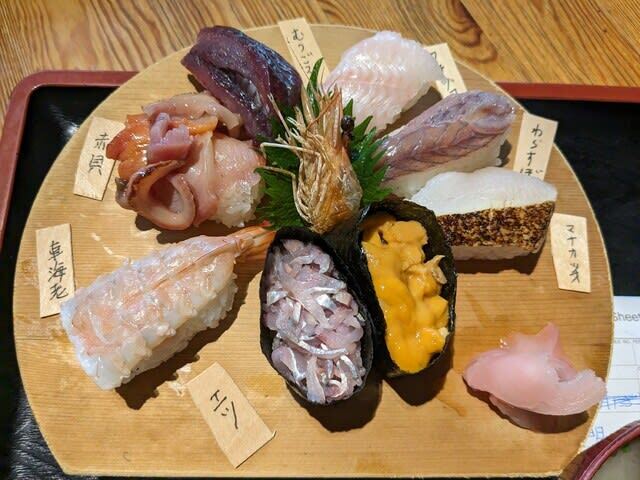
Fukuoka Prefecture, staying in Yanagawa City, visited Yakei Chaya for the second night in a row. The sushi was delicious with fresh toppings and thick slices. The unique-shaped shellfish was especially tasty. Had a delicious shrimp fry as well. The sushi set, priced at 1,600 yen plus tax, was a great deal. The walls were filled with signatures of many customers. This place seems to be popular on TV as well. I usually don't like sea urchin, but the one here was delicious, a sign of its freshness. Thank you for the wonderful memories in Yanagawa. I will definitely visit again. Thank you for the meal!
エイサーちゃん
3.80
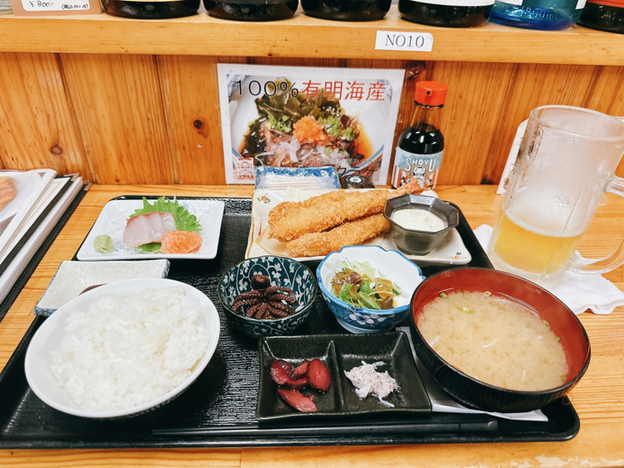
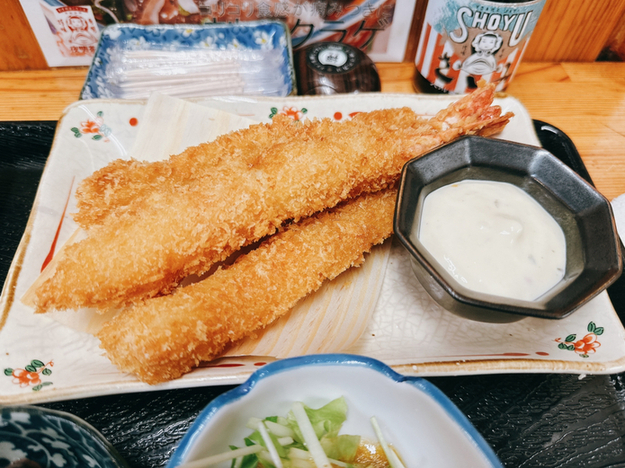
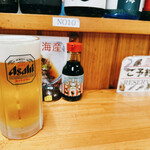
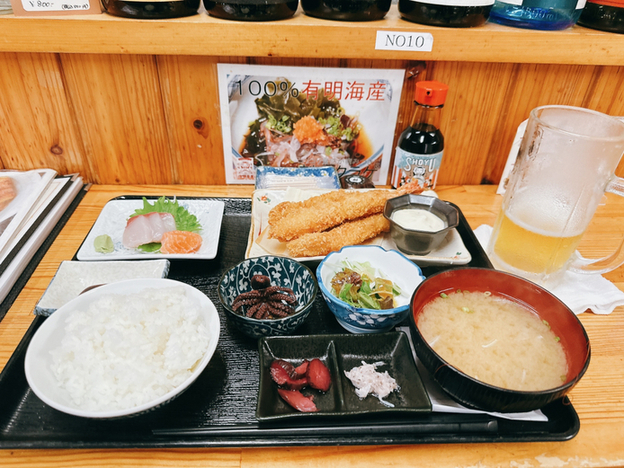
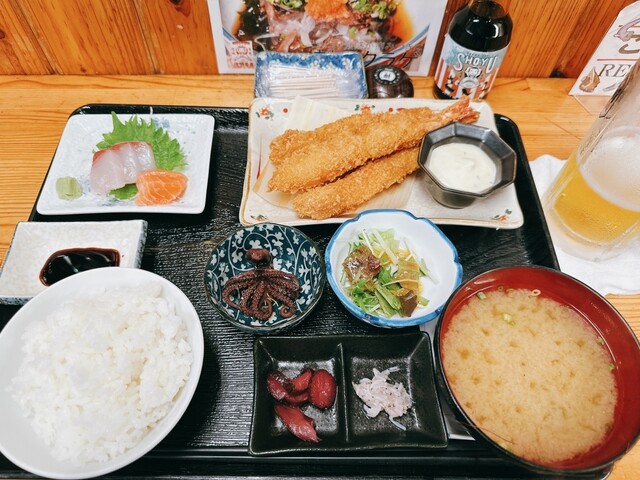
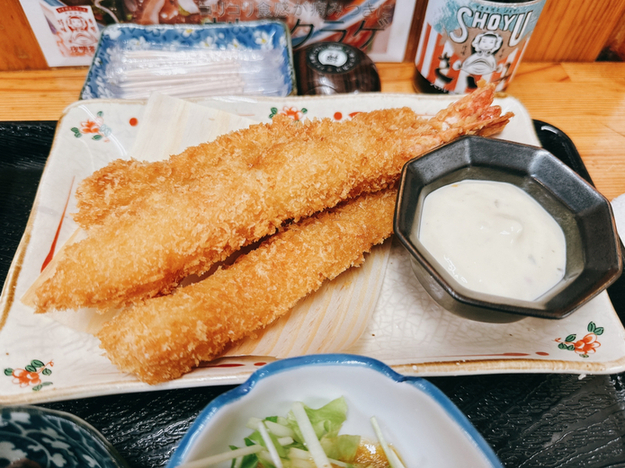
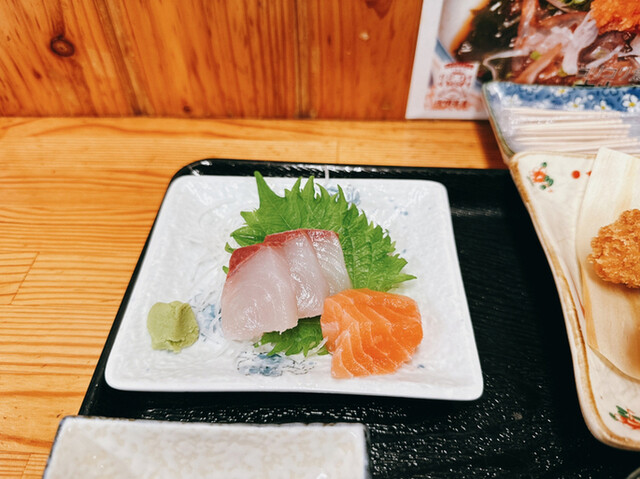
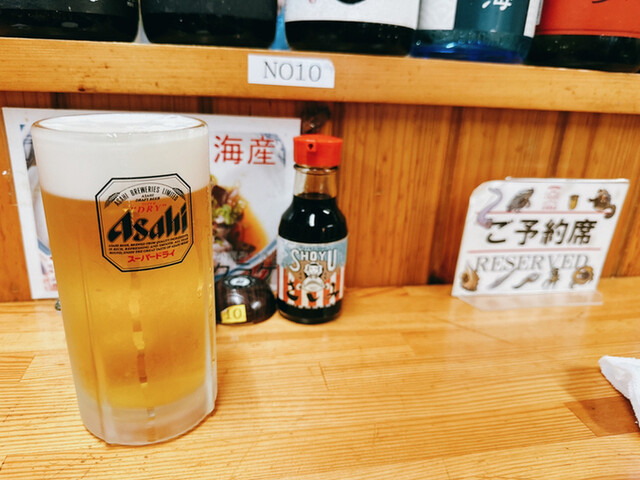
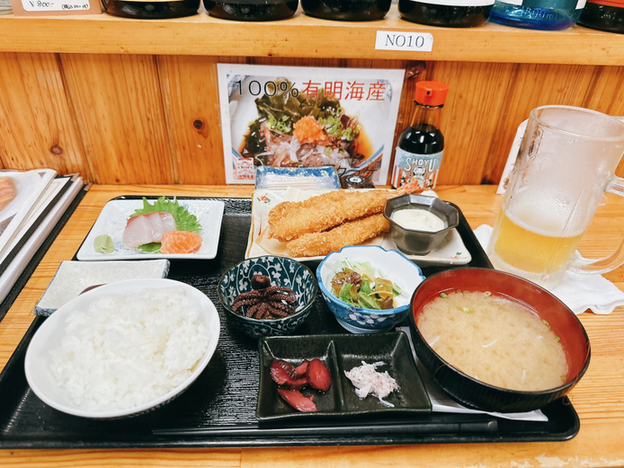
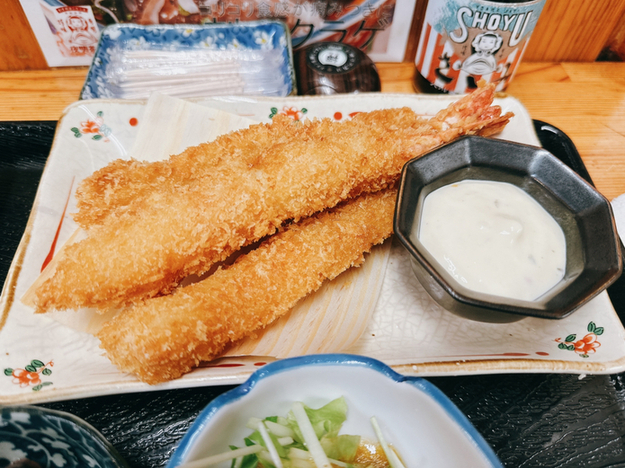
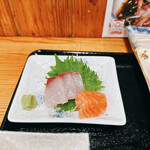
The Ebi Fry set meal was amazing! It came with 3 large shrimp fries, sashimi, simmered octopus salad, pickles, and miso soup for only 1,300 yen!! A draft beer in a mug was only 600 yen!! It was so cheap and delicious! We stopped by after visiting a nearby hot spring! I don't think I've ever had such delicious shrimp fries before! The sashimi was fresh and very tasty too! The soy sauce in Fukuoka is a bit thick and slightly sweet, but it was delicious! They had a lot of unique fish dishes on the menu, but we decided to pass on them this time! The dinner menu was also priced the same as lunch, which was very much appreciated! Thank you for the meal!

わたきょん
0.00
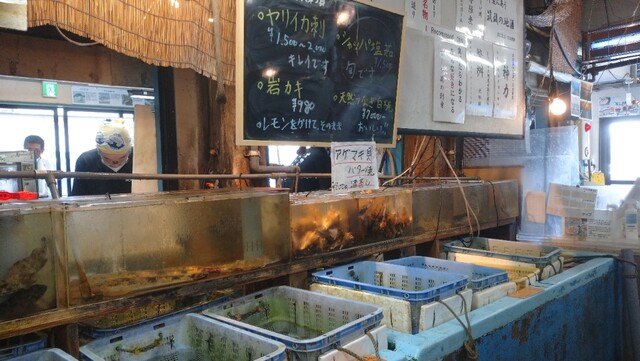
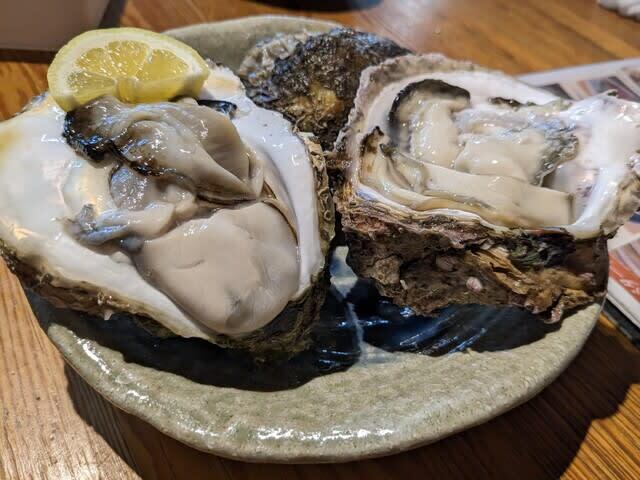
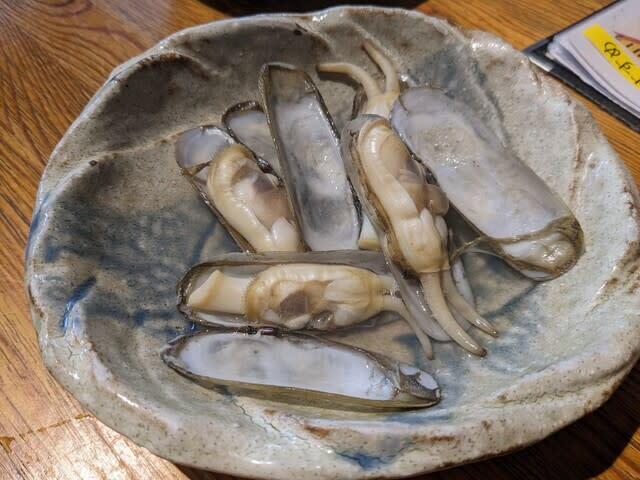
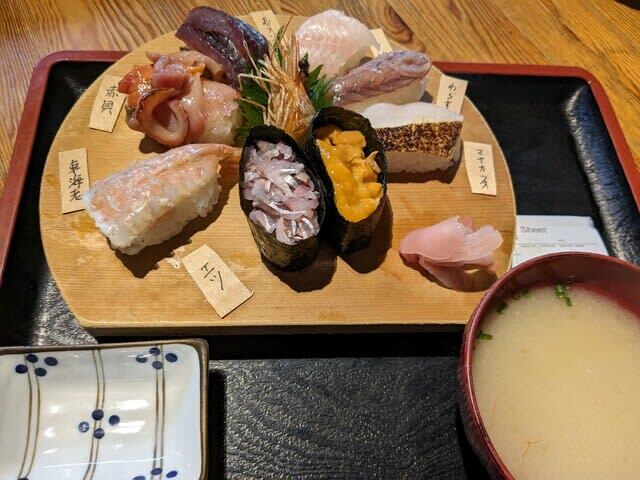
On June 22, 2023, my husband found a restaurant called Yomeicha for dinner. The storefront looked like a fish market, but inside was a restaurant where you could eat the fish displayed outside. They had natural eel in different sizes with varying prices. Despite it being before 6 pm, the place was almost full. My husband's goal was to try the rare fish from Ariake Sea. We started with a toast with beer, followed by rock oysters, steamed agemaki, Ariake sushi, sea urchin, horse mackerel, shrimp, ark shell, mackerel, and more. We even tried a fish called Warasubo. The tempura was delicious, and we also ordered the grilled natural eel displayed outside, which was fatty and tasty. The atmosphere was lively, and the staff were friendly and explained everything clearly. It was a truly delicious experience.

ぐぅぐるまっぷ
4.10
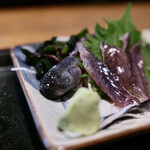
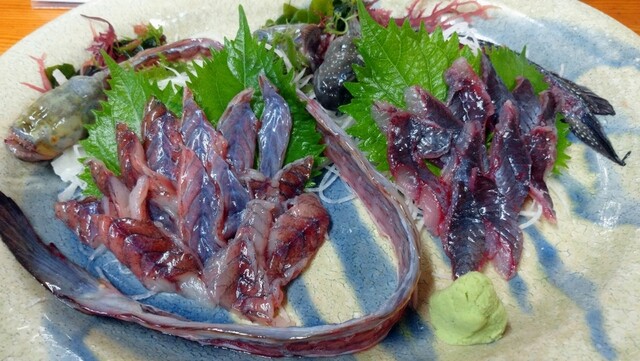
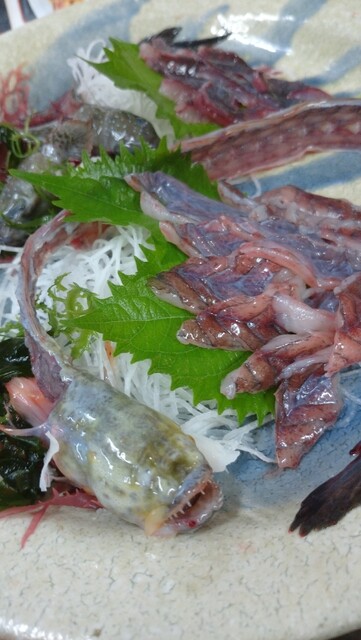
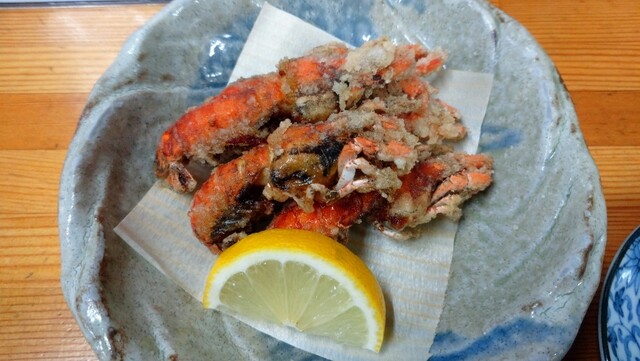
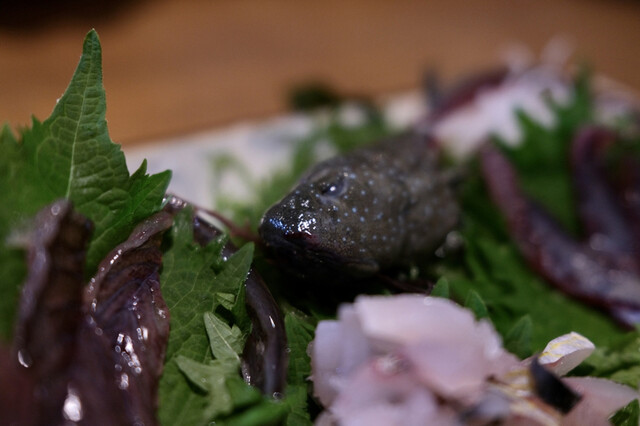
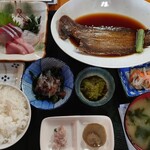
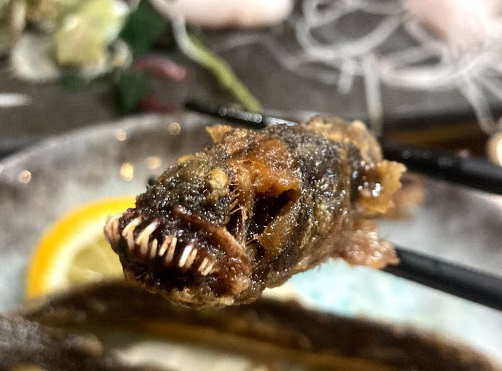
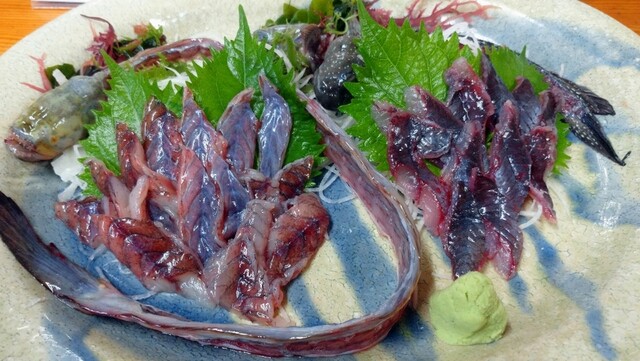
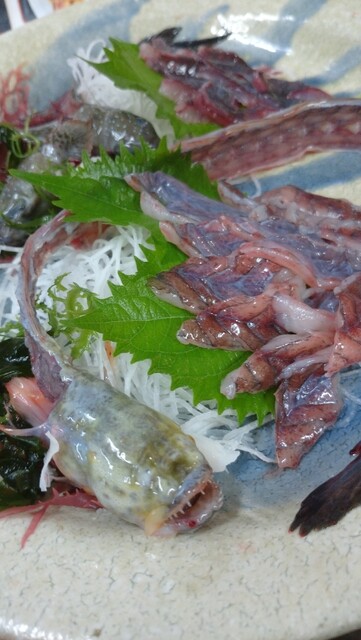
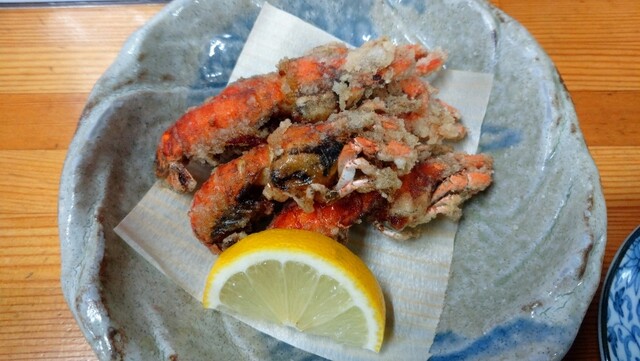
In Japan, it is a characteristic that you can eat fish like Warasubo and Mutsugoro, which only inhabit the Ariake Sea. Is this restaurant a tourist attraction that becomes lively from lunchtime? I visited this restaurant to see the actual fish that is often talked about as looking like an alien. Huh? Sashimi?? Sashimi of Warasubo and Mutsugoro?? I ordered it on reflex. When they were brought to me, they were still alive on the plate. With the heart of a young boy, I was about to try sticking my finger into their mouths, when the staff said, "If you're going to get bitten, it's better with Mutsugoro." Warasubo, with its ferocious appearance, bit down hard on my finger with teeth that didn't match its looks. It hurts even though it's almost dead! Now it's just a head and bones, but if it had been in good condition, I probably would have lost. The taste is well, the texture is interesting. It's elastic. I also tried the fried version, but that was a bit mediocre. My recommendation is the "Majaku tempura." The official name is Anajako, but unlike shrimp, the shell is soft, so when fried, it has an exquisite texture that is hard to describe. Despite the shell, it doesn't get in the way in your mouth and you can easily eat it. I highly recommend trying it.

YukiYukiHI
3.50
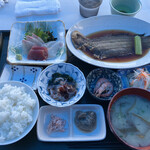
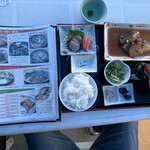
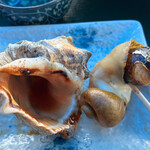
When it comes to Yanagawa, it's all about eel, but I visited a shop run by a fishmonger that had caught my attention. I tried a fish called Kuchizoko, which is similar to flounder. It had a protein-rich white flesh. Since the meat was not very thick, even eating one fish didn't provide much volume. The sashimi, including tuna, amberjack, and sea bream, was all fresh and had a nice texture. I enjoyed them all deliciously.

fujimo123
3.40
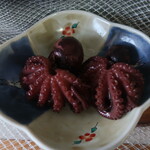
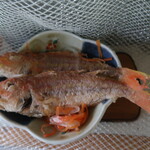
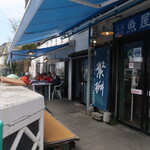
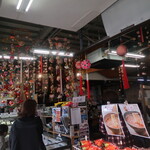
Two consecutive days of bus tours, lunch with Toyama eel, then moving to Yanagawa where there is 2 hours of free time. During this season (March), there is the event of hanging hina dolls (a unique hina festival in Yanagawa) and everywhere you go, hina dolls are displayed, creating a fantastical atmosphere. While walking, I came across a fish shop. Upon entering, there were a variety of fish caught in Ariake lined up, and local people were also coming to buy fish dishes. And they were cheap! I was surprised to find Yanagawa eel, medium size, for only 2000 yen. Since the dining area inside was full, I decided to buy some side dishes and find a place to enjoy them with beer. I got simmered octopus and fish marinated in vinegar. Both had a gentle flavor that went well with alcohol. It's a place I wish was in my neighborhood, where you can get such delicious food at a reasonable price.

Kawa0310
3.50
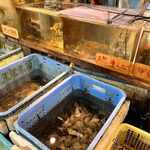
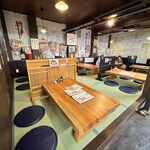
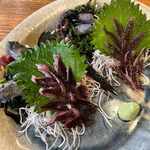
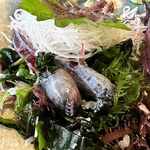
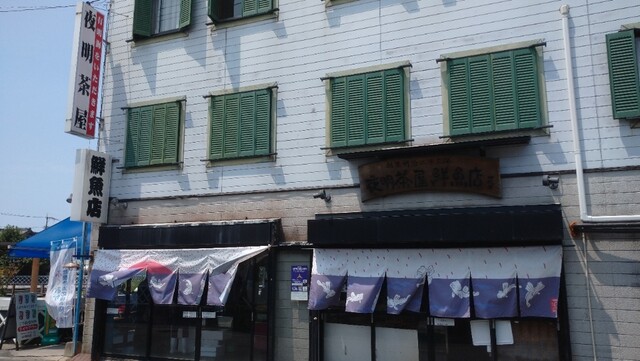
On the second day in Fukuoka, I rented a car and drove towards Yanagawa. The purpose was to eat the "Alien" that can be eaten in Yanagawa City. After about an hour and a half drive from Fukuoka city, I arrived in Yanagawa City. As I drove past the famous waterways, I saw "Yoake Teahouse". I was so excited that I forgot to take a picture of the exterior (lol). The exterior looked like a regular fish store. Upon entering, I saw many tanks with a variety of seafood swimming in them, which can be eaten at this restaurant. Since it was just before lunch and there were few customers, I was seated in a private room. A lively lady came to take our order and recommended various dishes, so we decided to try them. First, of course, we ordered the "Live Mutsugoro and Warasubo Sashimi (1,650 yen)". This is what we came here for. This visually grotesque sashimi consists of Mutsugoro and Warasubo, which inhabit the tidal flats of Ariake Sea. While Mutsugoro is quite famous, Warasubo is a rare delicacy only available in this area. Both sashimi had a crunchy texture and a light white meat flavor. In terms of umami, Warasubo was superior. This was definitely worth coming for. Its teeth like VENOM and atrophied eyes truly resemble an Alien. It has a strong life force, and even after being decapitated, it clings to the chopsticks when touched... scary. We also had the "Seafood Bowl (1,540 yen)". Being a fish store, the bowl contained fresh local fish and seasonal sashimi. Another specialty was the "Deep-fried Wakenoshinnosu (1,100 yen)", a representative dish of Yanagawa City made from Wakenoshinnosu, which is a sea anemone. Sea anemone as food!? It had a crunchy texture and a savory aroma of the sea, making it a delicious appetizer... I really want a beer now. Oh, there was also "Ami-zuke" in the small dish that came with the seafood bowl. It was salted Okiami, similar to shrimp, with a salty taste. It went really well with white rice and, of course, sake. Oh, I want to drink (second time). After eating the sashimi, we had the bones of Mutsugoro and Warasubo fried. It was lucky that they could do it as they are not available during busy hours. It was crunchy and delicious, and the bones of Warasubo were tastier. I'm so glad I came. It was a dream of mine for many years. I was told about this place during my first trip around Japan, but couldn't visit it the second time. Finally, I was able to go this time. Besides Mutsugoro and Warasubo, there are still other unique items such as Kuchizoko, Koke, and Mekaja that can only be eaten here, so I would love to come back again. Yoake Teahouse Yanagawa, Fukuoka Prefecture Inarimachi 94-10 944-73-5680 Business hours: 11:30-15:00, 17:00-22:00 Closed on Tuesdays
あんちゃんと申します
4.00
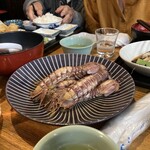
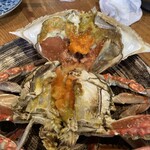
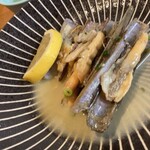
I visited my grandmother's house in Yanagawa from Kansai for a family gathering. I was looking for a good izakaya in Yanagawa, but couldn't decide on one. After enjoying a boat ride on the Yanagawa River, I stumbled upon a familiar restaurant. I was thrilled and immediately put my name down on the waiting list. While waiting, we looked at the fish and menu, keeping ourselves entertained. My elementary school-aged child who loves sashimi ordered a sashimi set, and said it was delicious. The adults ordered various rare fish dishes. We used to eat a lot of shrimp and other seafood at my grandmother's house, but it seems like it's not as common now. However, I couldn't resist and ordered some shrimp. We even ordered some snow crabs! We were so excited that we decided to just enjoy the food without worrying about the bill. Everything was fresh and delicious. I later found out from my cousin that the restaurant is famous and has been featured on TV. The interesting owner, as well as the staff, were all very nice and provided great service. Later, I saw a feature on Yanagawa on a morning TV show called "Tabi Salad," and the restaurant was also mentioned. The owner, who I found out is the president, had a friendly and likable demeanor. If I had to point out one thing, it would be that the cost of preparing the fish bought outside the restaurant and eaten inside is a bit high. Please lower the price a little (laughs). I will definitely visit again when I come back to Yanagawa for another family gathering!

taka_yu
4.00
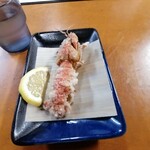
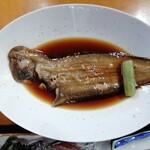
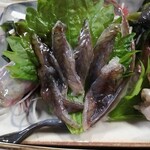
I had heard that you can eat natural Ayame Bay eel here, so I had inquired several times since the beginning of the year, but they always said they only had small ones, so I had put off going. However, it seemed that they had grown to a decent size, so I decided to give it a try. This place not only serves eel but also gathers the essence of Ayame Bay's seafood. It's over 50km one way from my home in Fukuoka city, but if you take the route through the Higashi Sekizan Tunnel, you only need to make 7 turns at the beginning and end, and the rest is mostly a straight road. It took about an hour and a half, and I arrived around 12 o'clock. There were about 3 parking lots at the restaurant, so there was plenty of space. It was a combo of Hina Matsuri, lifting of the state of emergency, and a three-day weekend, but I only had to wait about 20 minutes to be seated for lunch (they don't accept reservations during the Hina Matsuri season). I ordered the following: Ayame Bay Special Value Set recommended by the president, priced at 3,620 yen. Eel bowl for around 2,800 yen. Natural sea eel (grilled white) for around 3,800 yen. The Ayame Bay Special Value Set was a masterpiece with a variety of dishes such as deep-fried sand lance, simmered tongue sole, live mudskipper sashimi, live sea cucumber sashimi, raw tonguefish sashimi, jellyfish vinegar, Wakinosinnozu miso stew, shrimp salted fish, rock crab pickled fish, tonguefish sweetened fish, rice with octopus, boiled bay scallop, boiled sea anemone, dried sea cucumber and live mudskipper sashimi with heads and bones that are collected halfway and returned as fried chicken. This set is a unique collection of Ayame Bay delicacies that you can only experience by visiting Ayame Bay five times. More than half of the dishes were new to me. I had always wanted to try the various Ayame Bay delicacies. The sand lance was a big one. This creature, a type of hermit crab, has a slightly quirky flavor but is satisfying to eat. The sea cucumber, Wakinosinnozu, has a flavor similar to the clam and is a rare species. The dried sea cucumber, which has a unique taste, produces a good broth when chewed. The sashimi of mudskipper and sea cucumber is a white-fleshed, mild-flavored dish. The tonguefish, a fish with many small bones, is a beautiful white-fleshed sashimi. According to the president, it is said to be a unique species of Ayame Bay, but it seems to also exist along the continental coast, making it a local specialty of this region. This Ayame Bay Special Value Set allows you to experience a variety of Ayame Bay delicacies that you would not be able to taste without visiting Ayame Bay five times in one meal, making it truly a great deal. Eel Here, the eel is served without steaming, only grilled with the back open. I prefer eel without steaming, similar to grilled fish, so this was perfect for me. The precious natural sea eel is only available grilled white. The eel on that day was small, around 250g. The eel is known for its yellow belly compared to farmed eels. The eel is taken out of the live tank after the order is placed. First, the heart-stabbing dish was served. It was only about a quarter of a matchstick in size, but when chewed, it had a strong umami flavor. The grilled eel was served with liver and fried bones. The meat was crispy and delicious. Since it's sea eel, it doesn't have the typical taste of river fish, and you could eat as much as you want. The eel bowl was also made with eel that had a good elasticity, and the sauce was sweet but not overpowering, making it enjoyable to eat. I also bought red clams, kepp (a.k.a. red turban shell), and rice octopus at the fresh fish corner on my way home. They accept PayPay. When I got home, I tried to make sashimi with the red turban shell, but the shell was extremely hard. You needed a hammer to crack it open, as a regular kitchen knife would not be enough. Ayame Bay is known for its tidal range of up to 6 meters, which is caused by the bay's shape and the resonance phenomenon of the tides.

BAY星S
3.30
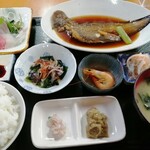
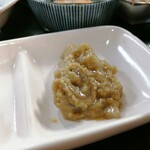
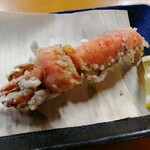
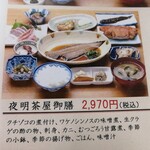
This is a restaurant that serves fish and seafood dishes caught in the Ariake Sea. Since it caters to tourists, the staff noticed that I was struggling with the menu and kindly explained various dishes to me. I decided to try the set meal that offers a variety of specialties and delicacies. One of the most impressive dishes was the miso stewed Wakenosinno. When the staff told me it was a sea anemone, I thought to myself, "Oh no, I might not like it." However, I didn't want to miss out on this opportunity. My husband, who tried it first, reassured me with a smile, "It's okay." After some hesitation, I decided to try it. The staff mentioned that it's about enjoying the texture, and they were right. The texture was indescribable, and even now, days later, I still remember it. It wasn't a repulsive texture; I managed to eat both pieces of Wakenosinno. It taught me not to judge food without trying it. I'm glad I tried it. *Advice: Search for Wakenosinno after finishing your meal. ♡
dorop114
3.50
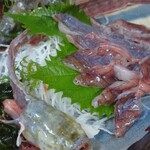
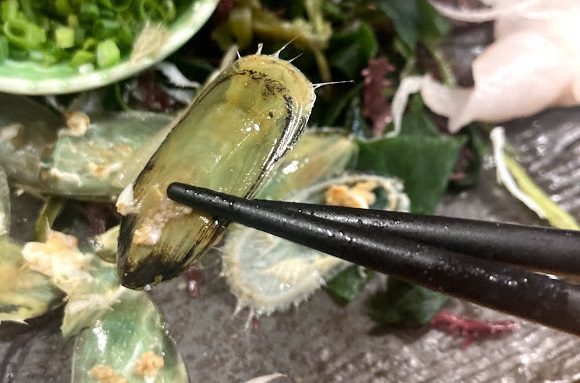
I ate alien food. Yes, you read that right. This restaurant actually has aliens. They serve food with names and appearances you've never seen before. Among the dishes I tried, the cuttlefish sashimi was amazing. There were other interesting dishes, but the most intense one was... well, I won't mention it here because it's too out there.

Mizuno , Yoshinori
2.90
This is a restaurant attached to a fish market. I love shrimp so I had the shrimp fry set meal. I tried the scallop tempura set meal! I came here for the rare delicacies from Ariake Sea. The portions were huge! There were also unique fish like mudskippers from the Ariake Sea. The restaurant itself had a nostalgic izakaya atmosphere. The male staff was very attentive, kind, and cheerful.
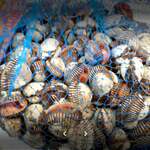
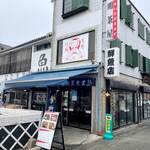

グルメまっちょ
3.80
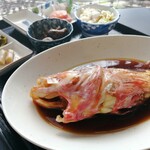
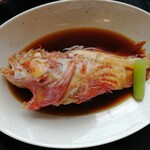
[Taste] The simmered Kasago (scorpionfish) has a slightly sweet and lightly soy sauce flavor. It's not too strong, allowing you to fully enjoy the deliciousness of the fish. The Kasago meat is tender and has a very pleasant texture, similar to medium fatty tuna. It lacks the typical fishy smell of bottom-dwelling fish and has a strong sweetness, making it a highly recommended dish.
[Service] The dish was served in 20 minutes. You can change the seasonal fish at no extra charge. This time, we were able to switch from sea bream to Kasago without paying extra.
[Atmosphere] The first floor has a casual market-like atmosphere, while the second floor is a serene Japanese-style space. If you prefer a relaxed dining experience, I recommend dining on the second floor.
[Cost Performance] 10 dishes for ¥1320 is quite affordable. It was delicious! Thank you for the meal!
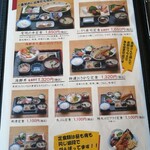
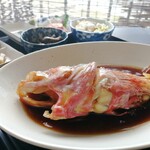

REONレオン
3.00
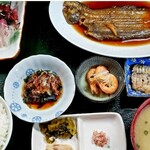
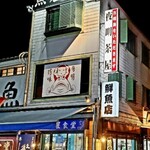
I went to a tea house along the moat in Yanagawa. Inside, there is a fish tank with fresh fish swimming in it. They have a variety of side dishes available, which you can purchase and have them cook for you. This time, I ordered the simmered fish collar set meal. The seasoning is strong, but the rice is delicious.

暖炉犬
4.00
If you want to enjoy various blessings of the Ariake Sea in Yukuhashi City, Fukuoka Prefecture, this is a recommended restaurant. The interior plays Showa kayo songs like Misora Hibari, creating a unique atmosphere. There is also a fresh fish market attached, offering rare sashimi dishes. The staff and hostesses will recommend the daily specials to you. We ordered the following for two people:
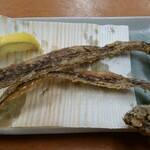
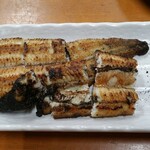
- Grilled eel (1800 yen)
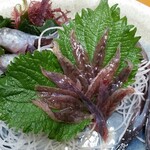
- Sashimi of walasubo (deep-sea fish, 800 yen)
- Sashimi of flat scallop (1200 yen)
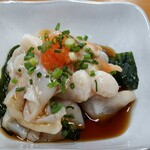
- Bilapon (vinegared flat scallop himo)
- Seafood bowl (1200 yen)
When you think of Yukuhashi, you think of eel. Since it is farmed eel (ranging from 2000 yen to 8000 yen for wild ones), it has a rich fatty taste. The grilled white eel, which is baked to a crisp, was surprisingly delicious. It is eaten with charcoal salt. Although I am not particularly fond of eel, I couldn't stop eating it. The sashimi of deep-sea fish walasubo has a chewy texture similar to a bluefin tuna. It is thinly sliced and has a rich flavor. I tried it for the first time in my life. Deep-sea fish is usually delicious with plenty of collagen. The flat scallop is domestically sourced and incredibly fresh. The scallop shell has a firm cut, almost like plastic. The scallop himo has additional umami and texture, which I found enjoyable. It goes well with beer or sake. The seafood bowl didn't have particularly rare sashimi, but it was still fresh (in Fukuoka, freshness is no longer just a compliment), and I was happy to see my favorite sea urchin. We finished with unlimited refills of green tea. Since we were fully focused on the meal, we were able to keep the price quite affordable. It was a fun restaurant that satisfied our curiosity.

宙友(ソラダチ)
3.50
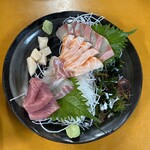
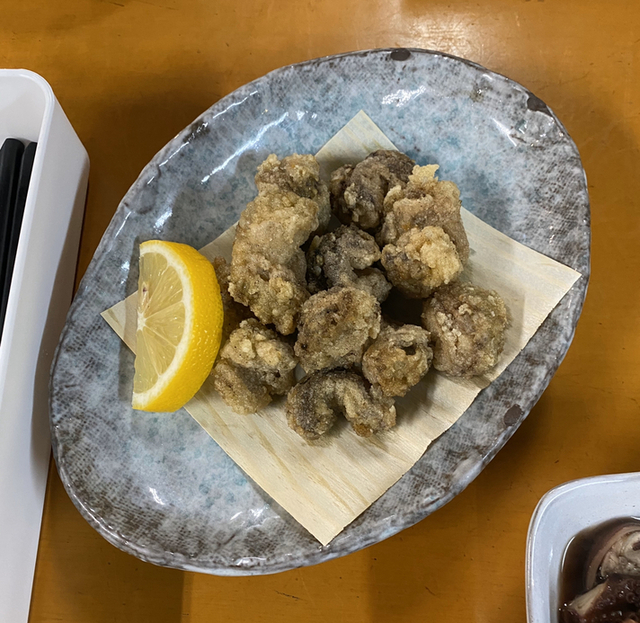
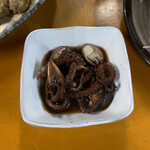
Visited the restaurant around 7:30 pm on a weekend. There were about 5-6 groups of customers already there, with one group arriving after us. We had arrived at the inn a little after 7 pm, and since dinner was not included in our plan, we asked the staff for recommendations. They suggested a place nearby, which I had also checked out beforehand. I called to confirm a table, and they said it was fine. It only took about 10 minutes to walk there from the inn. Inside, the table seating area felt lively, like a fish market. The customers below us seemed eager to eat, ordering dishes like fried oysters. My partner and I were more interested in drinking, so we ordered a sashimi platter. When we asked the energetic waiter for recommendations, he mentioned that the sea cucumber tempura had just arrived and that their fried chicken was excellent. We decided to try both, along with simmered octopus and butter-grilled clams. The dishes arrived one after another in 5-6 minutes. The sea cucumber tempura was a rare delicacy, with a taste reminiscent of clams. The menu had many interesting items, but we didn't have the courage to try them all. We ordered some fresh seaweed from the Ariake Sea, which had a great texture and a nice seaweed flavor. After about an hour, we started to feel full and a bit tired of eating. My partner wanted to eat more, while I wanted more to drink. As we left, the staff kindly said we were welcome to come back. I wonder if I'll have the chance to visit Yufucho again. The service was excellent. Thank you for the meal.
Email Login