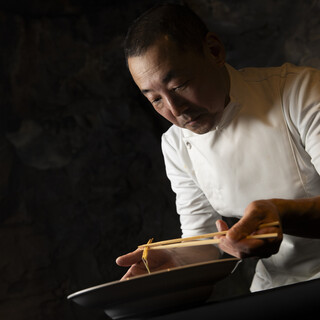
KOBAYASHI
コバヤシ
3.51
Roppongi, Nogizaka, Nishi-Azabu
「Chinese Cuisine」
30,000-39,999円
--
Opening hours: Monday, Tuesday, Wednesday, Thursday, Friday, Saturday, National Holidays, the day before and the day after a holiday
17:00 - 23:00 L.O. 22:30
Sun.
Closed
Rest time: We will be closed during the year-end and New Year holidays. Other irregular holidays may occur. Please contact the store for details.
東京都港区六本木3-3-29 六本木アーバンレックス B1F
Photos
(20)
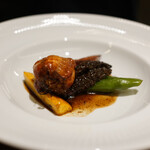
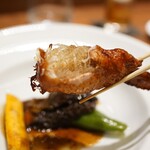
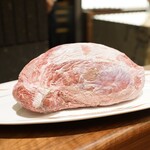
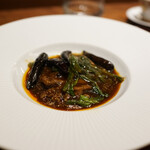
Details
Reservation Info
Reservations are accepted from 11:00 to 17:00 on business days. If you are in a hurry, please make a reservation through our official website. Our restaurant is on the first basement floor with cobblestone stairs. There is no elevator. Counter seating starts at 18:00. If you arrive late, you may be served from the middle of the course.
Children
We require that you are of junior high school age or older and can eat the same meal as an adult. If you have any questions, please contact us.
Payment Method
Cards accepted
Electronic money is not accepted
QR code payment is not accepted
Restaurant Service Fee
10% service charge,No private room charge
This fee is charged by the restaurant, not related to our platform
Number of Seats
32 seats
(8 counter seats, 5 private table rooms)
Private Dining Rooms
Yes, we have private rooms for 2~8 persons.
Private rooms for 2~8 persons are available. We do not accept seat assignments. Please understand in advance.
Smoking and Non-Smoking
All seats are non-smoking. Smoking is prohibited in the entire building including the premises.
Parking
None
Facilities
Calm space, counter seating available, free Wi-Fi
Drink
Sake available, focus on wine
Dishes
Focus on vegetable dishes
Comments
(21)

cozi0141
4.50
I visited a restaurant opened by Chef Takeshi Kobayashi, who was the former chef of "Momo no Ki," a restaurant that has been awarded Michelin stars for 16 consecutive years. I made a reservation at the counter, but I was informed that the course offerings differ between the counter and private rooms. The counter course is called "Ultra Style," and it starts all at once for everyone at the counter. Occasionally, Chef Kobayashi steps in front of the diners to explain the dishes and ingredients, as well as to present the effects of different cooking techniques. It truly lives up to the term "food entertainment," resembling an entertainment show where you can enjoy exceptional Chinese cuisine.
I feel there’s not much I can say about the dishes, as experiencing them is the best way to understand their quality. My feedback might not be very helpful (laughs), but what stood out to me was the incredible taste of the vegetables. Of course, the seafood and meat were also excellent, as were the sauces, but the vegetables were remarkably delicious. I look forward to trying the menu in the private room next time.

@melech_tokyo_gourmet
5.00
**Store Name:** KOBAYASHI
**Location:** 3-3-29 Roppongi, Minato City, Tokyo, B1F, Roppongi Urban Rex
**Tel:** 050-1809-4801
**Closed:** Sundays
Experience exquisite Chinese cuisine in an extraordinary setting. The moment you descend the entrance stairs to the underground restaurant, you're greeted with warm hospitality, enhancing your anticipation. The interior, rich in natural materials, exudes luxury. The "ULTRA K" counter, limited to eight seats, offers a theater-like live kitchen experience, allowing you to fully savor the final touches of the chef's creations. Owner-chef Kobayashi has consistently retained a Michelin star since the inaugural Tokyo Guide and is a highly renowned chef. He opened this highly anticipated restaurant in June, named after himself, after leaving "Momo no Ki."
This time, we enjoyed the exclusive counter-only “Seasonal Ingredients Omakase Course” starting at 6 PM for ¥38,500 (price may vary with ingredients) featuring a rich selection of high-end seasonal ingredients. The chef's original Chinese dishes offer a delicate flavor that will leave you touched by every single bite.
**Course content includes:**
- **"Ali Shan Jin Xuan Oolong Tea"**
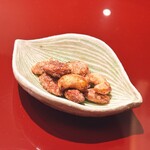
- **"Mixed Nuts with Sugar"**
Served as a welcome tea before the course, the milky, sweet aroma gently warms your stomach.
- **"Drunken Crab"**
Crab from Kasumi Bay, Hyogo, marinated in Shaoxing wine, filled with rich flavor and complemented by orange.
- **"Ikura, Sea Urchin, and Red Vinegar Rice"**
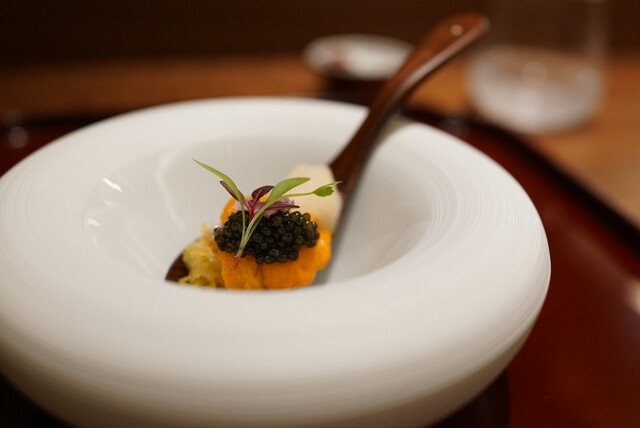
A spoon sushi featuring Hong Kong red vinegar rice topped with Hokkaido sea urchin and ikura, delivering a luxurious taste explosion.
- **"Caviar Green Salad"**
This salad features avocado with green herb paste, fried wontons, and basil, topped with caviar and shaved bottarga – a deeply nuanced dish that changes the concept of salad.
- **"Assorted Appetizers"**
- **[Smoked Shanghai-Style Salty Chicken]**: Delicately textured chicken and a burst of smoky aroma.
- **[Abalone with Truffle Scallion Sauce]**: A surprising pairing of abalone and truffle.
- **[Shirayaki Sweetfish with Special Yurin Sauce]**: Crispy skin with perfectly fried sweetfish, it pairs exceptionally with a unique sauce that is delicious enough to drink by itself.
- **"KOBAYASHI Special XO Sauce ULTRAstyle"**
A seafood ajillo made with dried scallops and Jinhua ham’s concentrated flavor, featuring Kagoshima shrimp, Hokkaido cod milt, and Akkeshi oysters; a must-try dish that bursts with umami. Slather on extra XO sauce for an incredible boost of flavor.
- **"Stir-fried Julienne Potato"**
Thinly sliced boiled potatoes stir-fried before your eyes, offering a crispy texture that’s simple yet profound.
- **"Shanghai Crab and Tofu Stew"**
Rich crab flavor combined with smooth tofu; pairing it with sakura shrimp and crab miso XO sauce is remarkably delicious.
- **"Chicken Wing"**
Doused with fragrant Shaoxing wine, crispy-skinned wings filled with shark fin and ginkgo offer a juicy and exceptional flavor.
- **"KOBAYASHI and NUMAMOTO"**:
A stir-fry of the rare Takamori Wagyu from Yamaguchi and oil-fried matsutake; the aroma fills the air as it’s cooked right in front of you, delivering an incomparable taste as it marries with the mushroom scent.
- **"Chicken Bone Soup Noodles"**
A chicken bone soup developed since the days of Momo no Ki, it’s richer than you can imagine, and the noodles cling perfectly to the broth. Adding the provided white truffle oil makes it almost a transcendent experience.
- **"Dried Scallop Fried Rice"**:
A surprise dish not listed on the main menu, featuring aged Thai rice, egg, dried scallops, and green onion, creating a perfect texture and aroma that exceeds expectations. Enjoy it with remaining XO sauce or chicken broth for an extraordinary taste.
- **"Mango Pudding"**
Inherited from the chef’s mentor, originally served in a famous Taiwanese hotel; it has an unparalleled richness and delightful jiggly texture.
- **"Fresh Mooncake"**:
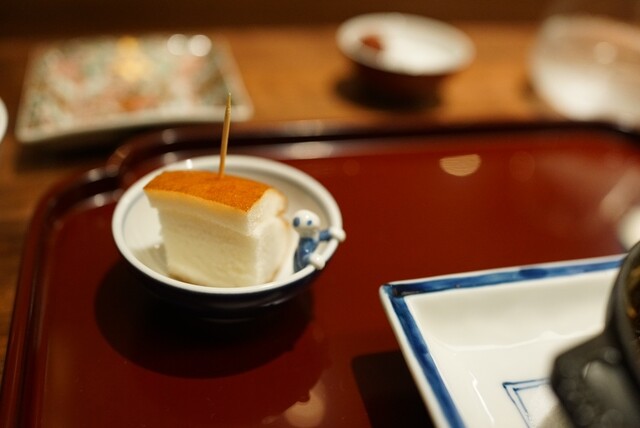
A special tea snack filled with coconut and matcha bean paste, pairing perfectly with warm red tea.
The ambiance, service, and flavors are all impeccable here. I felt immense satisfaction being able to enjoy Chef Kobayashi's cooking. The portion sizes are generous, ensuring a satisfying experience for everyone. The dishes are not overly spicy, emphasizing the natural flavors of the ingredients. There’s also a pairing course for beverages available, which I highly recommend. Though this visit was limited to the counter course, I look forward to trying a different course in a private room on my next visit.
It was so delicious that I got excited and ended up writing a lengthy review. Thank you for reading until the end! I'm still savoring the afterglow; this is currently one of the best Chinese restaurants to visit for a special occasion!
________________________________
**Instagram:** @melech_tokyo_gourmet
I introduce various delightful restaurants from new openings to established favorites around Tokyo. Follow me to stay updated on great dining spots and feel free to comment or DM for questions or feedback!
________________________________

Whiskey Cat
4.90
Chef Takeshi Kobayashi, a culinary genius who has consistently earned Michelin stars at "Odencho Momonoki" and "Akasaka Momonoki," has opened a new restaurant named "KOBAYASHI." Stepping into the restaurant, one is greeted by a serene and pleasant atmosphere, designed by landscape designer Junsuke Masui, resembling a forest illuminated by moonlight. Guests are directed to the counter seating, which features a live kitchen where they can watch Chef Kobayashi prepare dishes.
The menus for the counter and private rooms differ; at the counter, which seats only eight, the menu named "ULTRA K" allows the chef to freely create unique dishes using the finest seasonal ingredients. The anticipation of what will be served is exhilarating. At 6:00 PM, all diners at the counter enjoy their meals together, creating a memorable experience filled with serendipitous encounters as they savor Chef Kobayashi's culinary performance and dishes, often expressing their amazement.
The course features seasonal ingredients like "Shanghai crab," "Kagawa crab," and "Matsutake mushrooms," along with signature dishes that may soon feature Chef Kobayashi's name, such as "Stir-fried scallop fried rice" and "Shredded potato stir-fry." I opted for the half-wine pairing course, and the selections chosen by sommelier Kiyoshi Arai complemented the food perfectly while remaining outstanding on their own. Leaving the restaurant, I felt an overwhelming sense of happiness. I have no doubt KOBAYASHI will earn a Michelin star next year. It is truly one of Japan's top restaurants for enjoying special moments with loved ones.
【Today’s Course】
ULTRA K—¥38,500+/Half-Wine Pairing—¥16,500+
Starting with welcome tea, Alishan Jinshuen Oolong is poured into a wine glass.
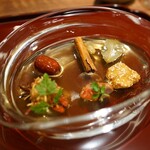
♦ Drunken Crab → Using washed blue crab from Hyogo Prefecture, marinated in Shaoxing wine. Underneath are green onions, shiso leaves, and Ehime's Lady Madonna orange. The orange inner meat absorbs the wine’s essence, letting you savor its rich flavors, enhanced by the freshness of the vegetables. The combination with Lady Madonna creates a fantastic harmony of crab umami, citrus sweetness, and the wine's bouquet, truly captivating from the first dish.
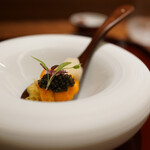
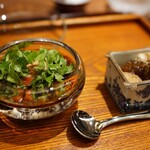
♦ Green Salad with Hong Kong Red Vinegar Vinegar Rice and Ikura/Caviar → A spoonful of top-tier sushi featuring Hokkaido's sea urchin and ikura, with Hong Kong's red vinegar rice. The umami of the roe and sea urchin spreads in your mouth while the mild acidity and sweetness of the vinegar add an accent. Accompanying this is a cucumber soaked in spicy shrimp paste and a salad layered with creamy avocado and plenty of caviar, topped with karasumi powder.
♦ Appetizer Platter
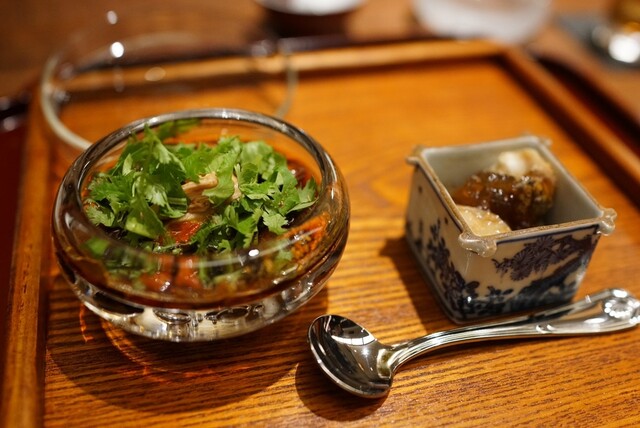
- Spicy Chicken (Yodare Chicken) → As the lid opens, a smoky aroma wafts out. The moist, smoked chicken pairs beautifully with crunchy peanuts and cilantro, making it incredibly delicious.
- Abalone with Black Truffle → Fresh abalone from Hokkaido, infused with black truffle, soft yet maintaining a robust texture, and perfect to enjoy with wine.
- White Sweetfish with Youlin Sauce → Fried scales provide crunch while the tender fish flesh contrasts deliciously with the balanced sweet, spicy, and salty youlin sauce, which complements the fish wonderfully.
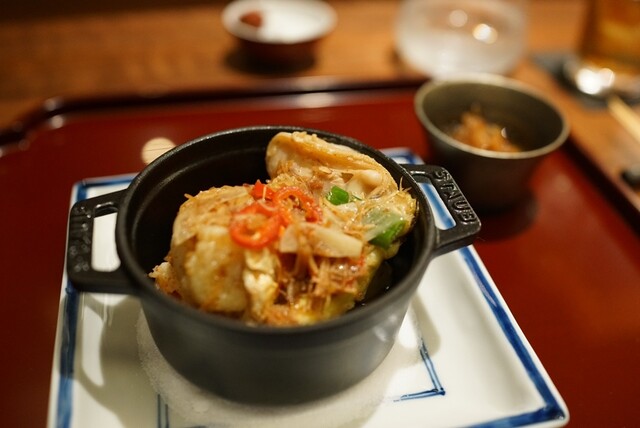
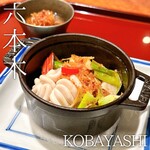
♦ KOBAYASHI Special XO Sauce ULTRAstyle → An incredibly luxurious XO sauce made with a generous amount of dried scallops that makes you want to eat endless bowls of rice or drink it down. Served in a Staub pot with white fish roe, shrimp, and oysters seasoned with the spicy XO sauce, reminiscent of Spanish ajillo. I can't help but imagine soaking bread in this delightful soup!
♦ Shredded Potato Stir-fry → One of the signature dishes; its intriguing texture, resembling noodles, is achieved by soaking the potatoes in water before boiling. The crunchy texture is hard to replicate, making it a unique dish that only Chef Kobayashi could master.
♦ Shanghai Crab and Tofu Stew → A dish showcasing the richness of Shanghai crab, simmered with tofu. The first bite floods your mouth with rich flavors, surpassing any prior experiences with Shanghai crab.
♦ Bean Curd Scallop → Fresh scallops from Hokkaido, grilled to a crisp exterior while remaining moist and tender inside, paired perfectly with a flavorful fermented black bean sauce.
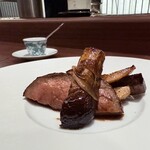
♦ KOBAYASHI and NUMAMOTO → A special cut of Takamori Wagyu from Aichi Prefecture provided by meat specialist Numa Moto, resulting in an extraordinary collaboration. Chef Kobayashi quickly stir-fried it with Matsutake, showcasing the beef's sweetness and umami.
♦ Chicken Soba → A rich chicken broth that could easily support its own restaurant, with perfectly cooked firm noodles. Various condiments like white truffle oil and black pepper enhance the flavors; I particularly enjoyed the combination of white truffle oil and black pepper.
♦ Dried Scallop Fried Rice → Prepared in front of me, this dish, not listed on the menu, had me thrilled. It takes 40 minutes to prepare the dried scallops used, showcasing incredible effort. Using jasmine rice, the fried rice offers an enticing aroma blended with scallop and green onion scents.
♦ Mango Pudding → A decadent dessert made from Indian Alfonso mangoes, topped with evaporated milk—the texture is silky smooth and fresh, paired perfectly with Alishan black tea.
♦ Fresh Mooncake → A chewy, glutinous cake filled with matcha and coconut red bean paste, with the coconut’s fibers providing a delightful texture, complementing the tea and making it a perfect finale to the meal.
Today's Wines:
- Collection 242 Champagne—Louis Roederer (Champagne)
- Peddac-Leognan 2020—Château Latour-Martillac (France)
- Les Ceps du Nebadon Condrieu 2019—Alain Paret (France)
- Meursault Les Grands Charrons 2022—Chavy-Chouet (France)
- Nuit-Saint-Georges 2020—Domaine Chantal Lescure (France)
- Yui Rose 2023—Kenzo Estate (California)
- Innocent VI Cote du Rhone Villages 2022—Alain Paret (France)
While I've focused on the dishes, the paired wines were exceptional and matched beautifully with the food while being delightful on their own. The cuisine continuously evolves, and I genuinely look forward to experiencing an even more enhanced "ULTRA K" on my next visit. Always striving for excellence, the success of Chef Kobayashi’s "KOBAYASHI" is undeniable; it is undoubtedly a restaurant worthy of a Michelin star next year.

おいしいミルク
4.00
I had the pleasure of enjoying a luxurious creative Chinese meal prepared by Chef Kobayashi, who formerly served as the head chef at Akasaka Momonoki. This extravagant course was not just focused on high-end ingredients; rather, it reflected a deep exploration of the ingredients used in the dishes. It's hard to capture in pictures, but caviar and shark fin were elegantly incorporated, providing a continuous surprise throughout the meal.
A standout dish was the papaya soup, sourced from Hawaii. As I spooned through it, I discovered shiitake mushrooms and shark fin mixed in, creating a wonderfully comforting flavor. For dessert, I had the choice between almond tofu and mango pudding, and both showcased a distinct level of craftsmanship. After tasting them side by side, I personally preferred the mango pudding.
I learned that there are seasonal courses featuring items like Shanghai crab, so I look forward to visiting the counter seating next time. Thank you for the delightful meal!

ツー太郎
4.90
"KOBAYASHI" in Roppongi is a Chinese restaurant where you can enjoy a lively dining experience with sophisticated dishes prepared right in front of you. Each visit brings surprises and a luxurious course menu that captivates diners. Every dish, using seasonal ingredients, is exquisite, and especially the autumn flavors are truly impressive! Here’s a detailed introduction to the current course menu:
Course content:
- **Shanghai Crab Spring Rolls**: Crispy spring rolls enhanced with the refreshing scent of sudachi citrus, highlighting the sweetness of the crab.
- **Botan Shrimp and Sake-marinated Sea Urchin**: A luxurious combination of plump botan shrimp and rich sea urchin, served on a spoon with caviar-topped green salad.
- **Platter of Appetizers**: A delightful assortment of flavors.
- **Sweetfish from Yamaguchi Prefecture with Youlin Sauce**: A fresh sauce made with long onions, sweet vinegar, chili, and chili oil complements the sweetfish beautifully.
- **Shanghai-style Dandan Chicken**: The momentarily smoked aroma stimulates the appetite.
- **Smoked Pacific Saury**: Marinated in a sweet and salty Hangzhou-style sauce that enhances the flavor of the fish.
- **KOBAYASHI Special XO Sauce ULTRA Style**: A luxurious dish featuring cod milt, oysters, and shrimp; the umami intensifies with every bite.
- **Stir-fried Julienne Potatoes**: A dish with a crisp texture and light seasoning that makes it hard to stop eating.
- **Braised Shanghai Crab with Tofu**: A gentle flavor where the harmony of crab and tofu is exquisite.
- **Braised Chicken Wings with Shark Fin**: Chicken wings filled with shark fin and Gokase ginkgo, allowing you to enjoy both the umami of the wings and the luxury of the filling.
- **Grilled Matsutake Mushroom and Beef from Iwate Prefecture**: Specially prepared matsutake and beef presented in a generous style, showcasing the deliciousness of the ingredients.
- **Special Fried Rice**: Flavor enhanced with dried scallops and made with Thai rice, resulting in a fluffy texture and aromatic taste.
- **Chicken Noodle Soup**: The umami of the braised chicken seeps into the broth, making it a perfect dish to conclude with.
- **Mango Pudding**: Known for its rich and fruity flavor.
- **Fresh Rice Cake**: The chewy texture is refreshing and offers a taste that’s hard to find elsewhere.
The courses at "KOBAYASHI" provide a unique experience to enjoy the high quality of ingredients and the excitement of live cooking. Each dish brings surprises and deep insights into the sophisticated flavors of Chinese cuisine. The atmosphere of the restaurant is refined, making it a great choice for special occasions or meals with loved ones.

O-YA-G
4.80
On the way from Roppongi to Iikura, I headed to a special underground space designed exclusively for enjoying an exquisite Chinese course called "ULTRA K," made with seasonal ingredients. Even before entering, I could already sense the satisfaction I would feel when leaving. As I took my seat, I heard my own sighs intended to ease my tension, and a soft-spoken female staff member welcomed me with tea. I took a sip—delicious! I couldn’t help but sigh again. After finishing my first cup, I opted for a non-alcoholic tea pairing from the extensive drink menu, considering I had the next day to think about. Served with a mix of candied nuts as a palate cleanser was "Ali Shan High Mountain Jin Xuan Tea," which had a pleasant natural sweetness that evolved in flavor as it steeped. This tea wasn’t just a complement to the dishes; it became a wonderful thread woven through the course.
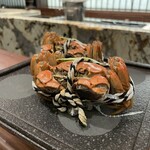
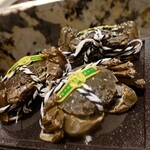
Soon, the star of the menu, the Shanghai crab, appeared—the sturdy and robust Dazha crab from Suzhou’s Yangcheng Lake. What's more, this restaurant exclusively uses female crabs. Years ago, I was shocked to learn from a local in Hong Kong that Shanghai crabs are freshwater crabs, and they are not caught in Shanghai but are shipped from Suzhou, hence the name. Moreover, it was said that "most delicious Shanghai crabs are exported to Japan, which means the supply of high-quality ones is scarce in China and Hong Kong, leading some people to travel to Japan just to eat them." I couldn't wait to see how the restaurant would serve the Shanghai crab.
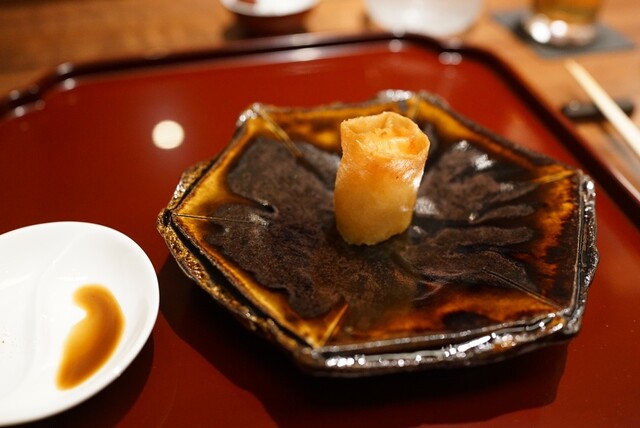
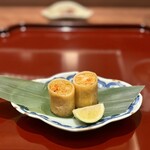
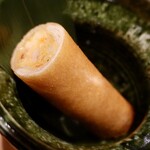
The first dish was a Shanghai crab spring roll, filled with crab meat and topped with caviar and either Bella Lodi or fresh cheese. The piping hot spring roll was irresistible, perfectly balancing the sweetness of the crab, the saltiness of the caviar, and the richness of the cheese. I thought to myself that I could finish the meal with this dish alone—it was a real home run, just like a lead-off home run by Ohtani!
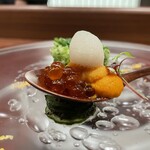
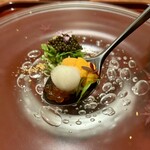
Next up were a spoonful of ikura and sea urchin, featuring Hong Kong red vinegar sushi rice, Hokkaido sea urchin, and ikura with a foam sauce—this was truly a refined Japanese dish in a single bite. Then came the caviar green salad, with basil-infused vermicelli, finely diced cucumber, and avocado, all topped with caviar and karasumi. It was fresh and refreshing with a hint of the ocean—a unique ULTRA K style that defied categorization.
As we progressed through the initial courses, the next offering was an appetizer platter, which included "momentarily smoked Shanghai-style spicy chicken" with homemade chili oil, plump chicken, caramelized peanuts, and cilantro. This dish had a balanced mild heat that even those who typically dislike cilantro could enjoy. Served separately were fried eel, smoked saury, and a tea and duck egg salad.
Chef Kobayashi made a live appearance at the front of the counter to prepare “sweetfish fried with a sweet vinegar sauce.” As he explained the sauce preparation, the cooking process unfolded beautifully. The sweet vinegar sauce, made with a soy sauce base, was combined with chili oil instead of sesame oil, green onions, clippings of fresh chili, and chives—all freshly cut just moments before. The dish's sweetness shone without the sharpness of the peppers. When the lightly floured sweetfish was fried to a crisp and paired with the sauce, it was incredibly delicious. I couldn’t help but think that this sauce would go wonderfully with rice.
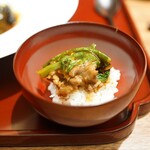
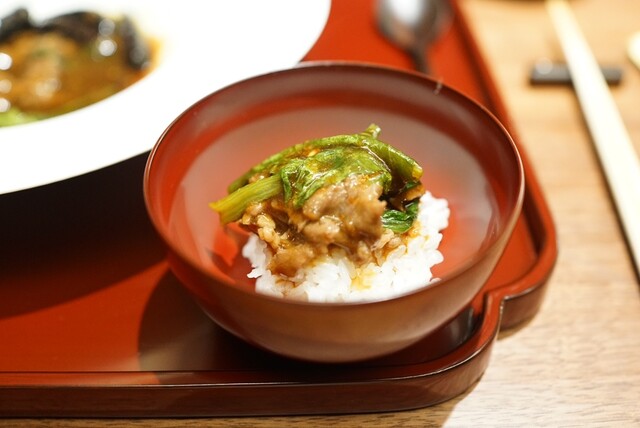
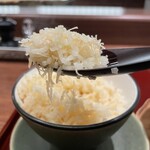
As I was enjoying the sweetfish, a small bowl of rice appeared before me—a kind gesture from the attentive server who must have overheard my comment. When I drizzled the sauce over the rice, it exceeded my expectations in flavor! The vegetables, cut with Chef Kobayashi's impressive technique, tasted extraordinarily fresh.
Next was "KOBAYASHI Special XO Sauce ULTRA Style,” made with preserved scallops and Jinhua ham, maximizing flavor while keeping the spice level low. This premium XO sauce was fantastic on its own or as a side. It accompanied a seafood ajillo made with delicious Kagoshima prawns, Hokkaido’s shirako, and oysters, all harmonized further by the added XO sauce.
We were then served "Longfeng Gorge High Mountain Tea," after which Chef Kobayashi returned to prepare "stir-fried shredded potatoes." Using a mix of white sesame oil and a hint of chili oil, he stir-fried the meticulously sliced potatoes until they were translucent, then added broth, a touch of black vinegar, salt, and sugar, finishing it lightly with cornstarch for a slight thickness. The result was a stunningly fresh potato dish that was far superior to any I had had before.
Next was "tofu simmered with Shanghai crab," where tofu was cooked in a sauce made from crab meat and roe. It was delicious on its own but even better enhanced with the spicy condiments served separately.
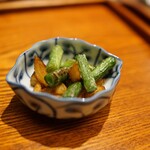
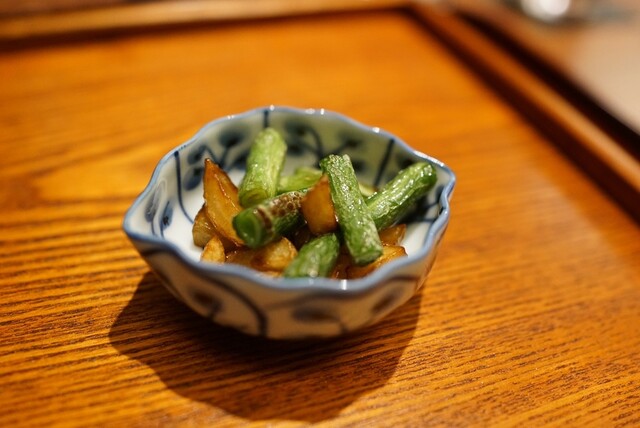
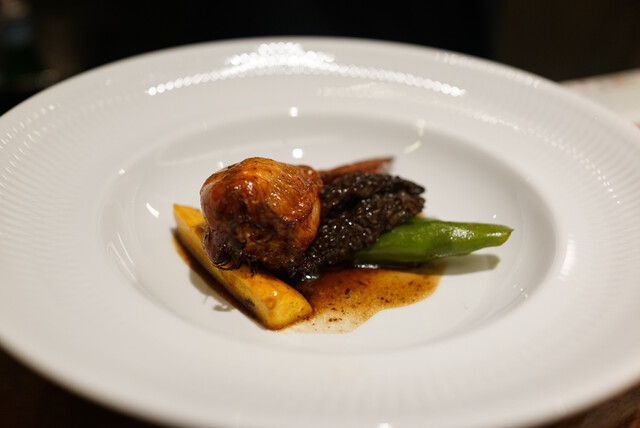
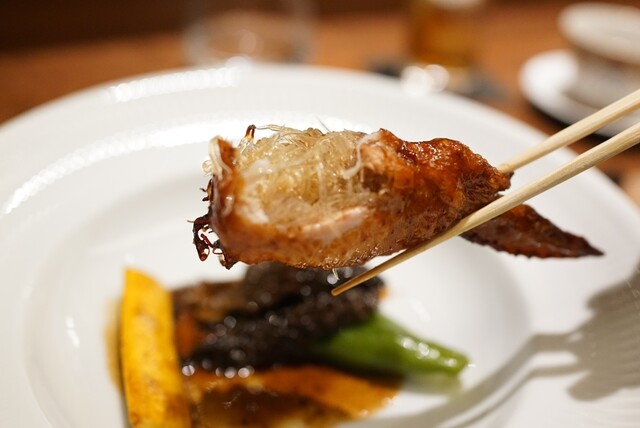
Then came the hand wings, which were served with a spritz of 20-year-old Shaoxing wine. Each wing was filled with shark fin and ginkgo, and the combination of crispy skin and the rich aroma of aged wine added to the enjoyment. Alongside, a lightly flavored burdock root and string bean dish was surprisingly tasty.
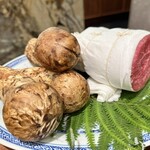
The main attraction was high-quality wagyu from Yamaguchi Prefecture paired with solid Yamagata Matsutake mushrooms. Chef Kobayashi took center stage again to prepare. He fried the Matsutake, releasing its fragrance throughout the restaurant, and seared the wagyu before combining them with garlic, Shaoxing wine, and spring onion oil in the pot. The depth of umami and aroma from the Matsutake combined with the wagyu was exquisite.
The next dish was a soup—the only one in the course—a richly flavored chicken broth with hand-pulled noodles that had a nice chew to them, accented by the slight bitterness of chives.
Dessert was supposed to be the finale, but then came an unexpected fried rice dish! Chef Kobayashi prepared a cooked rice with preserved scallops right before my eyes in about three minutes. Using Thai rice instead of eggs and constantly tossing it until it emitted a "cake-like aroma," he added finely sliced spring onions and a substantial amount of scallops with salt, stirring until completion. Miraculously, it tasted like concentrated umami without any greasy sensation. It was truly remarkable—like nothing I had tasted before. Following the chef's suggestion, I dipped some into the chicken broth—what an incredible flavor combination!
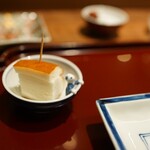
To finish, there was mango pudding, made from Alfonso mangoes blended with evaporated milk, resulting in a dessert that was even more mango than mango itself. Finally, with the last tea, “Ali Shan Black Tea,” came a traditional Chinese dessert, “shengyuebing,” filled with matcha, coconut, and candied winter melon—a delightful twist on the concept of tea sweets.
I truly appreciated Chef Kobayashi's skills and sensibilities throughout this experience. The hospitality of the staff was also impressively attentive. I learned that the menu changes with the seasons, and I hope to have the opportunity to return and savor it again.

shikina
4.20
Odenmachi's Chef Kobayashi of Momo no Ki is a well-known figure, having continuously earned Michelin stars. The entrance creates an impression of entering a theater, and the interior features a counter and private rooms, with the counter operating on a single rotation starting at 5:30 PM. As a professional, I was captivated by the beautiful solid wood counter. With Chef Kobayashi’s greeting, the “Kobayashi Theater” began.
⚪︎ **Shanghai Crab Spring Roll**: The first dish showcases plump bubbles from the Shanghai crab. It has an overwhelming allure! The beautifully fried spring roll has a crunchy skin that reveals a rich crab filling. The more you chew, the more the crab flavor comes alive, with a delightful aroma wafting through your nose. Drizzling some sudachi citrus juice adds a refreshing touch to the richness. A blissful start to the meal!
⚪︎ **Hong Kong Red Vinegar Sushi Rice with Ikura and Caviar Green Salad**: Served in a spoon, it features Hong Kong red vinegar, ikura (salmon roe), and sea urchin, topped with a bubbly sauce. It’s incredibly extravagant… and of course, it’s a one-bite dish. The ikura pops in the mouth while the sea urchin lends its rich umami. And let's not forget the rice! It’s a perfect match!! Underneath, there's a vermicelli gelato-style. The caviar enhances the dish. The Chinese elements? It turns out the use of Hong Kong red vinegar and Fujian-style vermicelli, integrating ingredients and techniques from across China. Essentially, it's recognized as Chinese cuisine.
⚪︎ **Appetizer Platter**:
- **Yodare Chicken**: Chicken coated in a rich and spicy peanut oil, unlike any yodare chicken I've tasted before. It has a deep, rich spicy flavor that makes you drool just thinking about it!
- **Fried Anago (Conger eel)**: Drenched in a sweet sauce, it contrasts nicely with the yodare chicken. The fat is incredibly tasty!
⚪︎ **Sweetfish Matukasa Fry with Sweet and Sour Sauce**: This dish is prepared right in front of you. The vegetables are diced into pieces less than a millimeter. As Chef Kobayashi mentioned, they are “alive vegetables.” The sweet and sour sauce is lightened with chili oil, allowing the flavors from chewing on the lively vegetables to arise! The crisp skin gives way to the sweetfish's umami, paired beautifully with the sweet and sour sauce. Each component harmonizes, producing a wonderful aroma and great taste!
⚪︎ **KOBAYASHI Special XO Sauce ULTRA Style**: Featuring dried scallops and Jinhua Ham. The spiciness is subtle, maximizing the umami in this homemade XO sauce—truly shocking in its deliciousness. The Ajillo contains sea urchin, shrimp, oysters, and green onions, which are delectable on their own, but when you add the XO sauce, the flavor elevates further. You just want some bread with it, it’s that good!
⚪︎ **Stir-Fried Shredded Potatoes**: This dish also celebrates the liveliness of the ingredients prepared before you. Chef Kobayashi encourages imagining the flavor before eating. Honestly, I could foresee the flavor. Yet, it betrays expectations with the Kobayashi style. If you didn’t know, you might not even think it was potatoes at first. The texture is pleasantly reminiscent of soft green onions, providing a comforting twist.
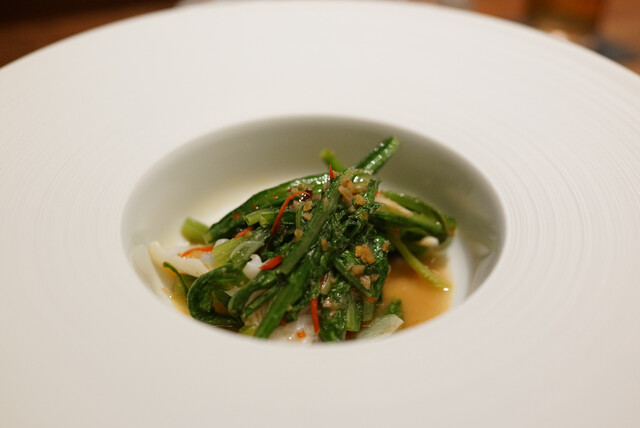
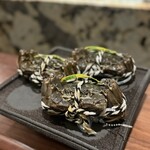
⚪︎ **Taiwanese A-Cai with Shanghai Crab Sauce**: At first glance, A-cai looks like water spinach, but it's actually a type of lettuce, distinct from water spinach. It has a light mouthfeel, with a strong garlic flavor. When mixed with the Shanghai crab sauce, the taste deepens. It might be hard to explain, but the delightful sauce coats the crunchy texture! This was a unique experience!
⚪︎ **Chicken Wings**: Stuffed with shark fin and ginkgo nuts, caramelized with 20-year-old Shaoxing wine. Finished with a spritz of Shaoxing wine, it’s a hand-eating style. The shark fin has a strong texture, and hints of five-spice powder enhance the flavor, making you want more with every bite!
⚪︎ **KOBAYASHI and NUMAMOTO Collaboration with Takamori Wagyu**: Concerning Takamori Wagyu from Yamaguchi, known for its quality. It's fed a mix with the sake-making koji from Dassai. This time, it’s cooked with matsutake mushrooms. They fry the mushrooms at high temperature to extract their moisture, filling the room with their wonderful aroma… While resting, the meat is added and seasoned with Shaoxing wine and spices. It appears simple, but the umami is remarkable. Though slightly chewy, the more you chew, the more delicious it gets!!
⚪︎ **Chicken Soba**: Slow-cooked for hours to produce a rich chicken broth. Honestly, it’s tastier than your typical ramen shop. To serve it as part of the course shows just how great it is. I can only dream about having a bowl of this for lunch… and the broth transitions perfectly into the next fried rice dish.
⚪︎ **Egg Fried Rice**: An essential combination of eggs, rice, and salt. The texture is fluffy and satisfying. Even on its own, it’s delightful; however, when dipped in the previous broth, it transforms into an exquisite chicken broth fried rice. I really wish there could be a lunch set with both the soba and this fried rice (I know I’m persistent)!
⚪︎ **Mango Pudding**: Made from Indian mango, blended with evaporated milk and set into a pudding. It’s rich yet subtly sweet!
⚪︎ **Fresh Mooncake**: Filled with coconut and matcha, enjoyed with Chinese tea!
This course left me incredibly full, with many discoveries and encounters with novel ingredients. Each dish was crafted with care and was truly impressive. The XO sauce was particularly shocking, and I wanted to take some home! It was the first long review in a while!! I’d love to return again when the seasons change!

グルメエンペラーK
4.90
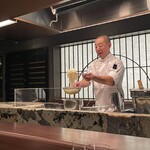
I had an extraordinary experience at the Chinese restaurant "KOBAYASHI" in Roppongi. The interior is remarkably sophisticated, perfectly blending unity, cleanliness, and luxury. As soon as you step inside, a lavish space unfolds, making you forget about everyday life, and the chic atmosphere brings joy to your heart. The counter seats, where the chef showcases the finishing touches of the dishes right in front of you, add a live element that is truly captivating, leaving you breathless with excitement. I couldn't help but exclaim, "It's delicious!"
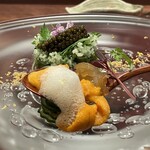
We started with the "Shanghai Crab Spring Rolls." A squeeze of sudachi enhances the rich flavor of the crab, adding a refreshing acidity that was perfectly balanced. The crispy thin skin and the sweetness of the crab harmonized in my mouth, making me smile.
Next came the "Botan Shrimp Marinated in Shaoxing Wine," topped with sea urchin—what a luxurious combination! The flavor of the Shaoxing wine highlighted the shrimp's sweetness, while the creamy sea urchin added even deeper umami. This dish was truly sublime.
The appetizer platter featured an array of lavish dishes: sweet tilefish from Yamaguchi Prefecture dressed in a rich sauce, where vinegar, scallions, chili, and spicy oil accentuated the fish's deliciousness. Freshly chopped vegetables provided an excellent crunchy texture. The Shanghai-style "Yodare Chicken" had a wonderful smoky finish, while the smoked mackerel in Hangzhou style had a sweet and savory flavor that was addictive.
We also had the special XO sauce made with shirako, oysters, and tiger prawns; every bite released extraordinary umami that left me speechless. The "Stir-fried Shredded Potatoes," simple yet so crunchy and light-tasting, reminded me of the depth of Chinese cuisine.
The "Braised Shanghai Crab and Tofu" was a comforting dish packed with the rich flavors of crab. Its creamy texture was delightful, making me want to eat it over and over. The "Chicken Wings with Shark Fin" featured tender chicken filled with shark fin and ginkgo, perfectly crispy outside and moist inside, each bite was a revelation.
The "Matsutake Mushroom and Beef Collaboration" showcased large matsutake mushrooms from Iwate Prefecture paired with beef from Yamaguchi Prefecture, producing an exquisite aroma and flavor that was simply indulgent. The special fried rice made with dry scallops was outstanding, brimming with concentrated umami. The unique texture from using Thai rice, along with its cake-like toasted aroma, was irresistible.
To wrap up, I enjoyed "Chicken Stew Noodles," which were rich and comforting, making the flavors seep into my body. For dessert, we had "Mango Pudding" and "Fresh Mooncakes." The rich and sweet mango pudding was an ideal end to the meal, while the rare fresh mooncakes had a delightful chewy texture and refined sweetness that stood out.
Experiencing such high-quality offerings in the heart of Roppongi was nothing short of thrilling. With the restaurant's luxurious ambiance, the live cooking experience, and the delicious array of dishes, my time at "KOBAYASHI" was undoubtedly unforgettable—truly "delicious!"

IKKO'S FILMS
4.50
At the Chinese restaurant "KOBAYASHI" located in Roppongi Ichome, Tokyo, you'll be amazed as soon as you step inside, beautifully designed by landscape designer Atsusuke Masui under the concept of "bridging the interior and exterior while facing nature." The extensive use of stone and wood in the decor, along with the nature-inspired garden design, creates a mystical atmosphere akin to an entrance to an ethereal realm. The restaurant features only eight spacious counter seats and five private rooms. Interestingly, the dishes served vary between the counter and the private rooms. In the private rooms, Chef Kobayashi offers traditional courses, while at the counter, guests can enjoy his new challenge, "Shin-KOBAYASHI Chinese Cuisine." The seasonal omakase course is priced at 38,500 yen.
**Chef: Takeshi Kobayashi**
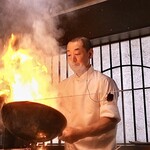
After graduating from the Osaka Culinary School, Chef Kobayashi worked there as an instructor for eight years. He honed his skills at various renowned Chinese restaurants, including "Takuro Sanbo" in Kichijoji, before opening "Oda-machi Momo-no-Ki" in Minato-ku in 2005. In 2020, he renamed the restaurant to "Akizaka Momo-no-Ki" and moved to the Tokyo Garden Terrace Kioicho. In 2023, he left the restaurant and assumed the role of chef at "KOBAYASHI" on June 6, 2024. His cuisine has significantly evolved since the Momo-no-Ki days, with some dishes being highly advanced. His fried potato dish, in particular, is for the discerning palate. Several dishes are prepared right in front of you by Chef Kobayashi, giving you a cooking show experience.
This year, a remarkable restaurant has opened where you can enjoy Chinese dishes unlike any you've had before.
**Here are some of the dishes we enjoyed:**
- **Shanghai Crab Spring Rolls**: Filled with Shanghai crab, Hokkaido hair crab, and Kagoshima shrimp, these spring rolls have a crispy texture and a delightful aroma of shellfish. Chef Kobayashi’s spring rolls are truly a dish to savor through your nose.
- **Marinated Botan Shrimp in Shaoxing Wine / Caviar Green Salad**: This dish features a spoonful of sushi rice with Hong Kong red vinegar, topped with Hokkaido sea urchin and salmon roe, a salad made with basil, crispy wontons, and avocado, adorned with caviar and a truffle onion sauce on cucumbers. The precision of the knife cuts is astonishing.
- **Assorted Appetizers**: Includes an instant smoked "Yodare Gai" (mouth-watering chicken). When the lid is lifted, a fragrant smoke wafts up, and the sauce is incredibly delicious. The chicken is "Akabira Hiwodori" from Hokkaido, cut into precise 1mm cubes, intensifying both aroma and mouthfeel.
- **KOBAYASHI Special XO Sauce ULTRAstyle**: Deep-fried sweet-scalloped fish with a chef-prepared sauce right in front of you. Unlike typical sesame oil, Chef Kobayashi uses chili oil for a lighter touch. The fish is fried with a delicate coating of strong flour, producing visually appealing pieces that snap crisply with flavor.
- **Fried Shredded Potatoes**: The potatoes are cut uniformly and stir-fried to maintain a crunchy texture without starching. It’s a surprisingly challenging dish that embodies Chef Kobayashi's skill set.
- **Stewed Shanghai Crab and Tofu**: Utilizing the crab's roe and internal organs for a rich texture and color, this dish offers deep flavor without overpowering seasoning.
- **Chicken Wing with Shark Fin and Ginkgo**: Finished with 15-year-old Shaoxing wine, this dish includes shark fin and ginkgo inside the tender chicken wing.
- **The KOBAYASHI and NUMAMOTO collaboration**: Featuring Yamaguchi Prefecture's "Takamori Wagyu" with Matsutake mushrooms, using the specialized cutting technique of meat specialist Noraki Numamoto, resulting in an incredible flavor.
- **Chicken Noodle Soup**: This signature dish featuring rich, thick broth is perfect for flavor experiments with pepper or white truffle oil.
- **Egg Fried Rice**: Delivering an incredible aroma and fluffy texture, this egg fried rice is uniquely delicious, resting in the fridge overnight helps achieve moistness.
- **Dried Scallop Fried Rice**: Enhanced with umami from dried scallops.
- **Traditional Almond Tofu**: Made by grinding apricot kernels and finishing with cream, boasting an elegant aroma.
- **Mango Pudding**: A recreation of the mango pudding made at the Peninsula in Hong Kong 30 years ago.
- **Fresh Mooncake**: Filled with matcha and coconut powder.
The total bill came to approximately 84,700 yen per person. The fusion of evolution and deepening of flavors in Chef Kobayashi's "New Chinese Cuisine" is simply overwhelming. His culinary mastery embodies the essence of "KOBAYASHI," offering an entirely new experience of Chinese cuisine. Thank you for the meal!

SUMIREN
4.80
I visited a highly rumored special dinner that might earn a Michelin star in Roppongi Ichome! Even though I had a reservation, I got lost on the way and just barely arrived three minutes before the event started! To my surprise, in the cold, a staff member was waiting for me outside! The hospitality was amazing right from the beginning! Once I entered the restaurant, another staff member guided me to my seat at the counter for a course called Ultra K, which is an evolved style of Chinese cuisine! There are five private rooms where guests can enjoy the traditional KOBAYASHI course, so different experiences are available depending on whether you're in a private room or at the counter.
Anyway, I was relieved to be seated, and the course began! First, I enjoyed a welcome drink of Taiwanese oolong tea, and I could snack on caramelized mixed nuts whenever I wanted during the meal.
★ Shanghai crab spring roll: The flavor of the crab exploded in my mouth, with the skin tightly wrapped around it to enhance the deliciousness of the crab meat! What a surprise from the very first dish!
★ Hong Kong-style red vinegar sushi rice with salmon roe.
★ Caviar green salad: Hokkaido sea urchin and salmon roe provided a sweet and popping texture! The mashed mushrooms with truffle and green onion sauce were so delicious! The salad had caviar, green tomatoes, avocado, and thin rice noodles underneath, tasting reminiscent of pesto pasta in a completely new sensation!
★ Assorted appetizers:
- Shanghai-style spicy chicken: The moment I opened the lid, the smoky aroma was amazing, with plenty of nuts that paired excellently as a snack with drinks!
- Sweetfish with oil drizzle: The skin was so crispy, and the tender flesh left me particularly impressed! The sauce was also delicious, and I found myself wanting to pour it over rice while enjoying it as a drink!
- Hokkaido conch: I love conch! I forgot what the jelly on top was, but it was tasty!
★ KOBAYASHI special XO sauce ULTRAstyle: A delightful Chinese-style seafood dish with shrimp, scallops, and fish maw! The XO sauce is made by hand-flaking dried scallops, packing in an intense umami that makes for a perfect pairing with drinks!
★ Shredded potato stir-fry: I got to watch it being made right in front of me! After boiling the 1.5mm cubes of potatoes, they were stir-fried! The texture was incredibly crunchy, and it was just a simple, yet delicious salt stir-fry—so good that I want to eat it every day! The chef's artistry created a simple dish that amazed me with its deliciousness!
★ Braised Shanghai crab with tofu: A thickened sauce featuring the flavors of crab and shrimp, this was genuinely addictive!
★ Chicken wings: Sprayed with 20-year-old Shaoxing wine for finishing! Stuffed with shark fin and ginkgo, the skin was crisp while the meat remained tender—a perfect and harmonious balance! The smoky aroma from the Shaoxing wine was delightful, served with lily root and green beans!
★ KOBAYASHI and NUMAMOTO: Matsutake mushrooms from Iwate Prefecture and rich meat dishes! Both had a great texture and felt very special. I felt like having red wine with it!
★ Chicken soba: A rich soup that takes two days to prepare! The firm noodles were just to my liking, and I enjoyed various flavors with truffle oil, black pepper, and white pepper. I knew it was too salty, but the soup was so good that I wanted to drink every last drop! The truffle oil added to the amazing experience.
★ Fried rice: This wasn’t part of the plan, but a chef made it for me after a fellow diner shared their impressive experience with it! A simple dish with dried scallops, green onions, and egg—every bite burst with the flavor of dried scallops! I had never tasted fried rice where the egg was so subtle yet present!
★ Mango pudding: This thick pudding tasted just like mango, so rich that I wished I could take an entire box home. Even when I was full, I wanted more!
★ Fresh mooncake: Matcha and coconut: I thought the two strong flavors might not work well together, but they surprisingly complemented each other perfectly!
★ After-drink: Alishan black tea.
Despite being a substantial course meal, everything was exquisite. I got to see the chef preparing the dishes several times, and the staff showed remarkable hospitality, confidently answering guests' questions about the food and materials. It was a truly impressive and happy dining experience! This place is perfect for a special day, to delight someone important, and to spend precious moments together! It was genuinely delicious—thank you for the meal!

あるぱかーん
4.30
I heard rumors about an amazing restaurant that just opened in Roppongi, and as a food lover, I couldn't resist making a reservation. Apparently, the chef who used to work at the famous "Akasa Momo no Ki" has gone independent. It's an experience I couldn't pass up. The restaurant is tucked away in a calm area. Upon arrival at my reservation time, two staff members greeted me warmly. The VIP treatment made me feel a bit guilty, though. The interior was dimly lit and exuded luxury. In addition to the counter seating, there are five private rooms offering different dishes. The private rooms serve Chef Kobayashi's previous creations, while the counter offers new Chinese cuisine. This time, I decided to enjoy the counter experience, and the staff provided attentive service, giving detailed explanations about the dishes and ingredients. It was a delight to watch Chef Kobayashi cook right in front of me, adding to the lively atmosphere. After all, the ambiance is crucial when enjoying food.
▶︎Ordered Items
- Seasonal Omakase 38,500 yen (service fee additional) and some drinks.
○ Pre-meal drink: It had a very pleasant taste.
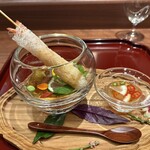
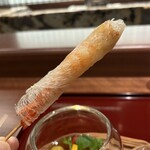
○ Amuse-bouche: The chef prepared shrimp spring rolls in front of me using red rice paper. The skin was incredibly crispy and delightful. Besides shrimp, they included Shanghai crab and hairy crab, all cooked perfectly. The sweet and sour sauce was refreshing, and beneath the spring rolls was a herbal jelly.
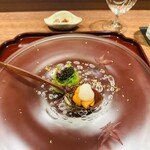
○ Bottled shrimp marinated in Shaoxing wine with Hong Kong red vinegar sushi rice: Enjoyed as a single bite, the flavorful shrimp with a delightful texture was mesmerizing. The green item at the back was a green salad that was fluffy, rich, and creamy, with a lovely crunchy texture from the jelly noodles. Both were exquisitely delicious.
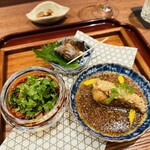
○ Assorted appetizers: Shanghai-style cold spicy chicken, sweetfish with oil-drenched sauce, and fermented chili stir-fry. The sweetfish had a crispy scale, and the sauce's ingredients were meticulously chopped. It’s impressive to think this was all done by hand! Each of the three dishes had a unique twist and were interesting.
○ Dumplings: The chef plated them right in front of me. They were all homemade. The dough was thicker and chewy, with a crispy bottom that had a strong wheat aroma. The filling was meat-heavy and didn't include garlic or ginger, perhaps to avoid flavor fatigue? They were delicious, especially with the homemade chili oil and black vinegar. I ended up ordering two extra dumplings without hesitation – I wanted more, but I restrained myself from ordering more out of embarrassment.
○ KOBAYASHI special XO sauce ultrastyle: Served in a cocotte with crispy deep-fried shrimp and plenty of vegetables. It had an aji-jo like quality and was very hot. The shrimp were also perfectly cooked, and I was surprised by how many there were. Depending on the day, abalones might be used as well. The special XO sauce packed with umami was delightful, and they even provided extra XO sauce for indulgence. I soaked the leftover oil with a fried bread.
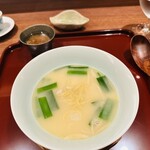
○ Soup: A richly flavored and aromatic broth. It had a refreshing quality and fullness, finished with finely chopped aged Jinhua ham.
○ Stir-fried Taiwanese A-choy with dried meat: Huh? A-choy? This was my first time trying it! It was very crispy with a pleasing texture. The dried meat added depth to the dish, and paired with the vegetables, the simple seasoning was just right.
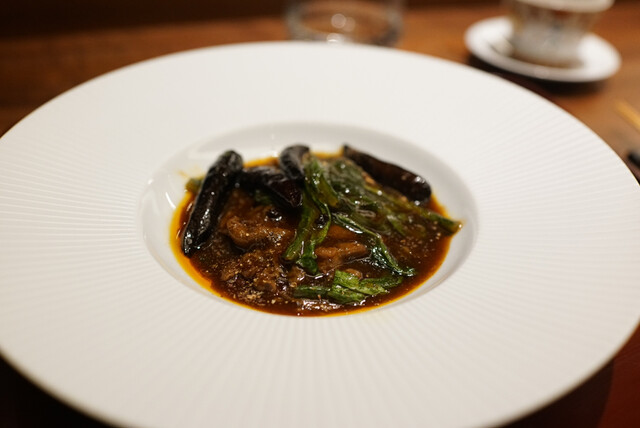
○ KOBAYASHI and NUMAMOTO Takamori Wagyu steak with doubanjiang sauce: NUMAMOTO refers to the butcher who cuts the beef. This was from the shin muscle section, moist and juicy with deep flavor. The sauce had a slightly salty and unique character.
○ Chicken Soba: Full of collagen and rich in chicken flavor, the broth had no undesirable odor. Even someone who dislikes strong chicken smells like I do found it drinkable at lightning speed! When drizzled with truffle oil, it changed entirely. The noodles were said to be from Hasuzume, slightly firm and very delicious, worthy of comparison to specialty shops.
○ Fried rice with dried scallops: I ordered a large portion. It included dried scallops, green onions, and eggs. A simple yet delightful fried rice.
○ Authentic almond tofu: This was delicious; it had a pleasant texture, wonderful aroma, and smooth flavor. It was mild and delectable.
○ Petit fours: Mooncakes with matcha, coconut, and candied winter melon. As a fan of wagashi (Japanese sweets), this was a delightful surprise. The rumored deliciousness was spot on.
The restaurant places great importance on ingredients, with each dish showcasing its uniqueness. At the end, Chef Kobayashi personally thanked us, and all the staff were friendly, making the time fly by. It was a great learning experience. Thank you! I highly recommend this place to other food enthusiasts. Thank you for the meal!

貴族猫ー
4.70
Nestled in a quiet back alley in Roppongi, "KOBAYASHI" is the latest venture of Chef Takeshi Kobayashi, who has been shining with stars in the Michelin Guide Tokyo since its inception at "Momonoki." I visited the restaurant alone on a weekday at 5:30 PM. While in a private room, you can enjoy signature dishes from the "Momonoki" era and a Shanghai crab course, but this time my goal was the counter-exclusive "ULTRA K" course, which respects tradition while exploring new possibilities in Chinese cuisine.
The "ULTRA K" course is priced at 38,500 yen and starts with Wenshan Baozhong tea, a low-fermentation Taiwanese Oolong tea with a floral and sweet aroma extracted overnight.
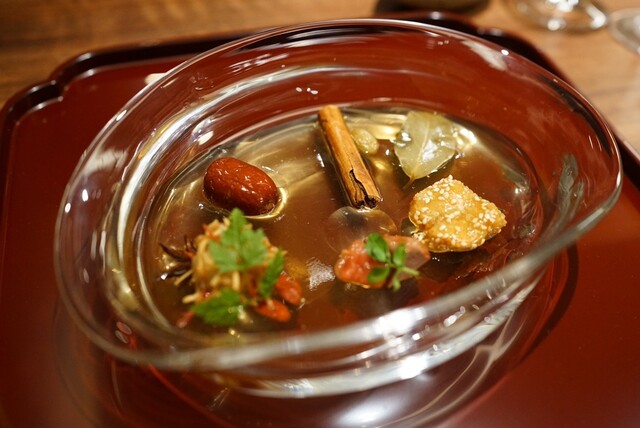
- **Amuse**: Crispy rice paper spring rolls filled with shrimp and a paste of hairy crab and Shanghai crab, served with a Vietnamese-style sweet and sour sauce. At the bottom of the plate, there is a herbal jelly made from dates, goji berries, dried grapes, star anise, and amaretto, lending natural sweetness.
- **Candied Mixed Nuts**: A nice palate cleanser.
- **Assorted Appetizers**: Fried sweetfish from Yamaguchi Prefecture with Yulin sauce; stir-fried squid from Nagasaki Prefecture with fermented chili; and my previously expressed love for cilantro was remembered, so I was given extra cilantro.
- **Dumplings**: The mochi-like skin was crispy on the bottom, filled with a mixture of pork, cabbage, and Chinese cabbage—made without garlic or ginger to avoid fatigue from flavor; served with black vinegar and homemade chili oil.
- **KOBAYASHI's Special XO Sauce ULTRA style**: Made with dried scallops and Jinhua ham, this moderately spicy condiment enhances umami. The seafood varies daily, and on this day, it was prawns.
- **Soup**: A golden soup full of dried scallops and Jinhua ham, with an indescribable fragrance. The Jinhua ham is finely diced just before serving to ensure the perfect saltiness, served in delicate Jingdezhen porcelain.
- **Stir-Fried A-Cai with Dried Meat**: A-cai resembles romaine lettuce and gets its name from its shape, while the dried meat is made from Mexican pork belly.
- **Collaboration Menu**: Created in collaboration with meat specialist Numa Moto, featuring Takamori Wagyu "makura" fed on Daisekai Saké lees, along with seasonal vegetables in a black bean sauce.
- **Chicken Soba**: A rich chicken soup made over two days, featuring soba noodles from Hashizume Seimen.
- **Fried Rice**: A perfumed fried rice with dried scallops, eggs, onions, and Thai rice.
- **Authentic Almond Jelly**: Made using apricot kernels.
- **Petit Fours**: Fresh mooncakes, a traditional Chinese sweet with a brief history, filled with matcha, coconut, and candied winter melon.
Dining at KOBAYASHI felt like a performance and a cooking class, as Chef Kobayashi personally explained every dish, making it an enjoyable and insightful experience. The wine selection was impressive, with many options that aren't typically available by the glass elsewhere. I opted for a half pairing priced at 16,500 yen, which featured an excellent selection, leaving me completely satisfied. Every member of the staff, including the sommelier and waitstaff, contributed to a professional atmosphere in the space itself.
Thank you for reading to the end! If you're interested, please follow my Instagram account: @516kizokuneko516 for dining experiences, and @kizokuneko0516 for home cooking.
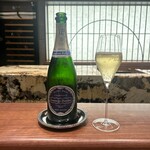

rinchan827
4.50
I visited a Chinese fusion restaurant in Roppongi! It's about a 10-minute walk from Roppongi Station. I hadn't heard of KOBAYASHI before, but I was excited to enjoy the open kitchen experience after hearing about it. Here’s what I had today:
○ Wenshan Baozhong Tea: A refreshing green tea with a rich aroma that is easy for Japanese people to drink.
○ Shrimp Rice Paper Fry with Herbal Jelly: The shrimp rice paper is finely shredded and crispy like kadayif. The texture contrasts nicely with the plump shrimp! The herbal jelly, despite not using sugar, has a rich sweetness from the herbs that feels very healthy.
○ Botan Shrimp Pickled in Shaoxing Wine with Hong Kong Red Vinegar Sushi Rice: The sushi rice is flavored with the botan shrimp essence, making it delicious to eat as one-bite sushi.
○ One-Bite Green Salad: The caviar provides a nice salted flavor, and the various herb aromas make it delightful for both the tongue and nose.
○ Assorted Appetizers:
- Yodare: When I opened the lid, a smoky aroma wafted out. The sauce is mild yet has a nice spiciness, perfect with cilantro!
- Sweetfish with Youlin Sauce: The skin is crispy, and the dipping sauce with finely chopped green onions and chili is incredibly flavorful!
- Kan-saki Squid Stir-Fried with Fermented Chili: The squid is tender and strongly flavored. The chili starts mild but reveals its flavor as you chew, making it enjoyable and healthy!
○ Gyoza: The skin is chewy, and the filling is juicy and tightly packed, reminiscent of a sheng jian bao! The crispy bottom is irresistible. There are no garlic or ginger in it, making it surprisingly light and easy to eat. It’s the best gyoza I've ever had!
○ KOBAYASHI Special XO Sauce ULTRA Style: Abalone and okra are turned into a Chinese-style ajillo and paired with XO sauce afterward. The small bowl uses dried scallops in the XO sauce, which is delicious on its own! The fried bread absorbs the oil perfectly.
○ Clear Soup: A consomme made from various high-quality Chinese ingredients, seasoned with diced Jinhua ham. It’s an exquisite broth that feels like a treat for the stomach!
○ Stir-Fried A-Cai with Dried Meat: The crunch and slight bitterness of the A-cai pair wonderfully with the thinly sliced rich-flavored dried meat.
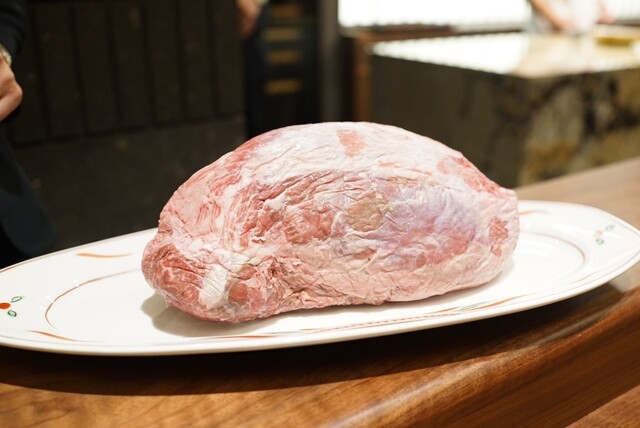
○ KOBAYASHI and NUMAMOTO Wagyu Shoulder Steak: The meat is tender and refreshingly light. Numamoto-san supervises the cattle raising and is a professional butcher. The sauce is Chinese-style, making it delicious but not heavy!
○ Chicken Soba: A rich chicken soup that thickens quickly, with white pepper, black pepper, and white truffle oil for added flavor. The moment the truffle oil is added, the aroma is incredible and pairs perfectly with the soup. It's just too good!
○ Dried Scallop Fried Rice: The ultimate fried rice with an invisible egg coating. You might not get it at first, but it’s cooked in an instant, creating a perfect coating of egg on the rice. The trick to the fluffy rice is using high heat to coat the rice with egg, and the Thai rice is prepared a day in advance to dry out properly. The scallops are finely cut, and the ingredients are diced into 1mm cubes. Making this fried rice involves incredible effort. It’s unbelievably delicious!
○ Authentic Almond Tofu: The rich almond flavor balances perfectly with milk, creating a velvety texture that is simply the best almond tofu I have ever had.
○ Fresh Mooncake: A chewy mooncake with a matcha flavor that was very delicious!
It was a fantastic course! The chef, Kobayashi, has experience as a cooking school teacher, so his explanations during the meal felt like watching an NHK cooking show. The ability to enjoy the aromas and fresh dishes was outstanding! The interior was also elegantly designed, showing attention to detail, which made for a wonderful experience. I had the best time. Thank you for the meal!
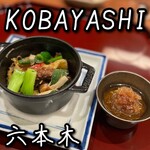


kk7777
3.90
I finally went to try the counter omakase course starting from 38,500 yen, along with a half wine pairing at 16,500 yen. I had been wanting to eat the dried scallop fried rice, so I decided to sit at the counter to see Chef Kobayashi's cooking. Everything was delicious, but the stir-fried Taiwanese A-cai with dried meat and the special XO sauce abalone really left an impression on me. And finally, the dried scallop fried rice was cooked right in front of me. It wasn't your typical fried rice; it felt quite different.

Erena.
4.70
This Chinese restaurant, run by Kobayashi-san, who served as head chef at a Michelin two-star restaurant, has quickly become popular and is now difficult to book ( ;∀;)♡ This time, I visited with my family and some close reviewer friends♡♡♡♡♡
・Wenshan Baozhong Tea: A soothing tea with rich aroma and delightful flavor, made using cold brewing.
・Ume-Kake Mixed Nuts: Sweet plum flesh combined with fragrant nuts.
・Chaghai Jone Rice Paper: A net-like rice paper paired with sweet and sour sauce made from sugar, fish sauce, garlic, and chili. The crispy coating is light and paired beautifully with the plump, juicy shrimp. The herbal jelly underneath is sweet and healthful, adding to the delightful experience.
・Shao Xing Alcohol Marinated Botan Ebi: Meltingly tender botan shrimp paired with mild sea urchin and vinegared rice. The rich avocado and salty caviar combine perfectly with the pasta-like rice noodles, which are chewy and well-textured.
・Appetizer Plate: The "yodare" chicken features succulent meat drizzled in a mildly spicy and sweet oil sauce, paired with crispy cilantro. The delightful mix of nutty flavor and cilantro goes excellently with champagne. The salad made with fresh sea bream is exquisite and pairs wonderfully with the champagne's crispness. The Matsukasa Fried Sweet Bream is also a standout, with a crunchy coating and a flavorful sweet and sour sauce.
・Gyoza: Served with black vinegar soy sauce and ginger slices, these dumplings burst with juiciness. The perfectly chewy skin and flavorful filling (pork, cabbage, and Chinese cabbage) create a refreshing and delicious bite.
・KOBAYASHI & NUMAMOTO XO Sauce: This dish features tender black abalone and vegetables in a Chinese-style ajillo, accompanied by fried bread. The dried shrimp seasoning adds depth, while the aromatic XO sauce and ginger elevate the flavors even more.
・Watermelon Sorbet: A refreshing sorbet bursting with watermelon sweetness.
・Soup with Jinhua Ham: A crystal-clear, superb broth crafted solely with the saltiness of ham—so delicious you'd want to drink it all.
・Taiwan A Leaf and Dried Meat Stir-Fry: A simple, flavorful stir-fry seasoned only with salt, balancing the crunchy texture with the unique bitterness and umami of the ham.
・Yamaguchi Prefecture Takamori Wagyu: This mouth-watering beef is expertly sliced by artisan Numamoto-san. Its strong umami flavor and mild sauce rich with vegetable essence create a delightful dish.
・Braised Local Chicken Soba: This rich soup is made by simmering free-range chicken for days, flavored with white and black pepper and truffle oil. The noodles are perfectly firm, and a touch of white truffle oil enriches the already deep flavors.
・Today's Specialty: Fried Rice with Dried Scallops: This rice is fragrant and delicious, especially when paired with the earlier ramen soup, and highlights the sweetness of the scallops.
・Traditional Almond Tofu: Made with apricot seeds, this authentic almond tofu is soft, wobbly, and not overly sweet—truly delicious.
・Mineral Tea: A comforting and deeply flavored tea.
・Fresh Mooncake: A delightful mooncake with an aromatic coconut flavor.
**Summary**: Every dish was delicious and health-conscious, showcasing a vibrant and beautiful presentation that blended elements from various cuisines. It was thrilling and full of discoveries throughout the meal. The service was excellent, and despite feeling quite full, I was pleasantly surprised to feel light the next day! The flavors were exquisite without a heavy after-feeling, so I definitely plan to visit again! Thank you for the wonderful meal!゚+.ヽ(≧▽≦)ノ.+゚

まる@横浜市
4.80
On this day, I had the pleasure of dining with a wonderful family at a Chinese restaurant we had been wanting to visit. We strolled through Roppongi and were drawn into a charming establishment. We were seated at a large counter, feeling calm and relaxed in the spacious and beautifully designed space.
⭐︎ Cold Brew Oolong Tea
This oolong tea was incredibly smooth and delicious! Just imagining how tasty the upcoming dishes would be was exciting from the moment I had this exquisite drink.
⭐︎ Champagne Bottle & Mixed Nuts with Plum Sauce
We started with a bottle of champagne while snacking on mixed nuts as we awaited the beginning of our course.
⚪︎ Amuse Bouche
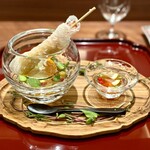
Vietnamese Chả Giò (spring rolls) filled with shrimp and crab, wrapped in rice paper and fried. The plate contained jelly with almost no sugar, delivering a natural sweetness that was delightful! The Chả Giò is served with a dipping sauce made of fish sauce and sweet vinegar—it was a perfect balance of texture and flavor!
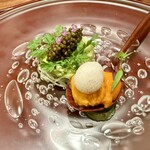
⚪︎ Marinated Botan Shrimp in Shaoxing Wine / Hong Kong Red Vinegar Sushi Rice
Served on a spoon for a one-bite experience, this dish exploded with various umami flavors in my mouth. Accompanied by rice noodles with basil, avocado, and caviar, it was not just a palate cleanser but a delicious dish in itself. I couldn’t help but smile.
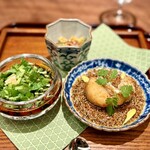
⚪︎ Assorted Appetizers
- "You Zha Ji" chicken with oil-and-vinegar sauce
- Salad with Akashi's sea bream
- Sweetfish deep-fried with pine nuts
Each dish, enhanced with cilantro and nuts, paired wonderfully with the sweet champagne.
⚪︎ Dumplings
The chef prepared them right before my eyes, and the aroma was mouthwatering! As we enjoyed the champagne, we quickly finished one bottle and ordered another (laughs). The dumplings had handmade, chewy skins filled with pork, cabbage, and Chinese cabbage—crispy on the outside but chewy on the inside! The dipping chili oil and ponzu were delightful as well. I could have had more, but I held back and only ordered one additional dumpling.
⭐︎ Champagne Bottle
⚪︎ KOBAYASHI Special XO Sauce
An ahijo made with black abalone from Akita and vegetables from Ishikawa. Dried scallops and Jinhua ham added depth to the flavor. Pairing it with fried bread made me incredibly happy; the XO sauce was the best I’ve ever had!
⚪︎ Sorbet
Watermelon sorbet. I was shown an impressively large watermelon, and the sorbet tasted just like a rich watermelon!
⚪︎ Ting Tang (Supreme Soup)
This means "the best soup." It’s a Chinese consommé made with pork and chicken, with delicious aged Jinhua ham (cut into 1.5mm cubes) included. Served in a Jingdezhen dish, it felt like experiencing 4,000 years of history and flavor depth.
⚪︎ Stir-Fried A Choy with Dried Meat
Crisp A choy stir-fried with Mexican dried meat, absorbing its delightful flavor. Although just seasoned with salt, it was my favorite A choy dish ever!
⚪︎ KOBAYASHI & NUMAMOTO
Wagyu beef zabuton from Takamori, Yamaguchi, served with Chinese fermented black bean sauce. The sauce contained yellow zucchini and Manganji peppers. Cut by meat specialist Kenmei Numamoto, the balance between the meat's umami and the sauce's flavor was superb.
⚪︎ Chicken Soba
Braised chicken noodle soup with a wonderfully rich white broth! Seasonings included white and black pepper and truffle oil. Adding pepper made it spicy, while the truffle oil turned it into something indescribably delicious.
⚪︎ Today's Special Fried Rice with Dried Scallops
Fried rice made with scallions, dried scallops, and eggs, prepared right in front of me. Eating it, I found it fluffy and chewy—absolutely superb! The umami from the dried scallops was intense. I also mixed in the soup from the earlier chicken soba, and it made me incredibly happy.
⚪︎ Authentic Almond Tofu
Made with seeds from apricot kernels, this almond tofu was slightly sweet and incredibly delicious as it melted in my mouth.
⚪︎ High Mountain Tea
Refreshing and aromatic, it brought a sense of calm.
⚪︎ Petit Fours
Sweet mooncakes. They truly looked like mooncakes and were delightful, with a fusion of coconut and matcha flavors.
This innovative Chinese cuisine course, aptly named ULTRA-K, was magnificent from start to finish, continuously surprising and delighting me. The attention to detail in the sizing of ingredients like ham and dried scallops was remarkable. I look forward to trying different dishes in a private dining room next time. Thank you very much, and I hope to come back soon!

youyo911
4.00
The restaurant, Akasaka Momo no Ki, has been awarded Michelin stars continuously for 16 years, and Chef Takeshi Kobayashi, who served as the long-time executive chef, has now opened his own establishment. The restaurant is located underground in a somewhat secluded area of Roppongi, but the interior is incredibly luxurious and well-staffed. There are two people outside to greet guests, two inside, and three behind the counter. The layout includes a counter and private rooms. The counter features a new style of Chinese cuisine from Chef Kobayashi, while the private rooms serve à la carte dishes or meals based on guest orders.
One of the amuse-bouche items is deep-fried shrimp wrapped in rice paper and a mixture of hairy crab. The foundation of the cuisine is Vietnamese, created with a perspective that aligns Vietnamese food with cuisine from southern China. The shrimp tempura is light and crispy, perfectly cooked—potentially even better than what you might find at a traditional tempura restaurant. This is surely Michelin-quality.
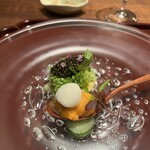
Another highlight is the marinated botan shrimp in Shaoxing wine and vinegar rice made with Hong Kong red vinegar. Topped with Hokkaido sea urchin, it is served on a wooden spoon for a single bite. The initial flavor of the sea urchin, combined with the sweetness of the botan shrimp, creates a deep and complex taste in your mouth. It’s hard to find words to describe it—just exquisite. The accompanying salad, topped with caviar, offers a wonderful freshness and rich flavor.
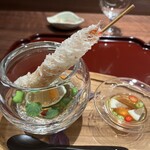
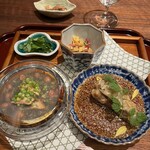
For the appetizer assortment, there’s a Yodare chicken garnished with a momentarily smoked oil, a salad featuring Akashi sea bream, and deep-fried sweet seabass with crispy scales. All three are outstanding and could easily serve as main dishes. The Yodare chicken has a perfect oil and vinegar sauce that balances sweet and spicy notes, reminiscent of the depth of Chinese culinary history. The sea bream salad comprises sashimi that is plump and integrates well with the sauce, while the sweet seabass's crispy scales release its flavor as you eat.
Gyoza is made right in front of you in a large iron skillet, utilizing a significant amount of oil to create a beautifully charred base that enhances its aroma and taste. This particular gyoza is made solely from pork and cabbage, without any garlic. It’s the most delicious gyoza I’ve ever had, distinctly different from any other—like it belongs in another dimension. The flour used for the wrappers is not store-bought, contributing to its exceptional quality. I even savored the wrapper alone, and it was exquisite. Additional servings of gyoza are available, but I refrained as I’m not a big eater.
Then there’s the KOBAYASHI special XO sauce, served with Akita black abalone and vegetables. The abalone is 250g and has a light, refreshing flavor topped with non-spicy XO sauce. As you chew, the essence of the abalone unfolds in your mouth.
The dish concludes with a sorbet made from Chiba watermelon, and a Chinese-style consomme soup made from pork and chicken. It features finely diced Jinhua ham and is served in exquisite Jingdezhen ceramics.
Another dish is a stir-fry with Taiwan A vegetable and dried meat, where pork belly has been marinated in Shaoxing wine for two weeks. Combining the vegetable and dried meat softens the dried meat's stronger flavor, resulting in a pleasantly aromatic, slightly spicy dish.
For the KOBAYASHI and NUMAMOTO dish, we had steak made from Takamori Wagyu from Yamaguchi Prefecture. NUMAMOTO refers to the cut specialists who usually divide beef into about 40 parts, but here they divide it into over 100. The sirloin is chewy yet tender, with a slight marbling that lends sweetness.
Next was the chicken soba with boiled chicken, seasoned with white and black pepper and truffle oil. The collagen-rich broth pairs perfectly with the thin noodles. The truffle oil enhances the broth’s flavor nicely.
The specialty of the day is fried rice using dried scallops, Thai rice, and chopped green onions. As soon as you take a bite, the flavors of the scallops and onions burst forth without any oily taste or scent. It’s the ultimate in light, fluffy fried rice. Initially, I thought it might need more salt, but as I ate, the flavor of the dried scallops balanced it out perfectly.
Finally, the restaurant serves traditional almond tofu, made using classic techniques. Opened in June 2024, this establishment showcases Chef Kobayashi’s dedication and expertise, ensuring a Michelin-worthy experience. While I’m unsure about this year's evaluation, it’s likely that the restaurant will earn a Michelin star next year.
Importantly, while the counter serves the new Kobayashi-style Chinese cuisine, the private rooms can cater to guests' preferences, whether focusing on vegetables, meats, or other preferences in their à la carte offerings. The private rooms include five spaces ranging from small (for two people) to larger ones; solo dining is also welcomed.
Pricing is on the higher end, comparable to a three-star French restaurant. The menu changes every three months, with a new one expected in November. Perhaps we will see the next renewal in January.

buska
3.40
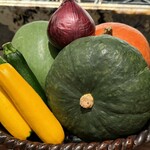
The food consisted mostly of rare items, and the explanations for the way to eat them and the ingredients were perfect, along with the service. However, considering the location and possibly the number of staff, the price of the dishes felt like only about a third of what I paid. The drinks were also on the expensive side; if they were reasonably priced, I would definitely consider returning, but it's a bit tough at this price point. Additionally, there wasn't my favorite sweet potato shochu to go with the Chinese food, which was a disappointment.

グルメマニア男2020
4.60
I had the pleasure of visiting KOBAYASHI, a highly anticipated counter-style Chinese restaurant located in Roppongi! As everyone knows, it’s run by Chef Kobayashi, a giant in the Chinese cuisine world and a former chef at Akasaka Momonoki. From the counter, you can enjoy a live cooking show as you watch Chef Kobayashi prepare his dishes. In the private rooms, you can sample dishes from his Akasaka Momonoki days or even request special dishes. I was invited by a regular from the Momonoki days to join them on this occasion, and I'm grateful for the rare opportunity!
Chef Kobayashi offers an impressive array of original dishes that break away from traditional boundaries. Aiming to maximize the quality of the ingredients, he generally doesn't use essential Chinese seasonings like ginger and garlic. It’s a serious, one-shot game for him, with no room for deception! The gyoza without garlic, green onions, or ginger, the chicken soba to finish, the fried rice with dried scallops, and the authentic almond jelly were all incredibly delicious! His skills, backed by years of experience, truly shine.
Being able to watch Chef Kobayashi present and prepare the dishes right in front of you is a real highlight of dining at the counter. I definitely want to visit again! Thank you for the wonderful meal!

ZDM1000R
4.30
At KOBAYASHI, a Chinese restaurant recently opened in Roppongi by Yoshitake Kobayashi, who earned a Michelin star at Ota Town's Momo no Ki, you can experience “Chinese cuisine that brings out the natural flavors of the ingredients.” Although the restaurant has only been open for two months since its launch on March 28, it feels poised to join the ranks of prestigious establishments.
I arrived ten minutes early and was kindly allowed to enter. The restaurant features 8 counter seats and 5 private rooms. I opted for the SPECIAL K (counter seats) priced at ¥38,500, plus a half pairing at ¥16,500, totaling ¥55,000.
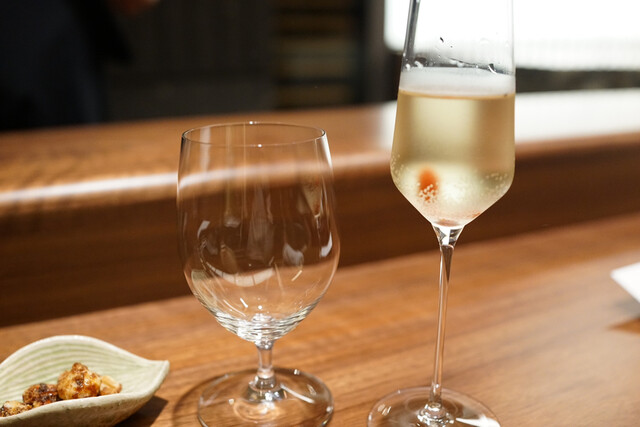
Upon arrival, I was welcomed with Taiwanese Wenshan Paochung tea and water from Mount Fuji. The first champagne served was Laurent-Perrier Ultra Brut, paired with candied mixed nuts.
Next was an amuse-bouche—a Vietnamese-style rice paper spring roll and herbal jelly. The wine pairing for the amuse was Domaine Barmès Buecher Gewürztraminer Alsace Grand Cru 2019.
The appetizer platter featured Hong Kong-style vinegar rice, sea urchin, berry salad, fried wontons, avocado with caviar, and Awa-odori chicken "yodare" chicken with finely chopped onions and chili. This course was paired with Bourgogne Passetoutgrain 2018.
I also ordered extra gyoza, made with vegetables from Ishikawa Takano Farm, which was complemented by KENZO ESTATE's yui 2023, while KOBAYASHI’s signature XO sauce was served with Akita black abalone, red vinegar cocotte, and sautéed Wan-gaki chili pepper in an ajillo style. A refreshing sorbet made from Tomitake watermelon followed.
Then we enjoyed a soup presented in fine Jingdezhen porcelain, made with Chinese ham and consommé, paired with Domaine Chantal Lescure Les Picotins Savigny-lès-Beaune 2019.
For the next course, we had stir-fried Taiwanese A-cai with dried meat, which included Taiwanese A-cai and pork from Mexico. This dish was paired with Anthony Palais Saint-Joseph/420 Nuits 2020.
The next dish was KOBAYASHI’s special wagyu beef from Takamori in Yamaguchi, with Wan-gaki chili pepper, shiitake mushrooms, and Takano daikon. Following that, the famous “chicken soba”—which Kobayashi has been perfecting for 20 years and has become a highly requested item—was served with white truffle oil and a mix of white and black pepper. Compared to other well-known chicken soba places in Roppongi, this was on another level of deliciousness.
Next came the special fried rice featuring dried scallops, showcasing masterful slicing techniques with scallops cut into pieces of 10mm by 2mm and 1mm cubes of green onion. This was simply paired with rice and beaten eggs. It was fascinating to combine the XO sauce and chicken soba soup to create various flavors.
For dessert, we had formal almond tofu, which used apricot kernels, delivering incredible flavor and taste. The petit fours included KOBAYASHI’s mooncakes, made with matcha and winter melon finely chopped into 1mm cubes and wrapped in mochi for a remarkable texture.
To get to the restaurant, I took the Toei Bus and got off at "Roppongi 4-chome Bus Stop," which is about a 5-minute walk. Although the entrance is on the first floor, the restaurant is located underground. An attendant guided me downstairs through the corridor to the 8 counter seats. There were surprisingly many staff members, and I realized this was because there were also customers in the 5 private rooms behind the counter.
Throughout the meal, Yoshitake Kobayashi would appear to personally prepare spring rolls, gyoza, chicken soba, and fried rice in front of us. The restaurant offers a balance of classic dishes while incorporating innovative elements, showcasing the interesting possibilities within Chinese cuisine without being limited to just spiciness or typical local styles.
Curious about how well wine pairs with Chinese cuisine, I opted for the half pairing, and the sommelier selected wines that complemented each dish beautifully. Surprisingly, despite the hefty price, it was filling without causing any discomfort, and I was thoroughly satisfied with the entire experience.

どくだみちゃん
4.50
I heard that Chef Takashi Kobayashi, who launched the Michelin one-star restaurant "Momo no Ki," has opened a new restaurant after becoming independent, and I was looking forward to visiting. The reservation was made through OMAKASE. The location is in Roppongi Ichome, in a quiet area away from the hustle and bustle of Roppongi, in a building basement. The interior is expansive and luxurious, featuring counter seats and several private rooms. In the private rooms, dishes reflecting the history of Momo no Ki are served, while the counter seats are named "Ultra K," offering the new Kobayashi-style Chinese cuisine.
I opted for the Omakase course at the counter for 38,500 yen.
◆ Taiwanese fermented tea, Wenshan Baozhong tea, extracted overnight in water.
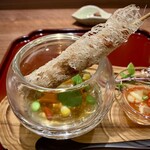
◆ Amuse-bouche: A fried shrimp dish using Vietnamese rice paper accompanied by a sweet and sour chili, lemon, and garlic sauce. Served alongside was a herbal jelly made from dates, goji berries, star anise, and dried grapes, highlighting the natural sweetness of the ingredients.
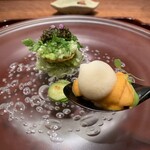
◆ Bottled shrimp marinated in Shaoxing wine, served on a bite-sized sushi rice ball made with Hong Kong red vinegar, topped with Hokkaido sea urchin and caviar. Accompanied by fried vermicelli, fried wontons, avocado, and green herb paste as a one-bite salad with basil sauce, alongside cucumber seasoned with shrimp paste.
◆ Assorted appetizers: Shanghai-style "mouthwatering chicken" with a momentary smoking, cilantro, mild mala sauce, and red radish. Yamaguchi prefecture's red sweet sea bream with oil-roasted chicken sauce and finely chopped scallions. A Chinese-style salad with fresh sea bream from Akashi, incorporating sesame and fried wontons.
◆ Gyoza: Chef Kobayashi personally makes the gyoza, which features thick, homemade dough that is crispy on the bottom. The filling is simple, made with cabbage, pork, and seasoning. Served with a dipping sauce of ginger-infused black vinegar and homemade chili oil, they are juicy and flavorful.
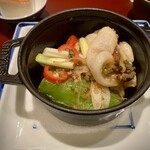
◆ Special KOBAYASHI XO sauce ULTRA style: Sliced Akita black abalone, Noto lotus root, and green beans prepared in an ajillo style, served with fried bread and generous portions of homemade XO sauce.
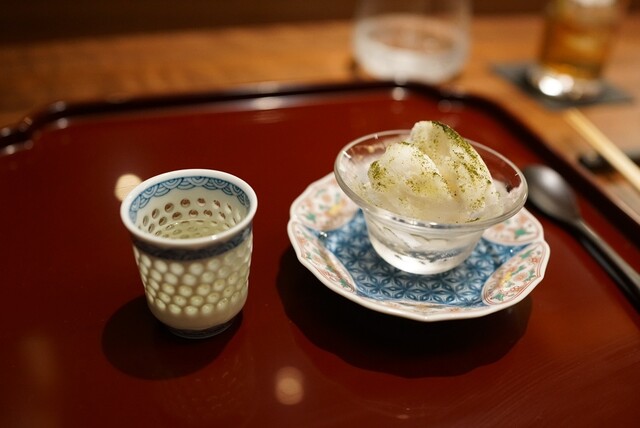
◆ Watermelon sorbet: A refreshing blend of watermelon juice from Tomi city and Wenshan Baozhong tea to cleanse the palate.
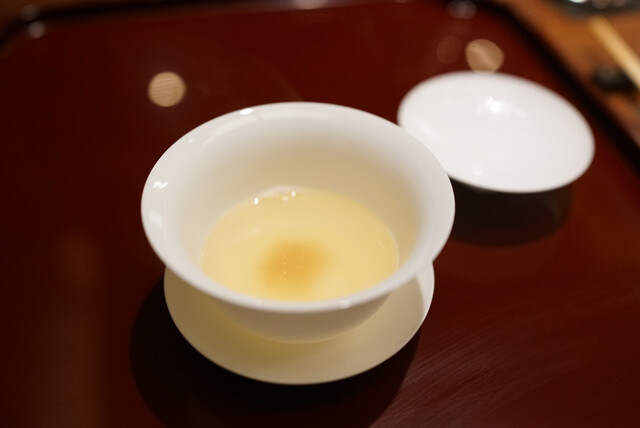
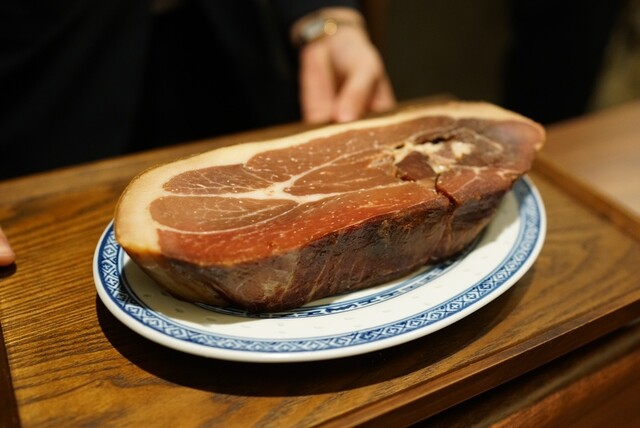
◆ Clear soup: Chicken and pork broth accented with 1mm cuts of 8-year-aged Jinhua ham. An elegant, golden soup.
◆ Stir-fried A-choy and dried meat: Pork belly from Mexico marinated in Shaoxing wine and dried meat.
◆ KOBAYASHI & NUMAMOTO: Takamori wagyu steak with fermented black bean sauce, accompanied by togarashi, Kyo's Manshu chili pepper, Nagano zucchini, and arugula. This was the only richly flavored dish in the course.
◆ Stewed chicken noodles: A collagen-rich broth made by simmering chicken and pork for six hours, served with straight, thin noodles from Shidume. Enhanced with white truffle oil, white pepper, and black pepper.
◆ Scallop and green onion fried rice: Using 24g of dried scallops per serving. Staff members take 40 minutes to hand-shred them. The finely chopped green onions add lightness to the fried rice.
◆ Authentic almond tofu: Made by grinding apricot kernels and combining them with cream and milk.
◆ Fresh lunar cake: A just-made, chewy lunar cake with a mochi skin.
◆ Taiwanese black tea: Overall, the flavors are light and gentle, defying typical Chinese cuisine. The early part of the course features several innovative, ethnic-inspired dishes, while as the meal progresses, substantial Chinese dishes including Chef Kobayashi's specialties from Momo no Ki are incorporated, demonstrating a dynamic course structure.
The fried shrimp wrapped in rice paper was paired with a Thai-style sweet and sour sauce, and the herbal jelly that highlighted the ingredients' natural sweetness was visually stunning. The meal started with exciting dishes that made me wonder, "What will come next?" The playful spirit continued with the generous slicing of large black abalone served in an ajillo style. Watching Chef Kobayashi's lively performance was impressive, especially as he prepared the fried rice right in front of us, exuding the scent from the omelet and achieving perfectly fluffy rice. The combination of finely chopped green onions and carefully shredded dried scallops created aromatic fried rice.
Though the gyoza and fried rice appear simple, they exemplify an unparalleled originality that one can only experience here. This course allowed me to fully enjoy the "ultimate Kobayashi chef’s cuisine," which is Chinese yet distinctively innovative. I highly recommend the counter seats for experiencing the ne plus ultra of Chef Kobayashi's dishes.
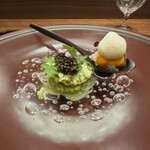
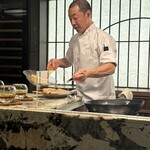
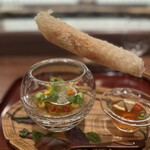
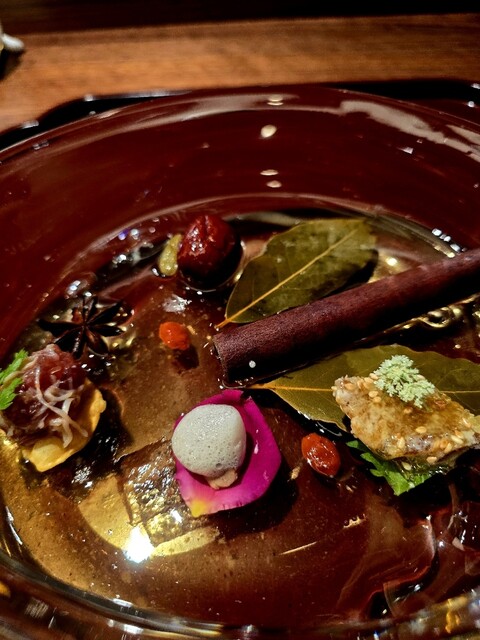
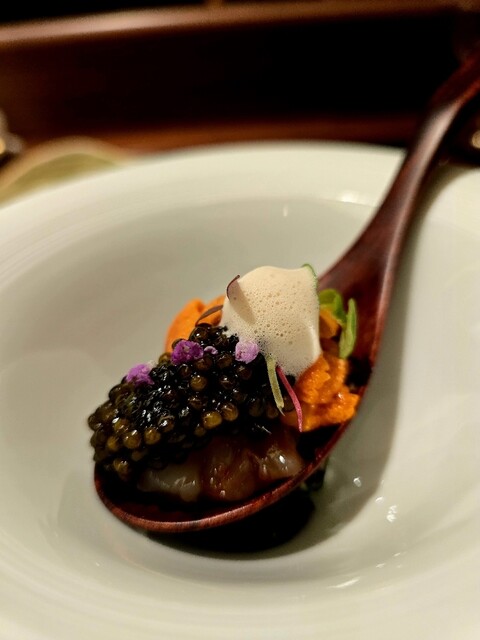
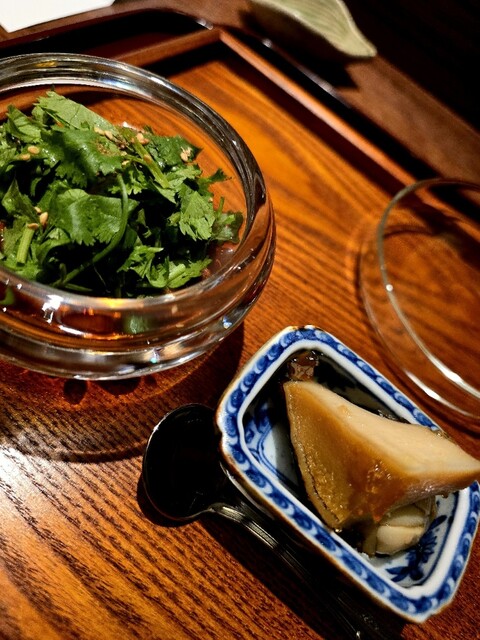
Email Login