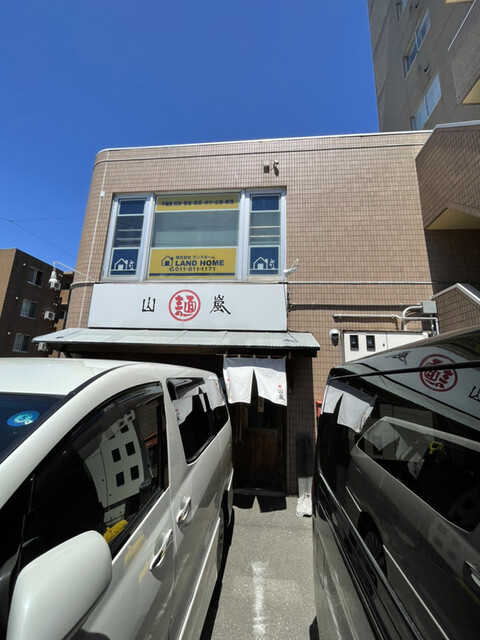
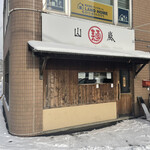
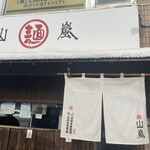
山嵐 本店
Yamaarashi ◆ やまあらし
3.61
Toyohira-ku Sapporo
「Ramen」
1,000-1,999円
1,000-1,999円
Opening hours: 11:30-16:0017:00-21:00 Open Sundays
Rest time: Monday
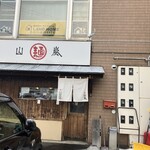
北海道札幌市豊平区平岸一条9-6-1
Photos
(20)
Details
Reservation Info
No Reservations
Children
child-friendly
Payment Method
No credit cards
Electronic money is not accepted
Restaurant Service Fee
nashi (Pyrus pyrifolia, esp. var. culta)
This fee is charged by the restaurant, not related to our platform
Number of Seats
12 seats
(8 seats at counter, 4 x 1 table)
Private Dining Rooms
None
Smoking and Non-Smoking
No smoking Smoking area outside
Parking
Yes
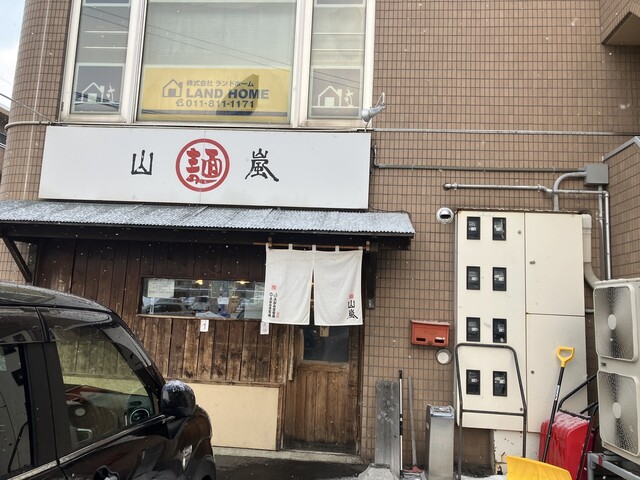
7 cars next to the front of the store
Facilities
Counter seats available
Comments
(21)

くい吉
4.70
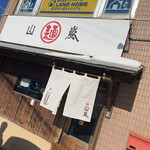
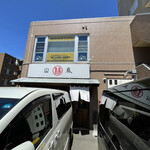
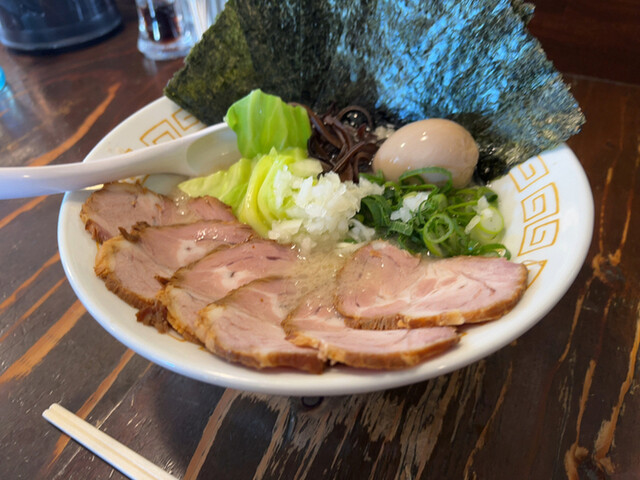
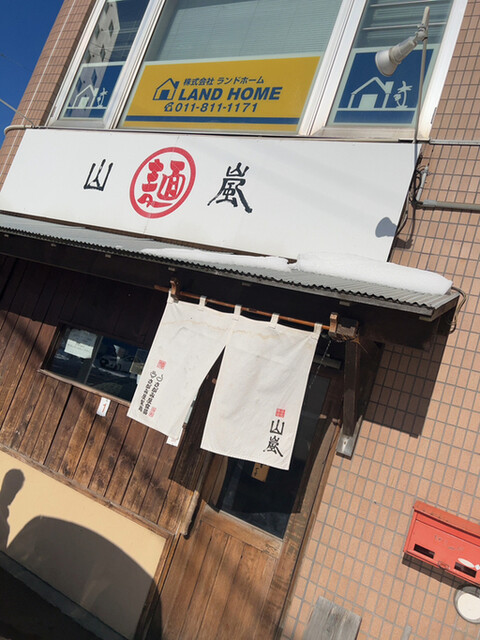
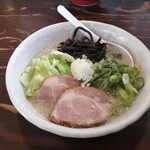
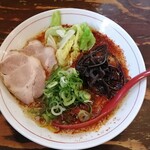
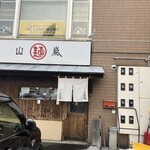
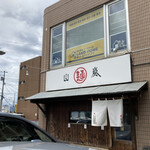
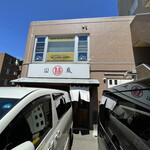
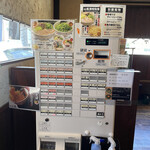
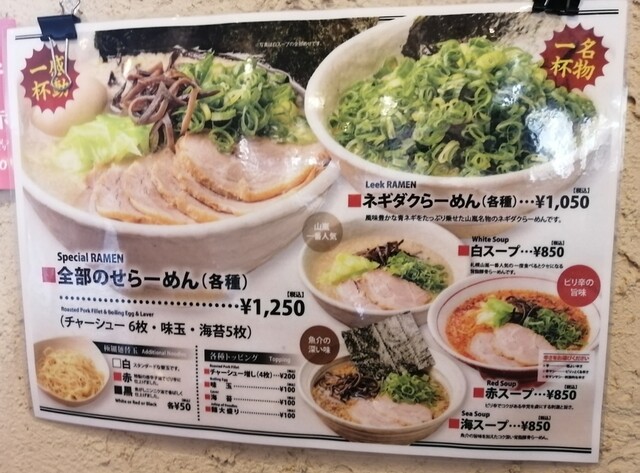
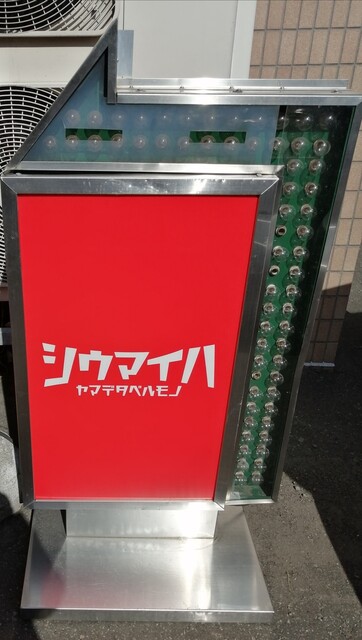
Today is May 6th, a Monday. Many restaurants are closed on the day after Golden Week, so I found myself struggling to find a place for lunch. While driving around, I happened to pass by this restaurant with one parking space available, so I quickly parked my car and went inside. The sign outside read "Shumai Hayama de Taberumono." I wondered what it could be as I entered and saw a ticket machine on the left side. I ordered the most popular "White Soup (850 yen)" for myself and the "Spicy Red Soup (850 yen)" for my girlfriend. We purchased the tickets, handed them over, and were directed to a table. It had been about 10 years since my last visit, but the warm wooden interior and the cleanliness of the place seemed unchanged.
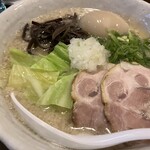
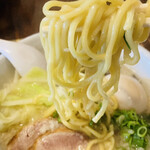
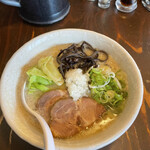
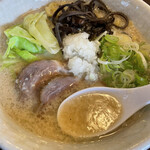
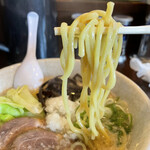
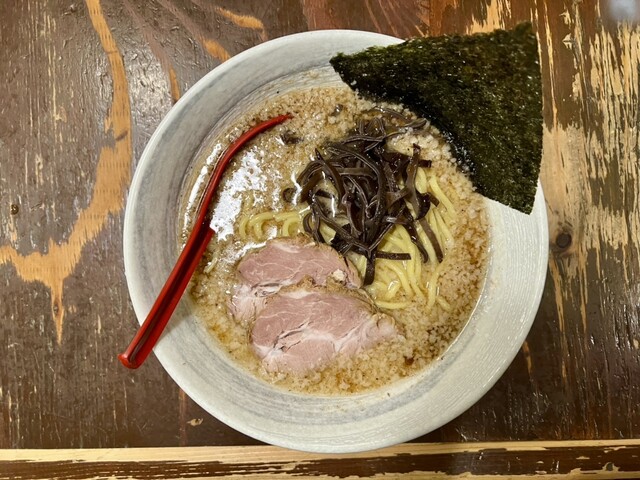
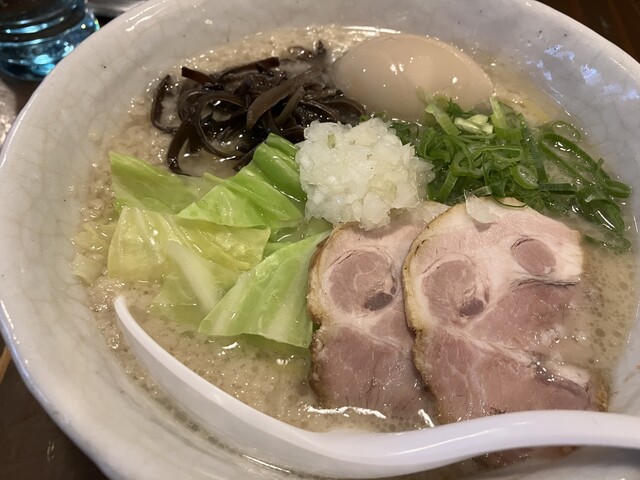
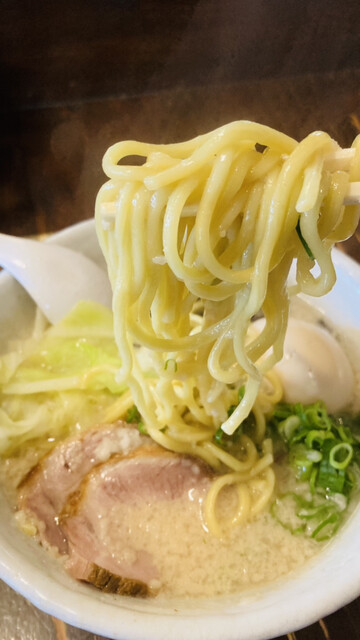
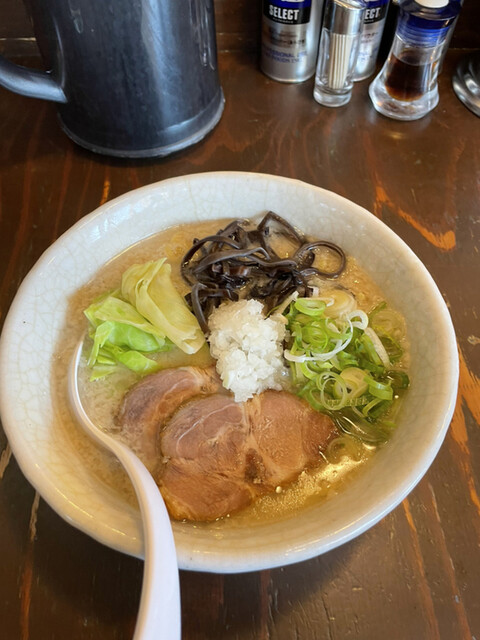
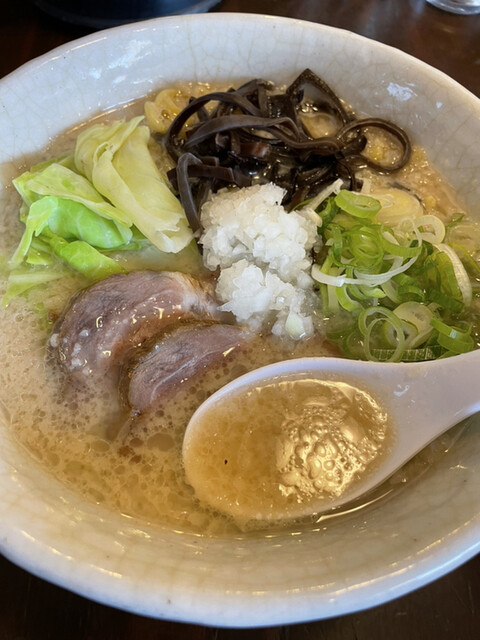
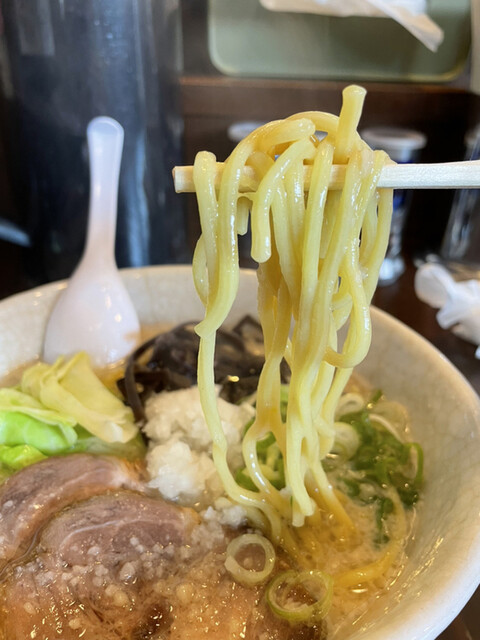
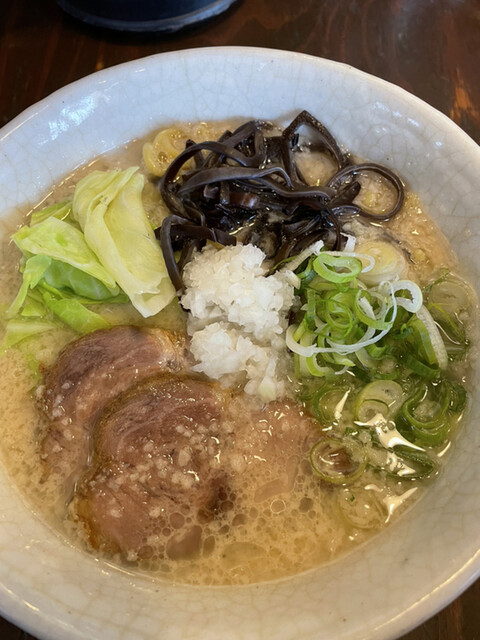
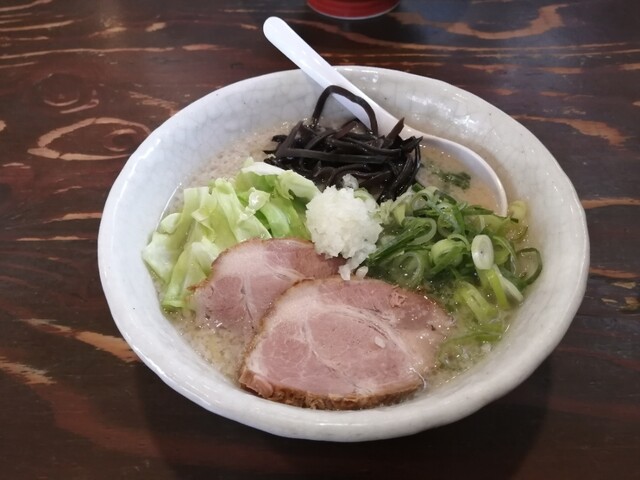
The restaurant was still bustling with customers ordering extra noodles, indicating its enduring popularity. Our ramen arrived in about 7-8 minutes. Despite the summer heat reaching over 25 degrees Celsius in Sapporo today, hot ramen is always a good choice. The rich tonkotsu pork bone soup had a pleasant aroma without the usual unpleasant pork smell. It was creamy yet light, with a hint of fish powder flavor in the background. The thick egg noodles from Sagamiya were chewy and satisfying, enhancing the overall experience. Grated onions in the center of the bowl added a refreshing touch when mixed into the soup.
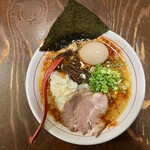
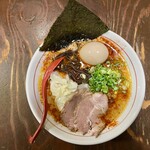
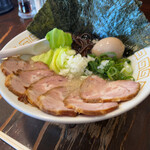
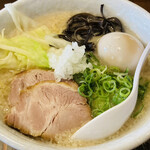
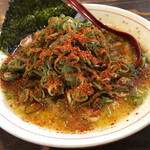
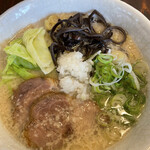
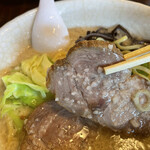
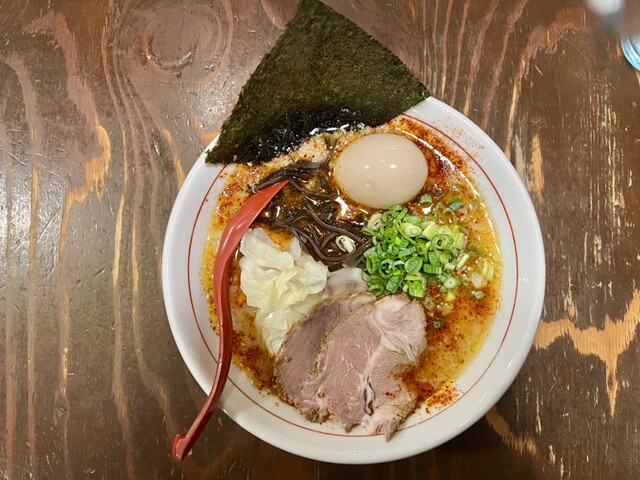
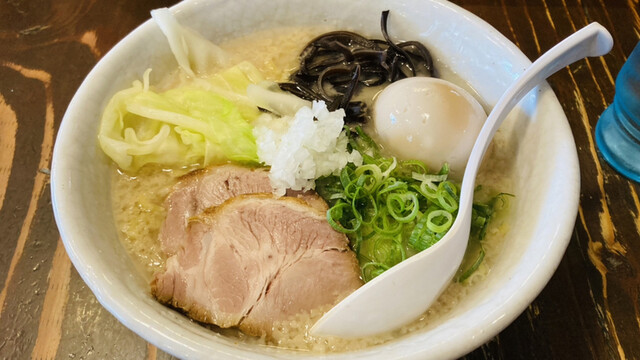
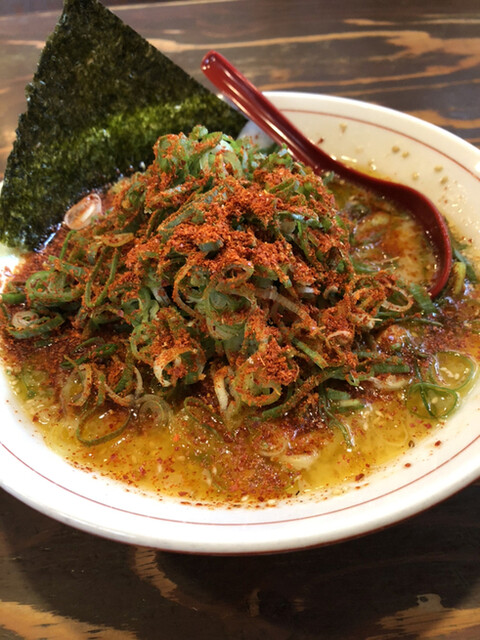
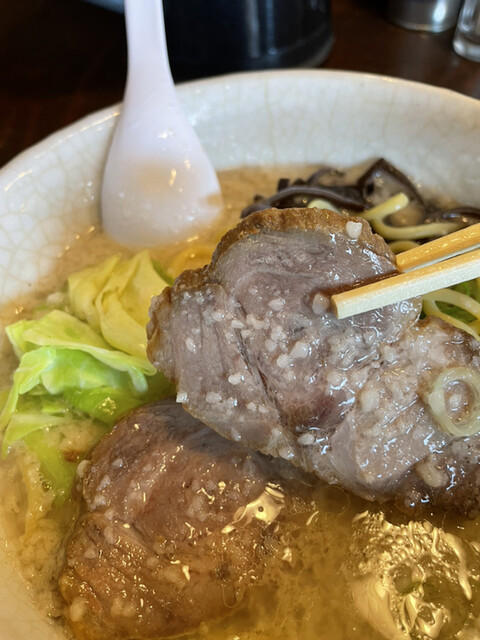
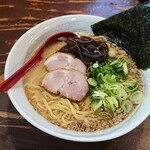
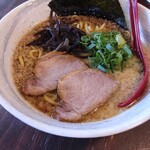
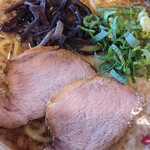
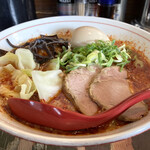
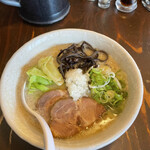
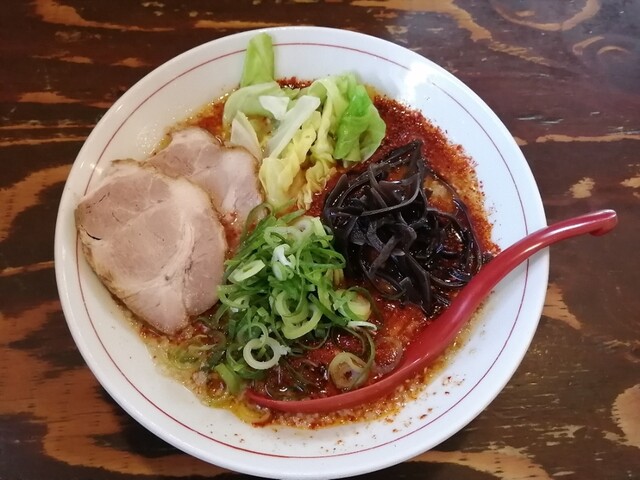
The toppings included tender chashu, cabbage, green onions, and sliced wood ear mushrooms. The wood ear mushrooms provided a nice texture, and the cabbage was perfectly cooked to complement the soup. The chashu, two slices of it, had a delicious flavor and just the right amount of tenderness. I even thought about trying it with rice. I also sampled my girlfriend's Spicy Red Soup, which had a generous amount of red chili flakes and a hint of chili oil in the soup. Despite my diminishing tolerance for spicy food, I found it enjoyable and flavorful.
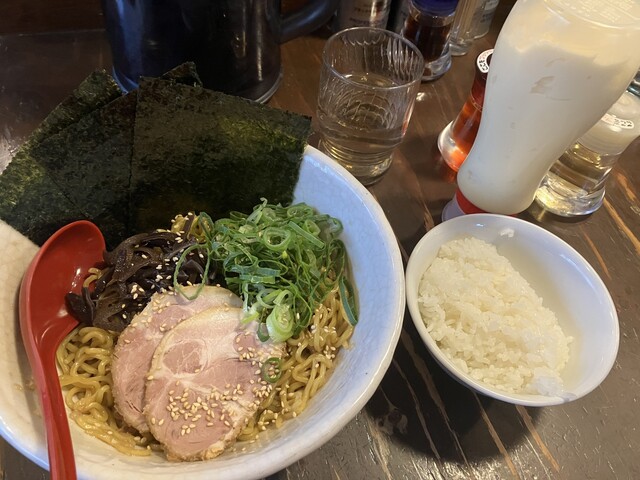
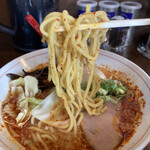
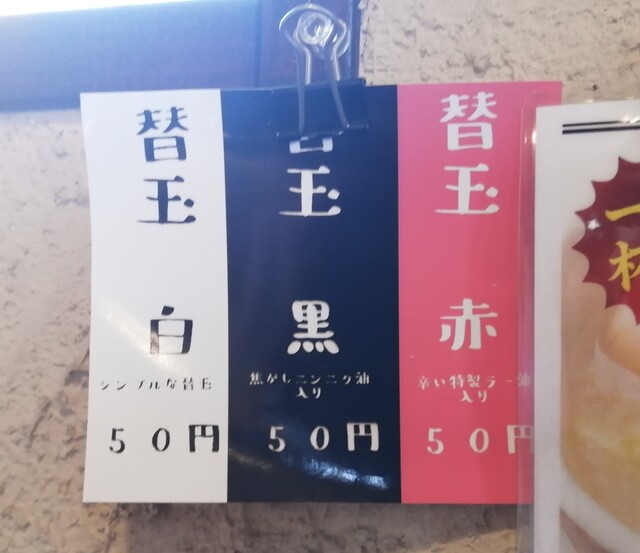
We decided to order extra noodles, with me choosing the "Black Extra Noodles (50 yen)" and my girlfriend choosing the "White Extra Noodles (50 yen)." The thin straight noodles for the extra noodles were cooked al dente, reminiscent of Hakata tonkotsu ramen. The black extra noodles were finished with roasted garlic oil, adding a pleasant aroma to each bite. We enjoyed the extra noodles and finished every last drop of soup.
Overall, I was extremely satisfied with my dining experience. I later found out that the sign outside advertised the "Shumai Hayama de Taberumono" from a shop in Toyotaki, Minami-ku, available only during the winter season. It seems you can also get it as a takeout, so I might try that next time. Thank you for the delicious meal!
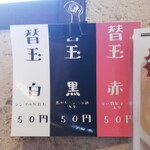

prima1122
4.60
I ordered the spicy miso ramen with extra spiciness, no green onions, and extra seaweed. The noodles were thick which I liked, and the soup had a lot of oil which I also enjoyed. The tender chashu was delicious, and I appreciated that there were plenty of toppings. The heat from the kitchen made it a bit uncomfortable at the counter, so it would be nice if they could turn up the air conditioning a bit. Overall, I could easily eat two bowls of ramen here. Thank you for the meal!
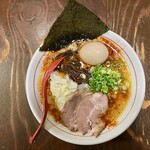

こじまよくと
3.90
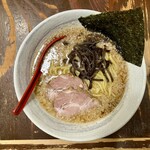
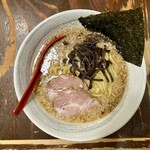
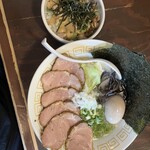
Ordered the white soup with green onions. The ramen here is very easy to eat, and I always end up finishing the soup completely. It's a simple bowl with just chashu, wood ear mushrooms, and chopped green onions, but it all just works together perfectly. Thank you for the meal.
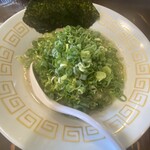

ramenlove4649
4.50
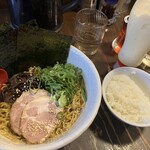
It's been a while since I last visited. I had the White Special Ramen for 1350 yen. The egg was delicious, and the green onions, wood ear mushrooms, and cabbage were great accents. I felt like the seaweed and chashu were unnecessary. Next time, I'll go for green onions and egg toppings. The chashu was tender with a good meaty texture, and it filled me up. The noodles were thick, which is unusual for tonkotsu ramen. The soup was rich with plenty of pork fat, but it wasn't overpowering. I also had the Miso Mayo Rice for 300 yen, which was tasty and the portion was generous. On the counter, there were water, black pepper, garlic powder, cayenne pepper, fish sauce, disposable chopsticks, toothpicks, and tissues. The service was good.

J DILLA
3.50
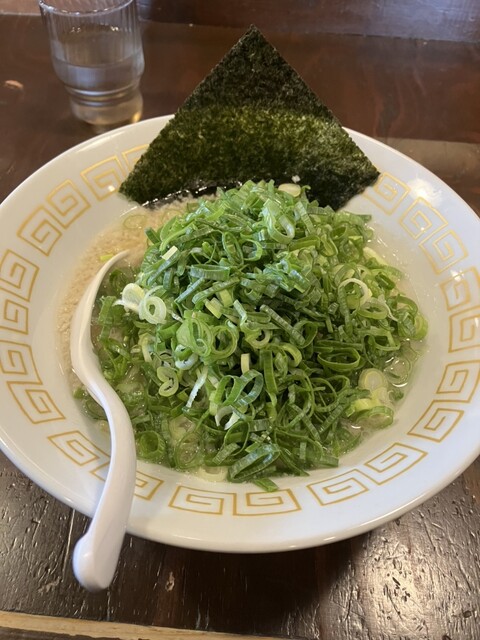
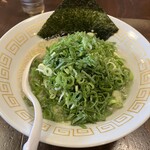
White, with lots of green onions. Seriously, I think green onions are important. The satisfaction here is hard to find in other shops. Where do people who express this lightly evaluate as rich? Maybe places like Tenichi that no longer exist? I remember the ramen I ate in Kyoto years ago. I'm just being pulled along by the Kujo green onions, haha. Next time, I'll go for the spicy one! I probably like that better.

hidenori1976
3.50
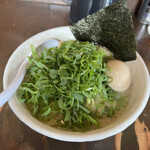
I couldn't go a few days ago, so for today's lunch, I had Yamagari as usual, with lots of white negi and a seasoned egg. I finished with black and red extra noodles. Thank you for the meal. My Guinomi - Recommended for drinking sake.

お嬢様になりたい一般人٩(๑❛ᴗ❛๑)۶
4.00
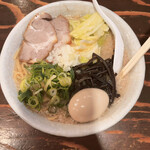
Hello everyone!! I love ramen so much that I want to become a princess ♡ This ramen shop is one of my favorites, I have visited it many times. Whenever I crave for rich and flavorful ramen, this place is always my first choice! I especially love the thick soup with lots of pork fat. I want to take it home in a water bottle haha \( ˆoˆ )/ I really like the addition of wood ear mushrooms in the ramen, it's quite unique (*´꒳`*) Cabbage goes so well with the rich soup, don't you think? On this day, I added a soft-boiled egg topping ♡

chiro723
3.50
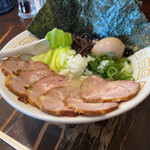
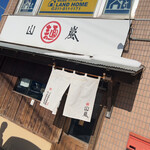
2023.1.29. It's been a while since I had ramen! I couldn't resist and ordered the "all toppings" white soup ramen for 1300 yen. The chashu was a bit too much, so I shared some with my partner. The soup was rich in pork fat but surprisingly light, and the thick noodles were delicious. The crunchy wood ear mushrooms were tasty. Even though it was a Sunday, we were seated quickly and our stay was less than 15 minutes. The green onions were so good that next time, I might just add them as a topping to the white soup ramen.

bonpochi
3.00
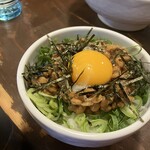
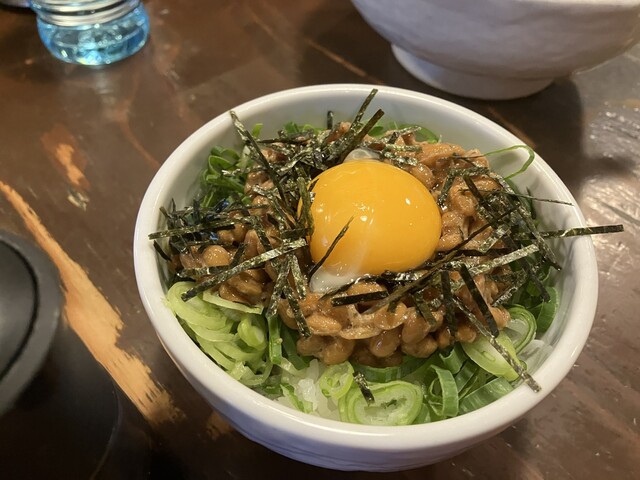
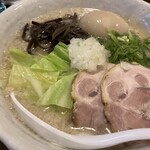
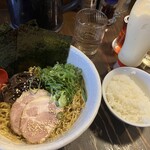
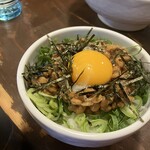
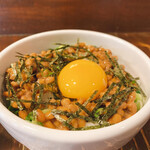
After living in Sapporo for over 5 years, I finally visited this restaurant that I had never been to before. I went in around 3 PM and quickly ordered the white soup. The boiled cabbage was delicious. It was easy to eat and seemed like I could even handle a second helping (although I didn't order one). My friend ordered the tsukemen, but it wasn't to my liking. The fish natto rice was like natto rice with added bonito flakes and was delicious. I'll definitely go for the white soup again next time. Thank you for the meal.

味噌ラーメン(札幌)
3.70
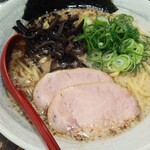
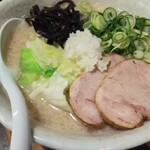
I had the seafood soup. I like fatty broth, but this much is a first for me. I feel like more than half of the soup is fatty broth, with a strong saltiness and a strong fish powder scent. The thick noodles are soaked in fatty broth. The white soup with cabbage and green onions is a bit easier to eat, but still salty.

ヒチマ
3.20
Visited around 2pm on Saturday. The seating includes counter seats and one table for 4 people. Since it was past lunchtime, the place was not crowded and I was seated at a table without waiting. I ordered the large serving of seafood soup ramen (900 yen + 100 yen) which was served in about 10 minutes. The soup, with a pork bone and seafood base, was hot, rich, and flavorful. The white straight noodles had a good chewiness to them. The toppings included chashu pork, green onions, wakame seaweed, and nori. This restaurant is particularly popular among the many famous ramen shops near Hiraishi Station. It's located just down the street from a super famous shop where the line is always long. It would be great if the restaurant could be a bit bigger.

kamelot555
3.50
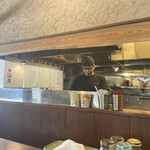
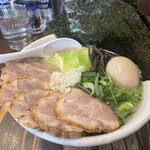
The tonkotsu ramen with rich pork back fat and all toppings, along with extra noodles in black pork bone broth but with thick noodles is great. The option to change the extra noodles to thin ones for variety is interesting. The highlight is the half-boiled egg topping. It's incredibly creamy with the perfect amount of saltiness. This famous shop that even has cup noodles has a great display at the counter. Noodles: Sagamiya Seimen

おやじ成田
3.00
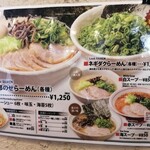
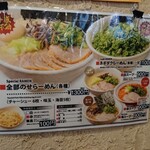
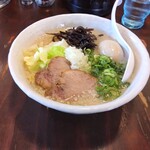
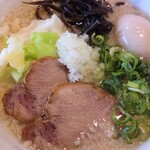
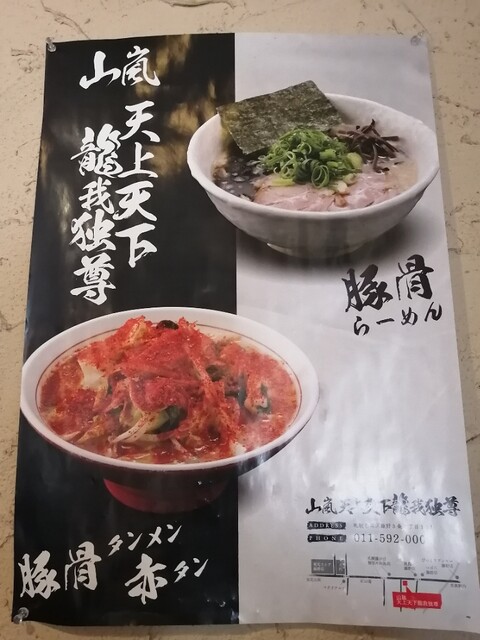
Today is the last day of my two-day weekend♪ My second daughter's move is finally done, but it's a bit iffy! For lunch, we decided to go to "Yamaran" along the loop road, a famous ramen shop. I didn't know about it, but my wife said she had heard of it before. When we arrived, the parking lot was full, but we were lucky to find one spot after a short wait. Inside, there was a ticket machine to order. They had white soup and sea soup, which I didn't understand. I think white miso ramen and seafood soy sauce ramen. I ordered the white soup with boiled egg for 950 yen tax included, and my wife ordered the sea soup for 850 yen tax included. The appearance of the ramen was as shown in the posted photos. After eating, I found that the white soup was a salt-flavored pork bone broth with back fat, and the sea soup was a special fish powder pork bone broth. Both soups were delicious. The thickly sliced chashu was tasty, and the shredded cabbage and wood ear mushrooms added an impactful touch. However, the noodles were too thick and lacked a slippery texture. As a man in his sixties, this was not good for me (laughs). Postscript: I vaguely remember that the affiliated store "Oni Soba" in Minori, Nanko used to offer a choice of noodle thickness. That's all for now♪

ロティ男
3.00
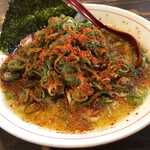
I always see a line at this shop. When I passed by during lunchtime on a holiday, there was one parking space available. Lucky me. The parking lot can fit about 7 cars in front of the shop. After parking and entering, I had to wait a bit inside the shop. They space out the seating, so it's okay for the pandemic. Now, ordering is done by purchasing a food ticket. It was a bit confusing with all the options, but I decided to go with the extra spicy with lots of green onions. Once seated, the ramen arrived in no time. Now, onto the taste. The tonkotsu ramen with thin noodles had a pretty rich flavor. There were plenty of green onions, which gave it a good bite. The spiciness wasn't as strong as it looked, but it was still good. As a ramen, it was delicious. However, there was a strange smell of a mop lingering around, which was disappointing. It's a shame that the delicious ramen was overshadowed by the smell, or lack of the ramen aroma... I hope it was just a one-time thing since it was a hot day.

りゅーとりあ
3.70
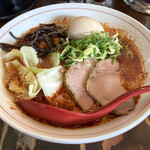
"Yamaarashi Honten" weekday lunch. I was originally planning to go to another restaurant, but it was crowded, so I ended up here. This place is also quite popular, but luckily the parking lot was empty, so it was good timing. The ordering method is through a ticket machine system. The ramen soup comes in 3 types: "white, sea, red". You can choose from basic, with flavored egg, with green onions, or with everything. I ordered the "Spicy with Flavored Egg @950 yen" because I've been into spicy food lately. I asked for it with a flavored egg. The spiciness levels are mild, spicy, and very spicy. I went for the second spiciest level this time because I was a bit scared of the very spicy option. The tonkotsu soup with floating lard was surprisingly mild, not too rich or heavy. The spiciness from the special chili pepper and chili oil looks quite intense, but it was just the right amount of spiciness, not too overwhelming. The medium-thick noodles from Prishiko balanced well with the soup. The cabbage was plentiful in the ingredients, and the thick slices of pork were satisfying. If you're still hungry, you can add an extra serving of noodles for an additional 50 yen. Personally, I was satisfied with the regular portion. I ate until I was full and it was delicious! The taste was consistent and stable, just like last time. Maybe next time, I'll challenge myself with the "very spicy" option. Overall, it was another delicious meal. Thank you!

柊山
3.80
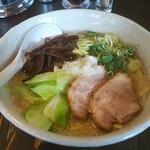
I have confidence in this place, they only serve tonkotsu ramen. I have been there over 5 times already. The white soup ramen costs 900 yen, and an extra noodle refill costs 50 yen (now it seems to be 100 yen). Not too long ago, the noodle refill was only 50 yen. It's unfortunate that the prices went up due to the increase in crude oil prices, but even at 100 yen, it's still cheap. I first finish the white soup ramen, which is delicious with its thin noodles and rich flavor. It's already a good amount and taste, but I decide to order a noodle refill. The white is a simple refill, the black has burnt garlic oil, and the red has spicy special chili oil. Each has a different flavor to enjoy. I recommend the red for a slightly spicy noodle. It's nice that you can enjoy changing the taste with the noodle refill, like from white to black, or white to red. I definitely want to go back again.
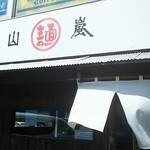

☻mog_syk☻
3.60
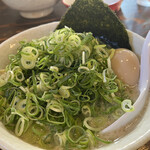
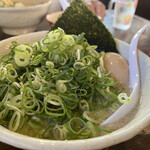
I have visited this place many times since I first went there about a year ago. The conclusion is that the white soup with green onions is the best choice! The rich white soup with the green onions is addictive. The chashu is finely chopped, so if you want more, it might be better to add extra chashu toppings. This time, I tried adding a seasoned egg as a topping. When eaten with the soup, the runny yolk is incredibly delicious. [Notes for families with children] - Child-friendly chairs available. - Child-friendly cutlery available.

TAR-KUN
3.30
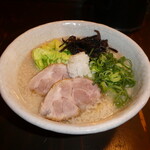
[White Soup] Hokkaido Ramen Expedition 2022! Established in 2005, Yamazan Main Store is a strong ramen shop that also has branches in the city. I arrived at the shop around 8 p.m. There is a parking lot around the store. I purchased the White Soup for 850 yen from the ticket machine. The modern interior has counters and tables. The ramen arrived. The noodles are medium-thick straight noodles that are deliciously chewy. The soup is a pure white tonkotsu with floating back fat. It is a light, milky tonkotsu soup with no strong flavors, making it easy to eat and delicious. The toppings include chashu, cabbage, and wood ear mushrooms. A satisfying bowl with a relatively easy-to-eat tonkotsu soup with back fat. Thank you for the meal.

鷲尾★ジロー
3.50
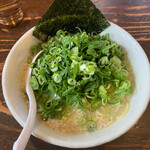
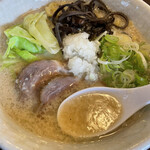
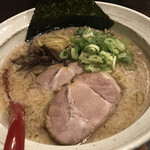
As usual, I am walking around Hokkaido trying various ramen dishes. Personally, I categorize Sapporo ramen shops into different generations. The first generation includes legendary shops like "Aji no Sanpei" that created miso ramen. These shops opened around 1945 to 1969 after the war. The second generation includes ramen shops that opened from the late Showa era to just before Heisei, around 1970 to 1988. These are often referred to as "Showa-style" shops, typical local ramen shops. The third generation includes shops that opened around 1989 to 2004 when individuality started appearing in ramen shops. Popular shops like "Tetsuya," "Gojo Hara," "Keyaki," and "Yamaokay" represent this generation. And then, there is the Sapporo Ramen fourth generation, shops that became popular from 2005 to 2015. These are known as the evolution and new wave style shops. Today, I visited "Sanzan," representing the fourth generation of Sapporo ramen shops. They opened in 2005, during the latter half of Heisei when the "Heisei Ramen Boom" was happening. The Heisei Ramen Boom is said to have started in 1994 with the opening of the "Shinyokohama Ramen Museum." This led to the opening of similar ramen theme parks nationwide. In Hokkaido, we also saw the opening of ramen spots like "Otaru Canal Shokudo Ramen Kobo" and "Sapporo Ramen Republic" in the early 2000s, attracting attention. On TV, shows like "Gachinko Ramen Michi" with the "Ramen Demon" Sano Minoru, and "TV Champion" featuring ramen chefs and enthusiasts, brought a lot of attention to ramen. It was during this time that rich and heavy ramen like fish and pork bone, lard, double soup, and thick noodles became popular. In the midst of this era, "Sanzan" in Hiragishi, Sapporo, introduced their "Rich Lard Pork Bone Ramen," quickly gaining popularity among Sapporo ramen lovers. Today, I visited the main branch of "Sanzan," my first visit in four years. The shop is located in Toyohira-ku, Sapporo, Hiragishi 1-jo 9-chome. It's in a highly competitive ramen area with shops like "Sumire" and "MEN-EIJI" nearby. The opening of "Sanzan" seemed to have turned Hiragishi into a ramen battleground. The parking lot in front and beside the shop can accommodate seven cars. I arrived at the shop at 11:40 am, just after the opening at 11:30 am, and the parking lot was already full. I had to wait a bit until a spot opened up. After about 15 minutes, I parked my car and entered the shop. The menu includes White Soup (Lard Pork Bone), Sea Soup (Lard Fish Pork Bone), Red Soup (Spicy Lard Pork Bone), and Oil Soba, with various topping combinations. I ordered the representative menu item, "White Soup" for 850 yen, handed it to the staff, and waited a bit more in the waiting area. The owner, Omura, trained at a Chinese restaurant and opened a dumpling shop at 26. He then decided to create a new type of ramen that wasn't in Sapporo and started learning how to make ramen on his own. At 29, he opened the main branch of "Sanzan." After becoming popular, he expanded to "Sanzan Kurotora" in Chuo-ku, "Sanzan Tenjo Tenga Ryoga Dokuson" in Minami-ku, "Sanzan Kiyota" in Kiyota-ku, and "Sanzan Obihiro" in Obihiro (although the Kitami branch and the second Obihiro branch have already closed). There are also several affiliated shops in Taiwan. I was then guided to a counter seat and my ramen was served in about 5 minutes. The creamy soup with a lot of lard floating on top, topped with chashu, green onions, wood ear mushrooms, cabbage, and finely chopped onions in the center.

満腹六郎
3.90
[Published in early June 2022] I regularly visit this shop. Since my previous reviews disappeared, this is my first post. I wish I had taken more photos (^^;; I like the ocean and negidaku, but when I want to fully enjoy the soup, I don't order negidaku. Lately, there are many customers who arrive first at 5:00 PM. I ordered the ocean soup. [Soup] The soup, made by carefully extracting the umami from Hokkaido pork bones over time, is rich without any unpleasant odor. The strong fish powder pairs well with it, and the impactful back fat has a strong sweetness that surprisingly doesn't feel heavy. Even though I'm not a fan of Jiro-style ramen, I find this rich soup delicious (I'm trying not to be). It's a soup that I can finish completely. Garlic also pairs well with it. Surprisingly, it has not been imitated by other shops (can't do it?). It's still a unique soup. The salt content is high, so your mouth will get shiny (lol). [Noodles] The thick noodles from Sagamiya Noodles are easy to slurp and have a good throat feel despite being thick. When you bite into them, they snap nicely. Of course, they go perfectly with the soup. [Chashu] The flavor is strong but not heavy, and it's delicious. The balance between the fat and lean meat of the pork loin is great. [Overall] Even for those who don't like fish powder, I recommend it because there is a white soup available, as long as you don't mind the richness. I've been going here since it opened, and even though I've gotten used to non-chemical light soups lately, I still don't get tired of it. It was delicious. Thank you for the meal♪
yutos733
4.50
Yamaarashi Main Store
10 minutes walk from Hiraoka Station
9-6-1, Hiraoka 1-jo, Toyohira-ku, Sapporo, Hokkaido
⚠️Closed on Mondays
⏰Business Hours: [Tue-Sun] 11:30-16:00, 17:00-21:00
Ordered:
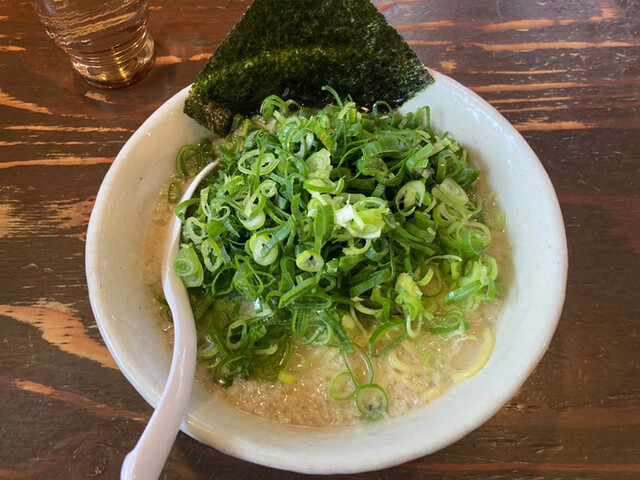
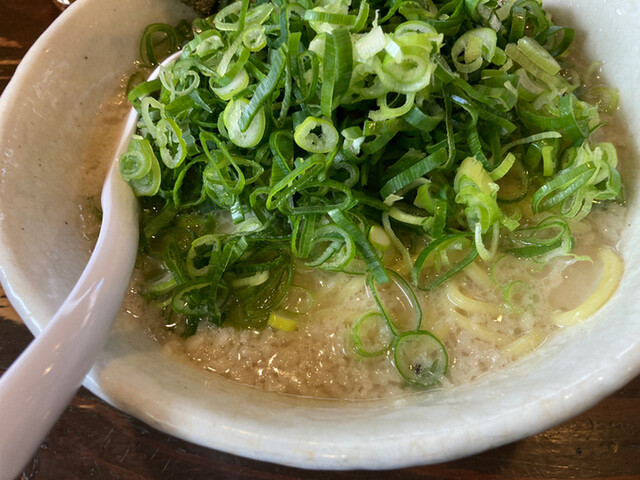
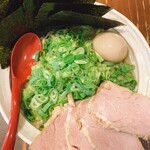
Seafood and Green Onion Ramen (1050 yen)
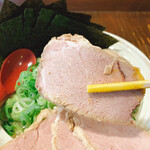
Extra 4 slices of Char Siu (200 yen)
Flavored Egg (100 yen)
5 sheets of Seaweed (100 yen)
Fish and Natto Rice (250 yen)
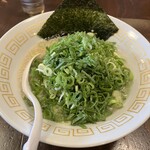
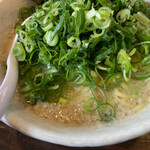
So much green onion, green onion, green onion! Not bitter at all, very sweet!
The combination of pork bone broth and fish powder is a nice touch.
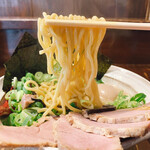
The soup and light wavy low-water noodles go well together.
Finished every drop and every bite today.
#Yamaarashi #PorkBone #PorkBoneRamen #Sapporo #SapporoRamen #SapporoGourmet #SapporoLunch #ramen #noodles #ramen #ramenclub #WantToConnectWithRamenLovers #WantToConnectWithFoodies
Email Login