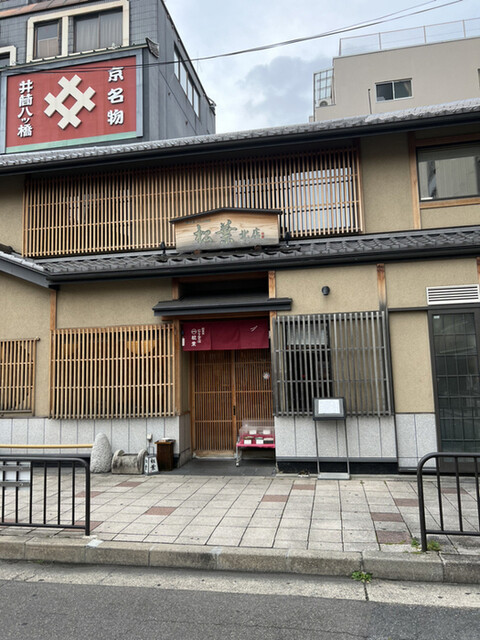
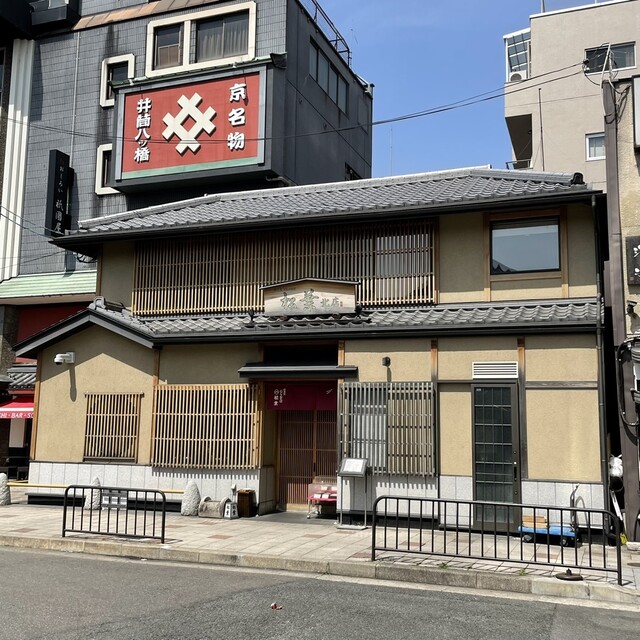
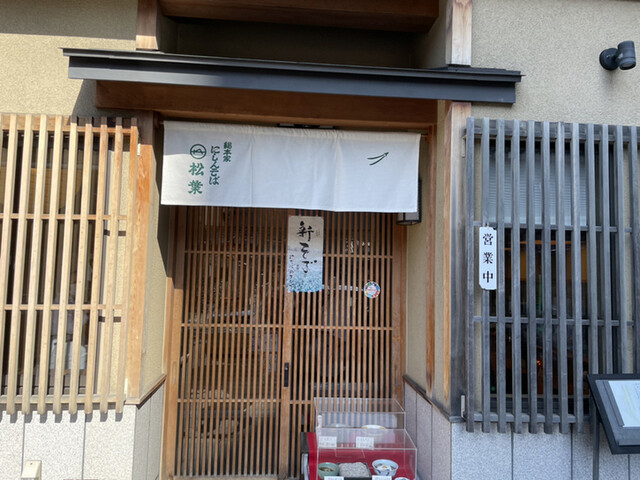
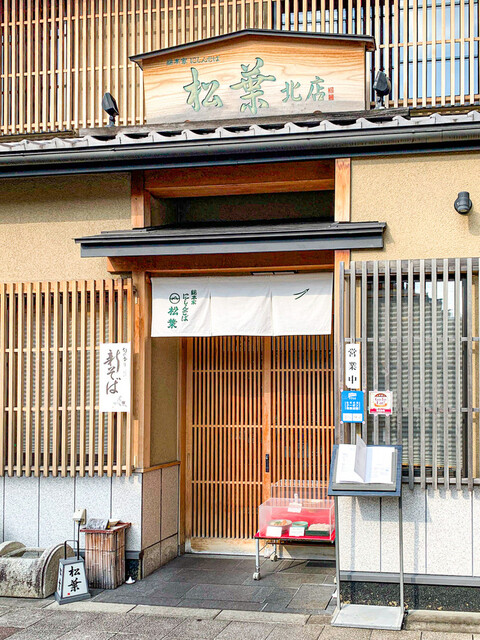
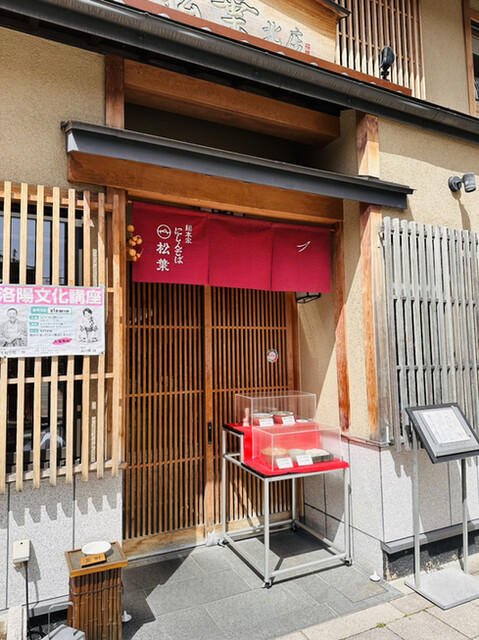
にしんそば 松葉 北店
Nishinsobamatsuba ◆ にしんそば まつば
3.38
Gion, Kiyomizu-dera, Higashiyama
「Soba」
1,000-1,999円
1,000-1,999円
Opening hours: 11:30 - 20:30 (L.O. 20:00) Open Sundays
Rest time: Tuesdays Business hours and holidays are subject to change, so please check with the store before visiting.
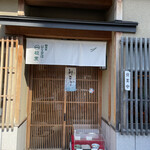
京都府京都市東山区大和大路四条上ル常盤町149-1
Photos
(20)
Details
Reservation Info
No Reservations
Children
Children (unmarried children, primary school children)
Payment Method
Credit cards accepted
(JCB, AMEX, Diners, VISA, Master)
Electronic money is not accepted.
Number of Seats
(counter seats, small seats, table seats)
Private Dining Rooms
None
Smoking and Non-Smoking
Smoking is prohibited until around sunset (around 6:00 p.m. in summer and around 5:00 p.m. in winter), after which smoking is permitted.
Parking
None
Drink
Sake and shochu available
Comments
(20)

Geric Plankton
3.70
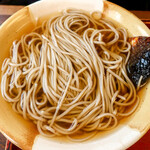
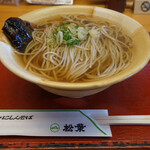
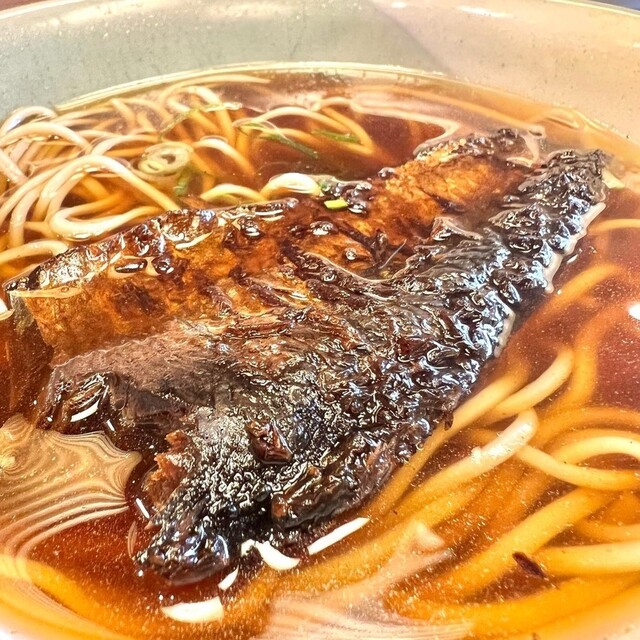
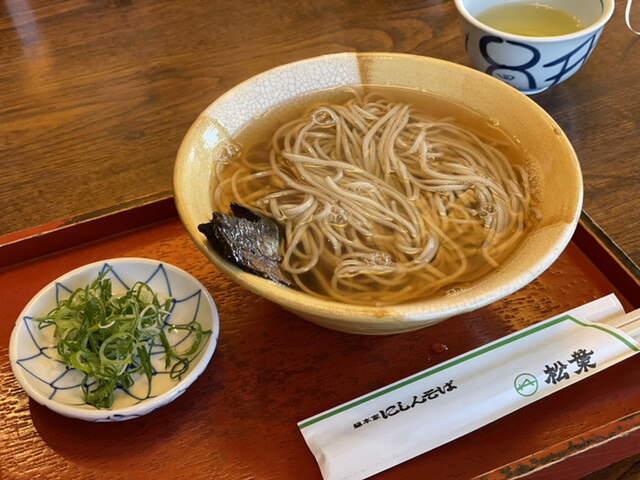
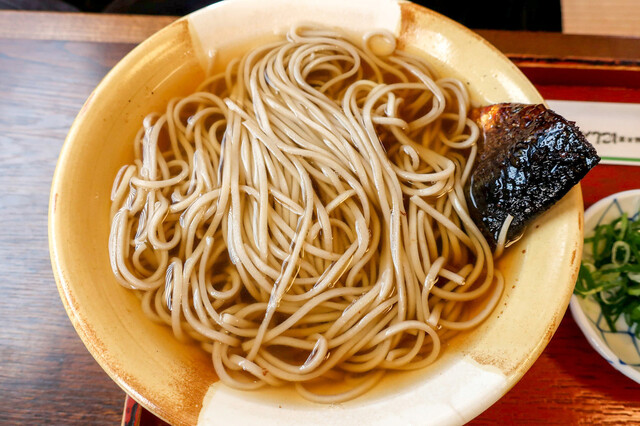
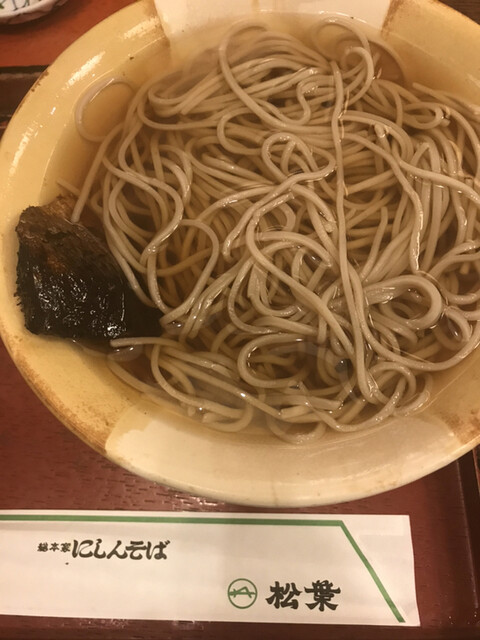
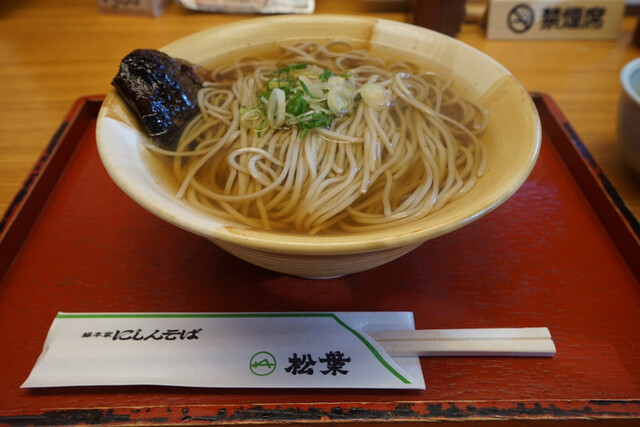
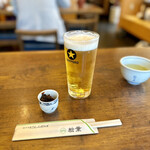
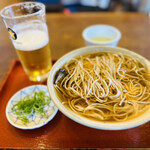
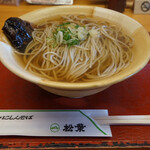
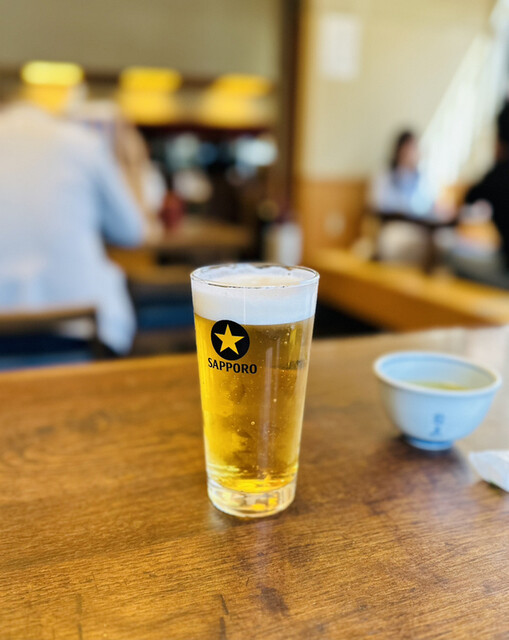
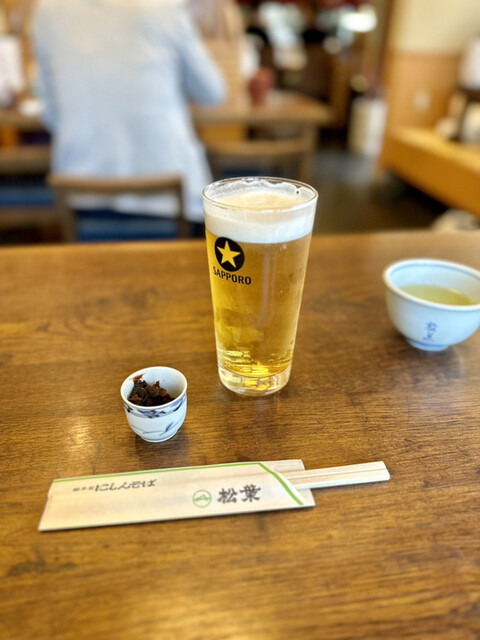
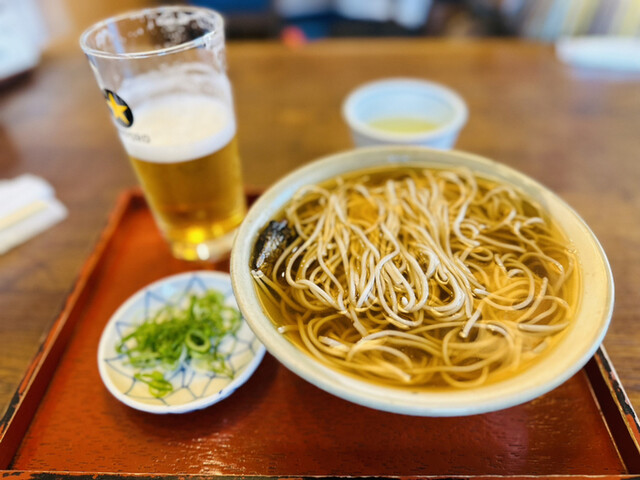
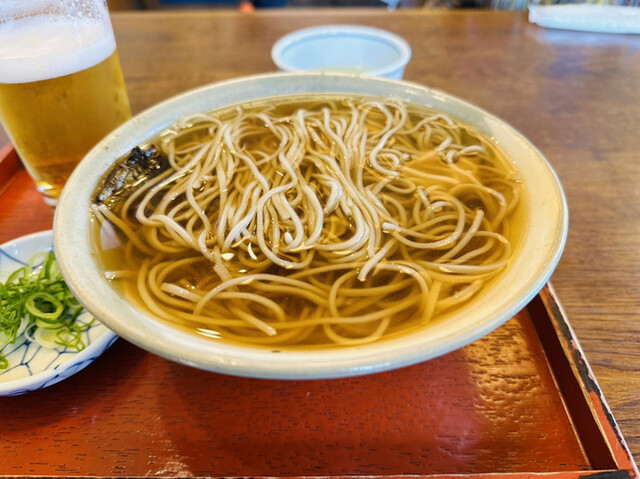
The road to Kyoto is challenging. As a tourist, no matter how much you walk or explore, you cannot truly touch the essence of this city. Kyoto, the millennium capital, has continuously preserved the essence of Japanese aesthetics, enduring various natural disasters and wars, and has become a renowned tourist destination in recent years, even enduring the challenges of the COVID-19 pandemic. The slogan "Let's go to Kyoto" by JR has further spread the essence of this city nationwide, attracting people as a place of solace. For me, Kyoto is where philosopher Kitaro Nishida walked the path of philosophy. In the morning, I passed through the almost deserted Kyoto Imperial Palace and arrived at Shimogamo Shrine before noon. My purpose was to visit the movable residence called Hojoan, believed to have been built by the revered Kamo no Chomei about 800 years ago. However, my purpose was shattered as it was being relocated. Undeterred, I continued on the Philosopher's Walk. Along the way, I encountered the vast campus of Kyoto University and scattered groups of students. The time was exactly noon. My body, having only drunk mineral water since morning, began to feel the sun's strong rays through the backpack on my back. I could have eaten at a lunch spot filled with students. Nevertheless, the Philosopher's Walk beckoned me, pushing aside the sun, sweat, and hunger. Finally, I saw a sign for the Philosopher's Walk. The road abruptly ended, and a still waterway greeted me. The Philosopher's Walk connects Ginkaku-ji and Nanzen-ji, spanning about 2km. As I descended south, the serene mountains loomed closer, and a cool, stern air began to dominate the surroundings. A strong, overpowering smell hit my nose, unmistakably the lingering scent of perfume left behind by a group of French-speaking tourists. It was not surprising to pass by many restaurants and souvenir shops catering to inbound tourists. Most of the bustling people were Western foreigners. Of course, Nishida Kitaro's time of walking the path was before the war, so encountering such scenes, overpowering scents, and foreign tourists would have been unimaginable to him. By the time I finished the Philosopher's Walk, hunger and fatigue struck simultaneously. Vowing to visit in a different season, I hailed a taxi. It was past 2 pm. The Shijo Bridge was filled with Western tourists as usual, or even more so in the current era of the COVID-19 pandemic. One of Kyoto's representatives is Nishin Soba. As a soba lover, it is an essential delicacy in Kyoto. Although the main branch of Nishin Soba Matsuba Honten was closed, I felt relieved to find that the Nishin Soba Matsuba Kitate was open across the street. The right side of the counter was filled with foreign tourists. Guided by the friendly staff, I was seated at a large table on the left side. The well-kept cleanliness and calm atmosphere in the restaurant were comforting. I desired a beer. Then, I ordered the Nishin Soba (1,650 yen). The beer circulated through my body, providing a refreshing and exhilarating drinking experience, welcoming the tired body. Although there were few customers due to the time, the foreign tourists occupying the counter seemed to show no signs of finishing their meals, instead, new dishes kept being served, creating an atmosphere of a small party. "Thank you for waiting," said the female staff with a smile as she brought the tray. The meticulously crafted Nishin Soba, refined through careful consideration, was truly the pinnacle of Kyoto's ingredients and culinary skills. The sweet and savory flavor of the herring nestled in the depths of the thin, firm noodles, combined with the perfected broth. This taste, preserved for over 160 years, truly represents the essence of Kyoto's cuisine.

ZUNDOCO
4.00
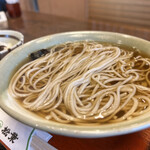
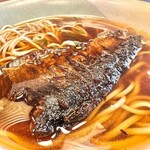
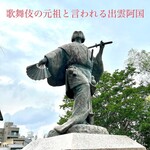
"I always order the 'Nishin Soba' at this soba restaurant. It is a simple dish of soba topped with sweetened herring, but each restaurant adds its own unique touch. The sweetened herring most likely originated in Hokkaido. Here at 'Matsuba,' they serve this dish, which is a fantastic discovery. This restaurant is located next to the Nanzu Kabuki Theater, with a history dating back to the Edo period. They also have a branch in the Kitate, where you can enjoy the original Nishin Soba even on days when there are no Kabuki performances. It was a delightful experience to enjoy a bowl of soba by the Kamo River, where a monument of Izumo no Okuni, the originator of Kabuki, dances in the wind, allowing me to feel the old charm of Edo."

Toru_310
3.30
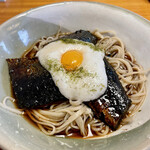
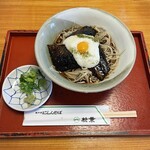
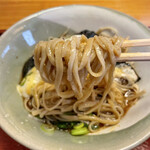
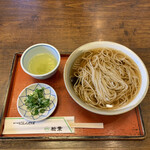
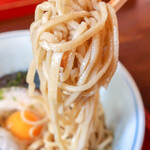
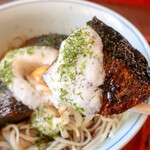
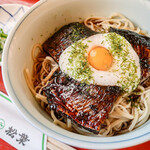
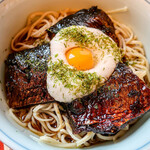
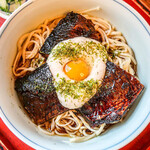
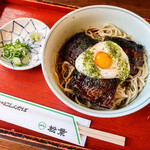
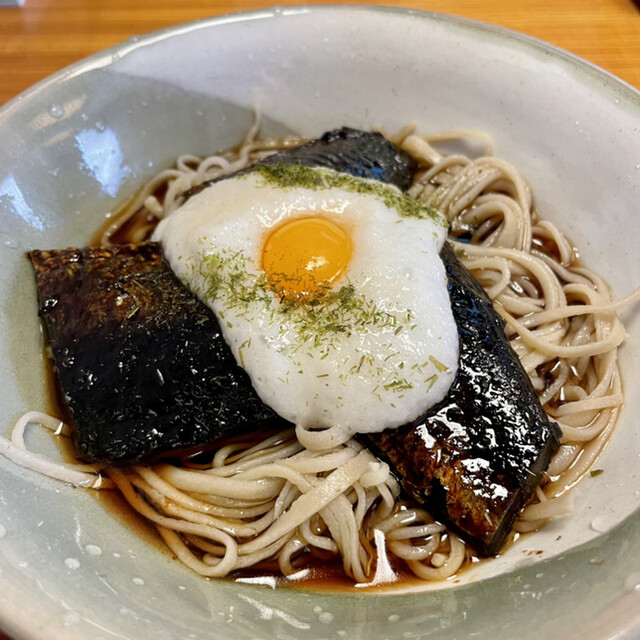
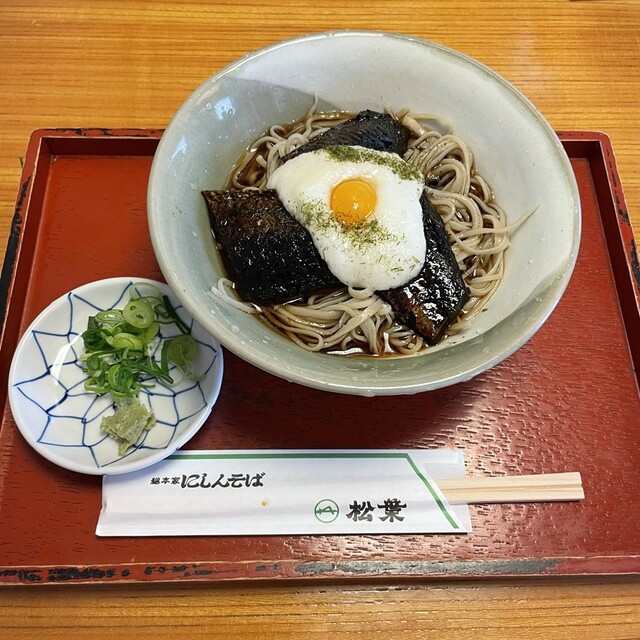
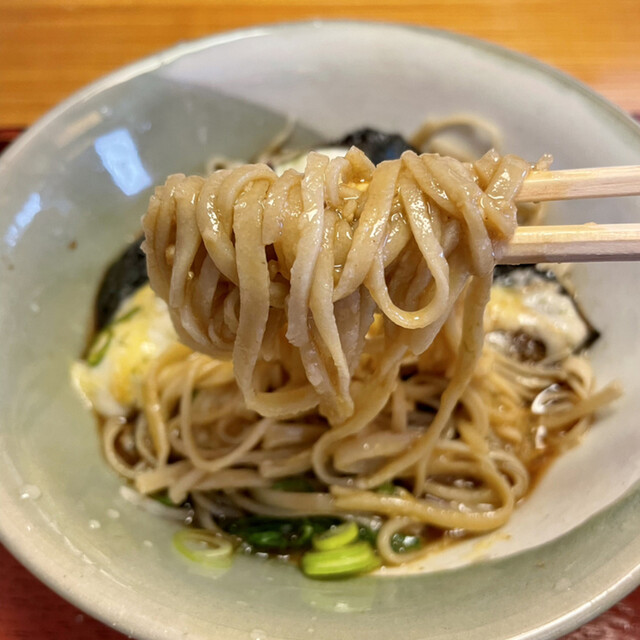
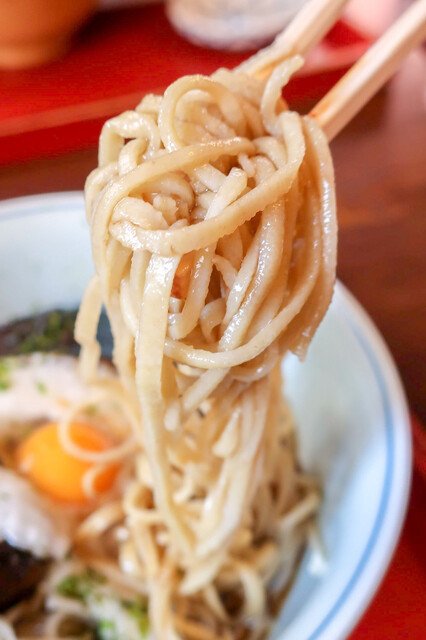
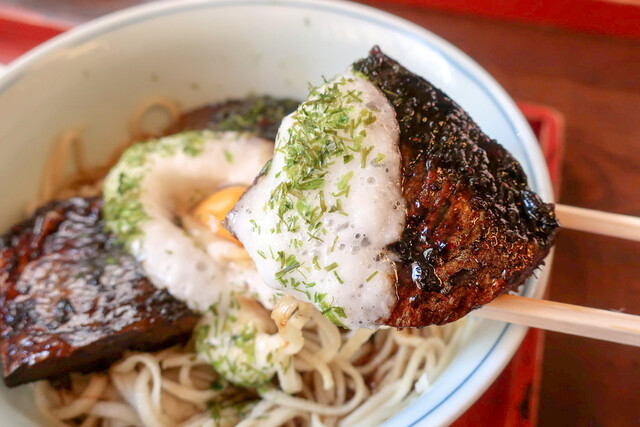
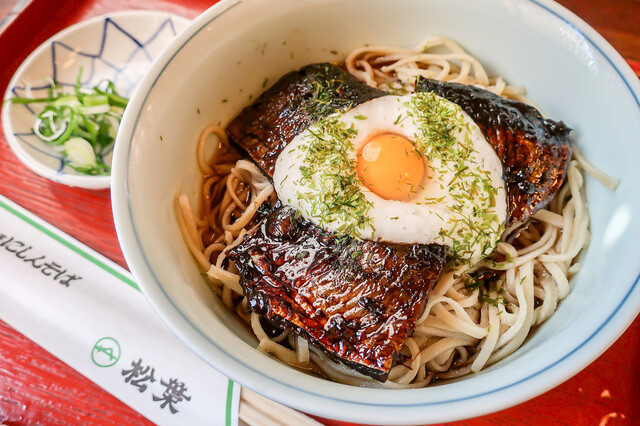
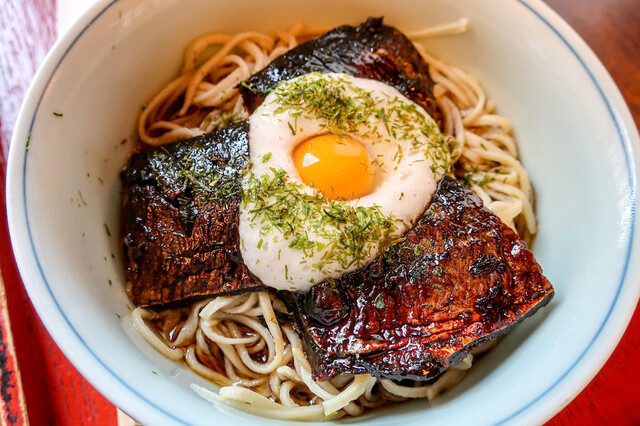
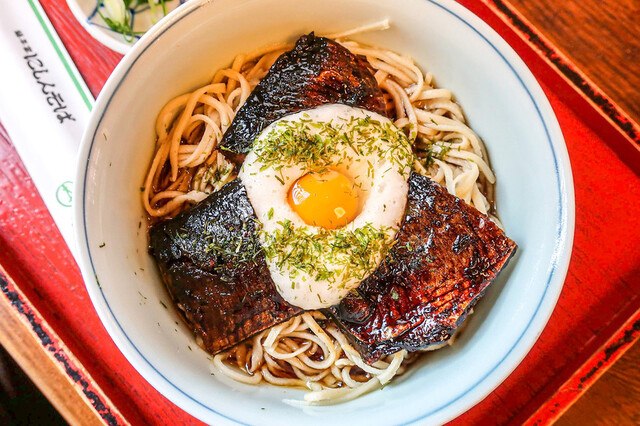
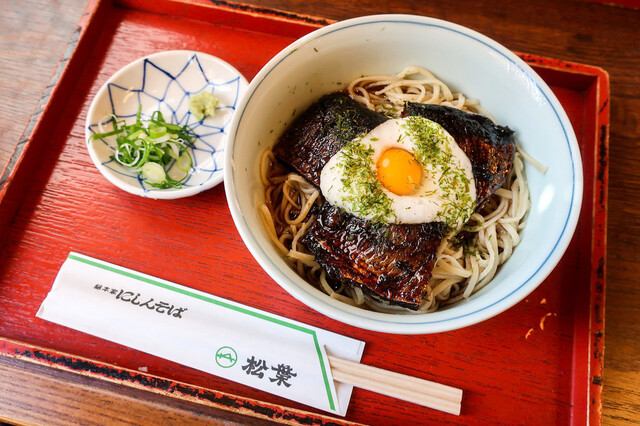
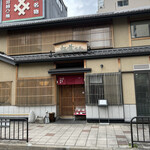
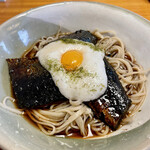
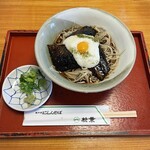
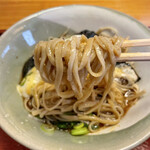
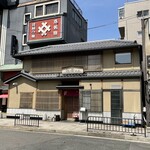
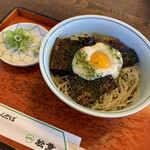
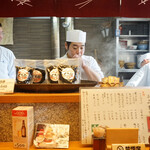
Today, since the main store next to Minamiza theater was closed, I went to the north store across the street. The weather feels like early summer, so I decided to try the cold version of the herring soba. I sat at the counter where I could see the cooking process, which was a great seat. Watching the chefs at work while waiting was quite enjoyable. The cold soba in the bowl was made with hand-cut noodles. On top, there were three pieces of sliced herring fillet and grated yam with a quail egg yolk. The herring fillet was hidden under the soba, creating a different charm compared to the warm herring soba. The combination of grated yam with the herring fillet was quite interesting, and the chewy soba noodles with added wasabi provided a different kind of enjoyment. Pouring soba water and savoring it slowly at the end was also a unique experience. The price was a bit high at 1,915 yen, reflecting the tourist area pricing, but it was worth it considering the effort put into the dish.

りーさんとなつごろうちゃん
3.90
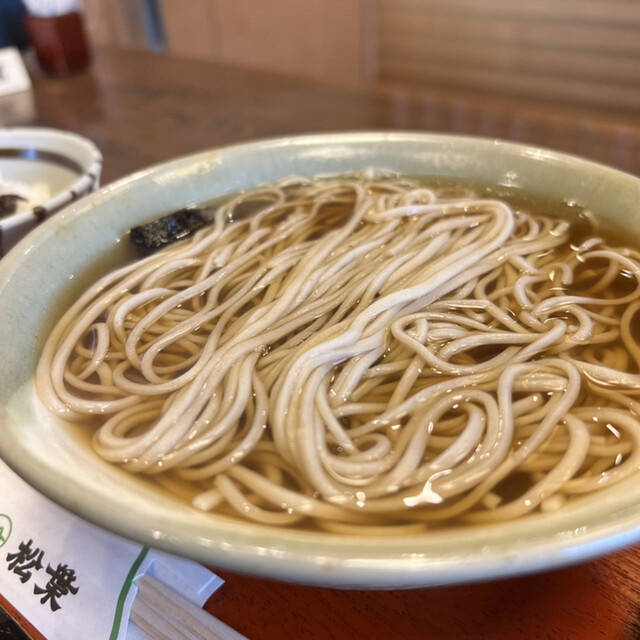
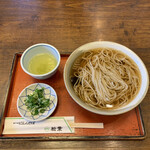
I went to the nearby North store because the main store was crowded. I had never heard of Nishin soba before, but I tried the warm Nishin soba. I don't usually choose soba, but this Nishin soba was really delicious... I would like to try Nishin soba at other stores as well! The Nishin was sweet and just the right firmness, the broth was delicious, and the soba was also tasty!

楓かえで
2.80
When entering the store, I was asked, "Are you here for a meal?"... Are there people who come for reasons other than eating? I found it strange. Despite the small size of the restaurant, it was empty, so I sat at a table and placed my order. The staff seemed a bit busy... even though the place was so empty? After finishing my meal, as soon as I stood up, a loud voice echoed in the store saying, "Thank you, that will be XX yen." I hadn't even put on my coat yet, shouldn't they wait until I reach the register to tell me the amount? The staff still seemed busy... When I asked if they accept Goto Eat vouchers, they replied, "Not today..." What does "not today" even mean? It was all very confusing. Overall, the soba was okay, a bit on the pricier side, with a slightly bland taste, typical of Kyoto. The noodles were thin, not suitable for those who prefer thicker, chewy soba.

じゅっきー
3.30
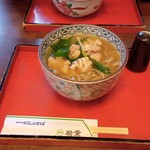
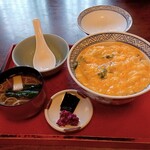
I stayed overnight in Kyoto and visited the northern branch of the restaurant because the main branch was closed. I tried herring soba for the first time. It was simple and light, seemed gentle on the body. The dashimaki tamago (rolled omelette) we ordered together was also delicious. I don't have much experience with this type of cuisine, so I honestly don't know what's considered good, but it was tasty.

piadi
3.50
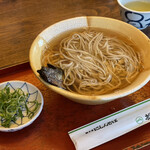
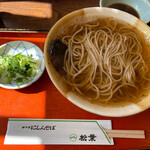
I visited the famous restaurant, Matsuba's Kita branch. Of course, I ordered the classic Nishin soba. The sweet pickled herring on top of the dashi-flavored broth was surprisingly a perfect match. I was able to enjoy some daytime drinking and relax. The waitress was friendly and it was a perfect place for a break during sightseeing.

COOLTIME
3.40
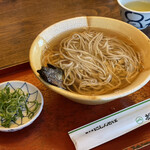
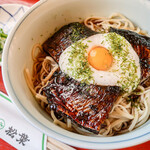
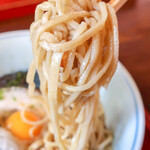
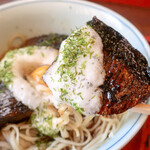
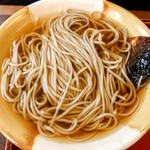
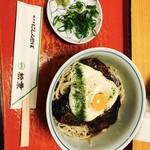
The main store of Nanza is famous, but I didn't know there was also a North store. It was my first visit. The place is small but well-maintained, with tables and tatami seating. The natural light is good. The service from the staff was average. It's easy to go in alone. On this day, I went with my partner. My partner had the warm soba, while I had the cold soba, of course with the famous herring soba. It was served promptly. I dug in right away. The warm soba looked delicious, but as a soba lover, I enjoyed the aroma of the cold soba. The three pieces of herring, grated yam, egg, and green seaweed created a well-balanced color that stimulated my appetite. I lightly mixed it and started eating. The soba was delicious. The herring was cooked well and tasted sweet. Mixing the soba dipping sauce and grated yam in a balanced way, then coating the soba with it was delicious. The portion was just right. I was satisfied but not overly full. It was a quick 10 minutes. The specialty of this historic famous restaurant is truly wonderful. Thank you for the meal. I would like to visit this restaurant again. ( ̄▽ ̄)

餓神
3.50
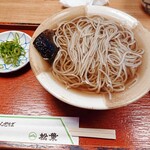
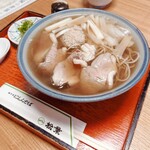
For lunch, I had decided to go to Matsuba for soba, so we walked briskly in that direction. But suddenly my wife said we were going the wrong way. She had been coming to this place for a long time. It was my first time visiting. Inside, there were counter seats, table seats, and tatami mats. I chose the counter. I ordered the herring soba, while my wife ordered the duck soba. The chef in front of us was boiling and preparing the soba. The soba noodles were thin and slid smoothly into my mouth. The herring soba had a rich flavor and color compared to the duck soba. However, I couldn't finish all the broth. This place is said to be the birthplace of soba near the Minami-za theater, with a history of 160 years. The taste is still as authentic as ever.

キィ。
3.80
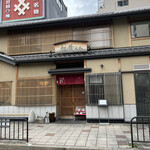
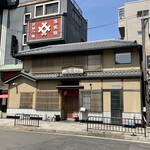
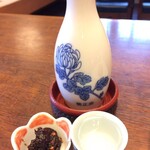
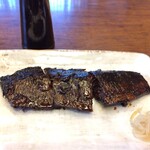
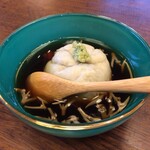
This is a soba restaurant located at the site of the former Kitaza in Gion. Matsuba, a shrine for dried herring soba lovers. Finally, I was able to come to Kyoto and eagerly went to the main store next to the Minamiza, only to find out it was closed. My heart sank, but when I searched, I found out that the North store was open just across the street on Shijo-dori. The interior of the restaurant was unexpectedly empty. I thought that a famous restaurant located right in the middle of a tourist spot would be crowded, but the fear of the COVID-19 virus was evident. I secured the best table with a view and first enjoyed some hot sake and simmered herring. It was a dream for soba and sake lovers to have simmered herring with their drinks. As I savored the hot sake with the soba miso appetizer, the simmered herring arrived. The texture was unbelievably soft and fluffy, making me moan in delight. It was like a perfect balance between simmered fish and candied sweet potatoes. The fluffy and chewy soba tofu with the hot sake was another moment of ecstasy. Delicious. If I continued like this, the soba dishes would seem never-ending, so I ordered a finale of cold soba. Of course, the soba was delicious as well. The aroma, texture, and smoothness were all perfect. It was the first time in a while that I had such delicious soba. It was like a dream to have the famous restaurant all to myself for a daytime drinking session. It's a bit complicated, but if it weren't for all this commotion, I wouldn't have been able to enjoy this time. Thank you for the wonderful meal.

歯だけサイボーグ
2.00
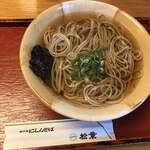
I can't say much more, as I might receive complaints from the headquarters. But let me just say this for the honor of soba noodles. Ramen noodles, udon noodles, hiyamugi noodles, pasta - everyone should be able to tell the difference between them, right? Yet, when it comes to soba noodles, why are there so many "soba tone-deaf" people? To be clear, what they're serving here is not soba noodles. It's really a pity that the people in Kyoto think this is soba. Do you understand what I'm saying? I may not be an expert, but when it comes to soba, I believe my taste buds are somewhat refined. For those who don't understand, I'll take you out to eat real soba noodles next time! It's not a lie.

まるあ〜る
3.50
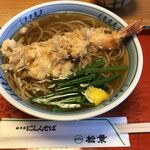
I came here because the main store was closed♡ The specialty here is sardine soba♡ When you think of Kyoto, you think of sardine soba♡ I visited around 1:30 pm on a weekday and it was quite empty♡ I ordered the sardine soba for ¥1300 (excluding tax) where the sardines are soaked to bring out the flavor♡ The sardines were soft and delicious♡ The soba seemed to have more wheat flour, but it had a rich sardine broth that I ended up finishing completely♡ It's quite filling! It was delicious♡ Thank you for the meal♡ I'm thinking of trying the main store next time♡

京都の犬
3.50
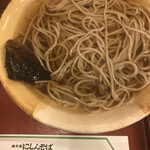
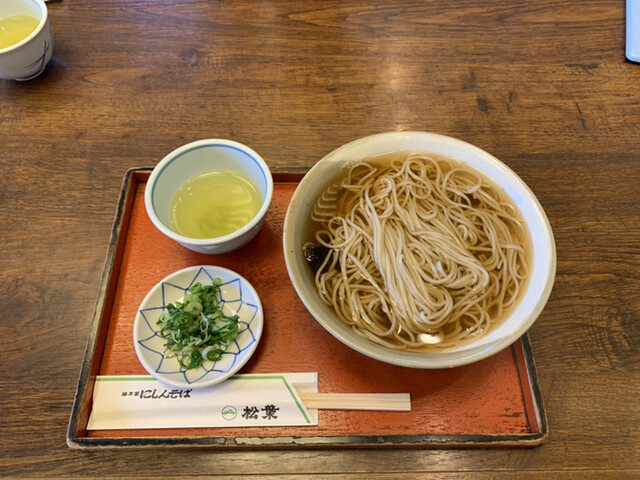
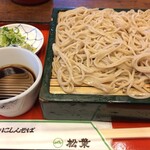
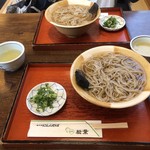
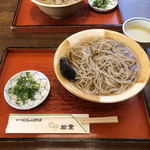
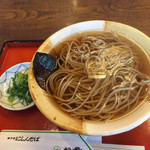
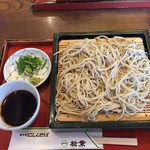
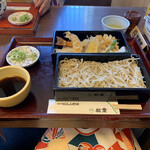
I had Nishin soba and a seiro. The Nishin in the Nishin soba tasted normal. The broth was excellent, at first it seemed light, but as the umami of the Nishin melted into it, the umami of the broth became addictive and I ended up drinking more and more. The soba was freshly boiled and it was clear that it was carefully made. The seiro was also freshly boiled and firm, giving me the taste of fresh soba. Yeah, it was delicious.

飲み歩きJD
3.60
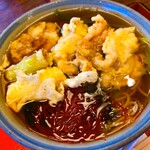
I mistakenly thought this was the main store and left a review here, but the reviewer kindly pointed out my mistake! Thank you. We tried the off-menu item "Duck Tempura Soba," which requires a certificate from the kimono shop we visited. The soba came with plenty of duck tempura and crispy white onion tempura on top. It was my first time trying duck tempura, and it tasted fresh and delicious! I didn't know duck could taste this good when fried. The white onion tempura was also crispy, sweet, and delicious. The soba noodles were perfectly cooked, with a firm texture. It was my first time having two servings of soba, but it was so tasty that I managed to finish it all!

なあー78
3.30
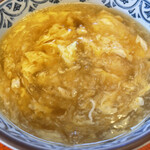
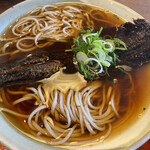
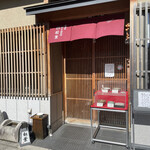
I had chicken egg ankake soba! It had a strong ginger flavor and warmed my body up so much that I broke into a sweat! The person I went with had herring soba. The herring was huge!
tamii3584
1.00
The restaurant next to Nanza was closed, so I went to the branch listed on the sign. It was quite empty. I had the herring soba, but the herring was not fully cooked and was tough, and the broth was not as flavorful as the main store. I hope they practice more before opening their own shop.

やすぼうし
4.00
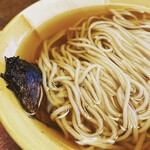
Sweet herring soba from Yoshimoto's manzai. The delicious herring I had in Kyoto during my middle school field trip still lingers in my memory. The taste was so impressive. The restaurant has a nice atmosphere that matches well. It's conveniently located near the station, which is great.

うらみないんとぅう
3.50
Maiyan and Momo. It was very delicious. It was so delicious that I could eat as much soba as I wanted.

punpurine
4.00
The easily digestible broth and well-cooked soba noodles have a wonderful and gentle taste and texture that makes you want to eat it anytime. Thank you for the meal!

ゆっとり世代
3.50
I tried Nishin Soba for the first time. I see, this is what it's like... It was delicious. I wonder if the taste is the same as the main store. It's the same, right? Probably.
Email Login