寺町更科
Teramachisarashina
3.26
Shimogamo, Kita-Shirakawa, Ginkaku-ji
「Soba」
--
--
Opening hours: 11:30-19:00 (approximately) Open on Sunday
Rest time: Friday Business hours and holidays are subject to change, so please check with the store before visiting.
京都府京都市中京区寺町通り竹屋町上ル行願寺門前町6
Photos
(20)
Details
Reservation Info
can be reserved
Payment Method
No credit cards
Electronic money is not accepted
Restaurant Service Fee
nashi (Pyrus pyrifolia, esp. var. culta)
This fee is charged by the restaurant, not related to our platform
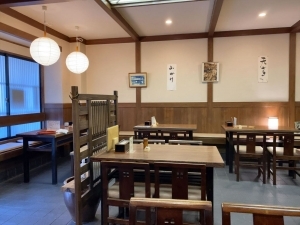
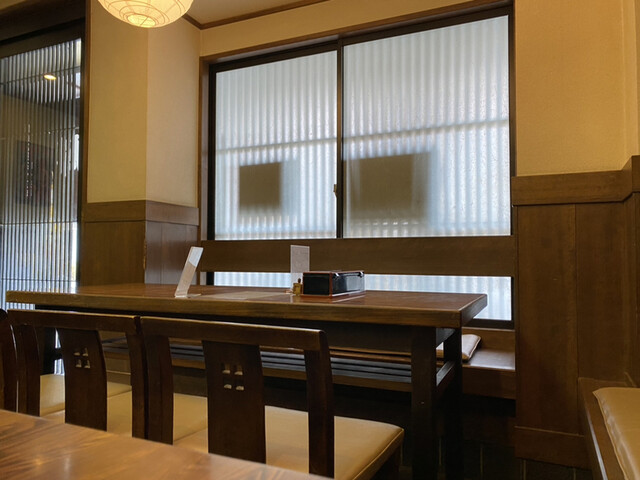
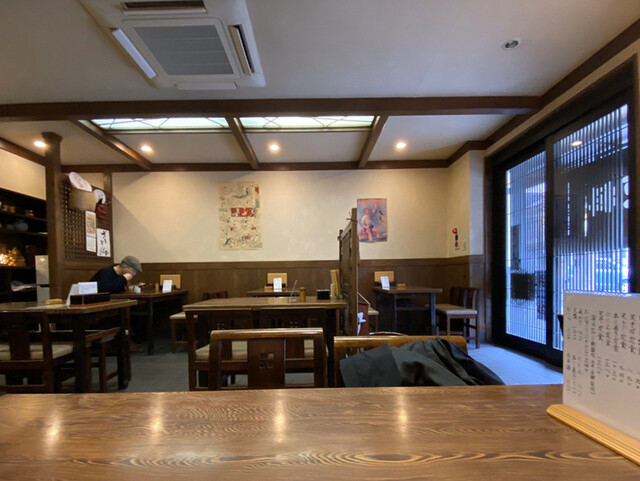
Number of Seats
40 seats
(8 x tables for 4 persons, 1 x table for 6-8 persons)
Private Dining Rooms
None
Smoking and Non-Smoking
Smoking is permitted in all seats. As the Law Concerning Measures Against Passive Smoking (Revised Health Promotion Law) has been in effect since April 1, 2020, please check with the restaurant prior to your visit as the information may differ from the latest information.
Parking
None
Comments
(20)

Max-ruyzi
4.00
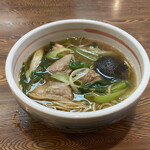
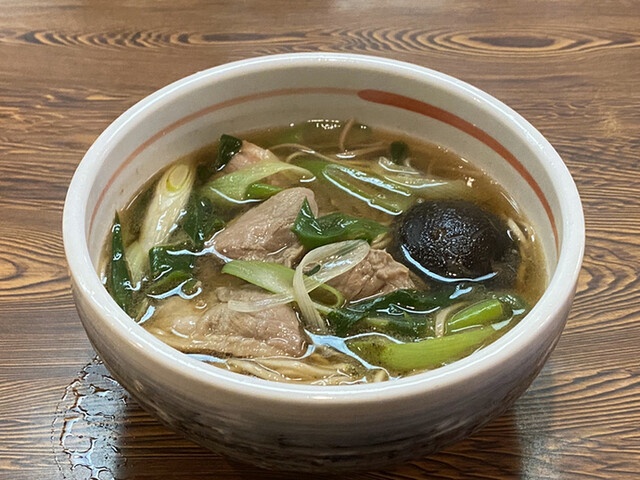
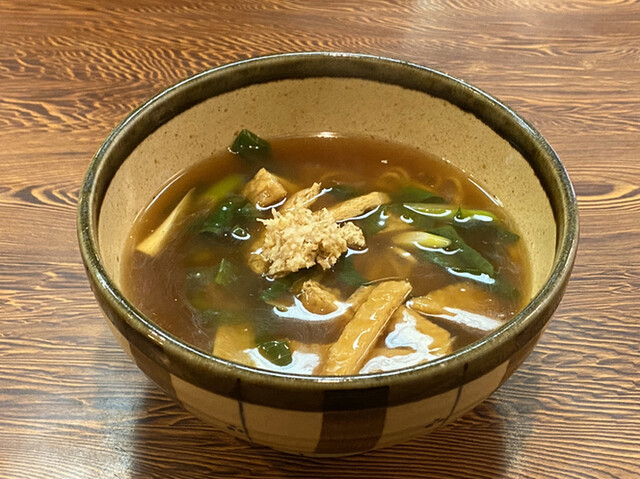
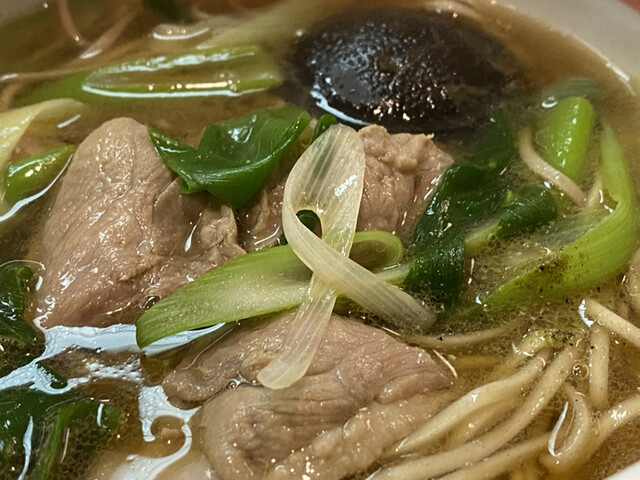
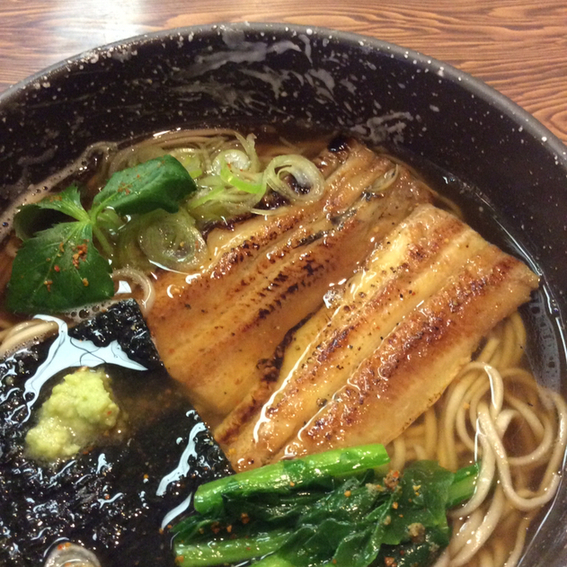
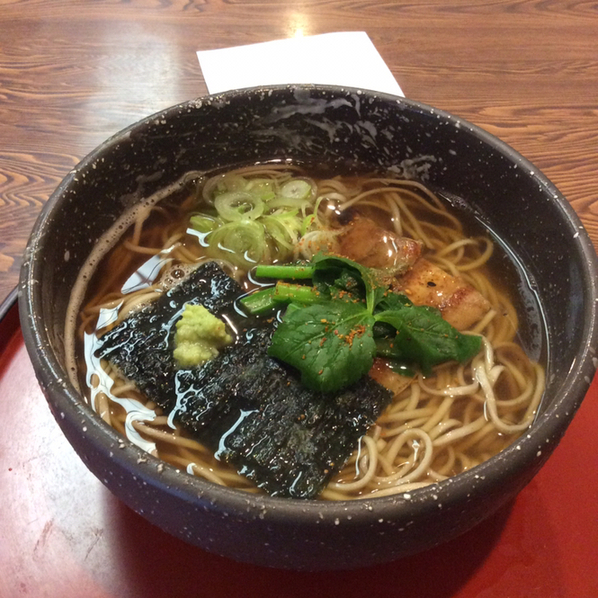
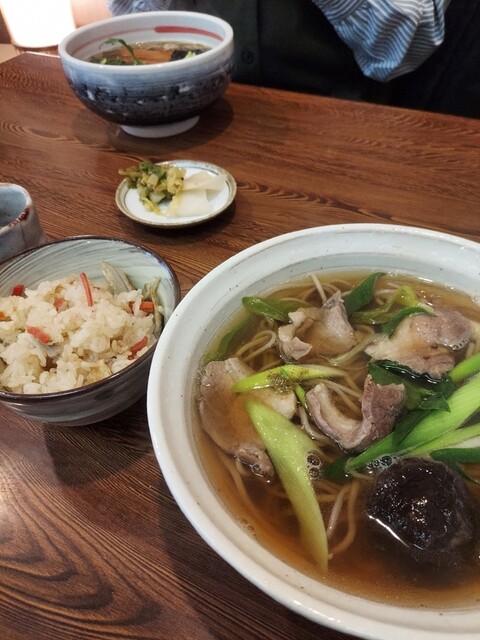
In the past, there used to be a traditional soba restaurant near the temple (Gyoganji/Nishikoku 33rd temple, 19th pilgrimage site), but now it is surrounded by modern buildings. During our trip, we found this peaceful place where we could enjoy delicious soba. The broth was tasty, and my wife was happy to try the eel soba, a rare menu item. The warm soba with eel, seaweed, and wasabi on top, with condiments of our choice, was a delight. I opted for the duck soba with burdock rice set, and the duck had a satisfying texture that complemented the flavorful broth perfectly. I ended up finishing every last drop of the soup.

fjky
3.00
I visited for lunch on Monday, June 20, 2022, and there were few customers, so I could easily sit at my favorite table. I ordered the sweet and sour set with soba. The order arrived very quickly, within a few minutes. The broth was Kansai-style, and it paired well with the sweet taste of the fried tofu. I couldn't really distinguish the texture of the soba noodles. The fluffy texture of the egg was good. I was surprised to find bonito flakes on the rice! It's a shame there was no soy sauce on the table. It felt like a local soba shop.

太っ腹
3.30
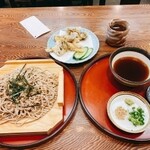
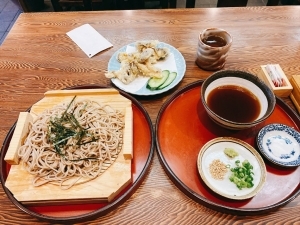
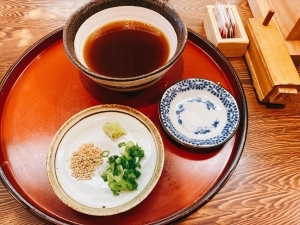
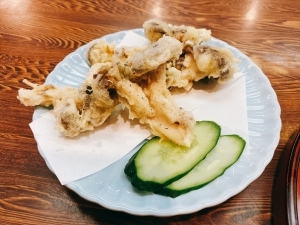
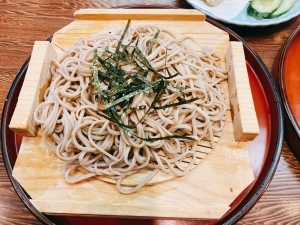
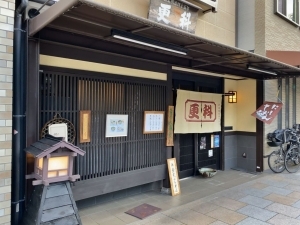
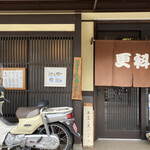
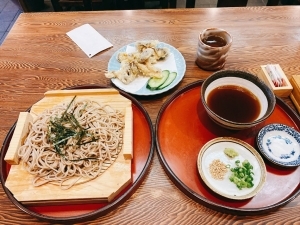
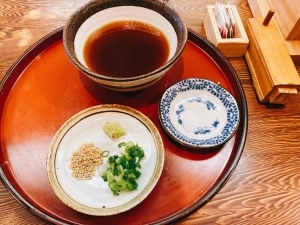
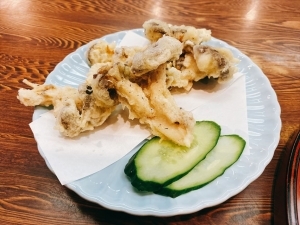
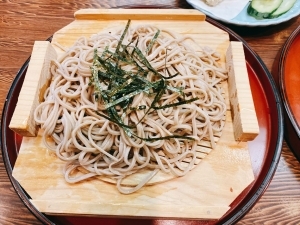
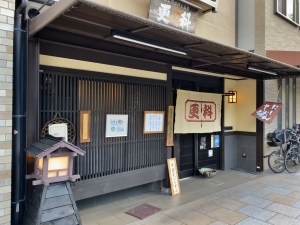
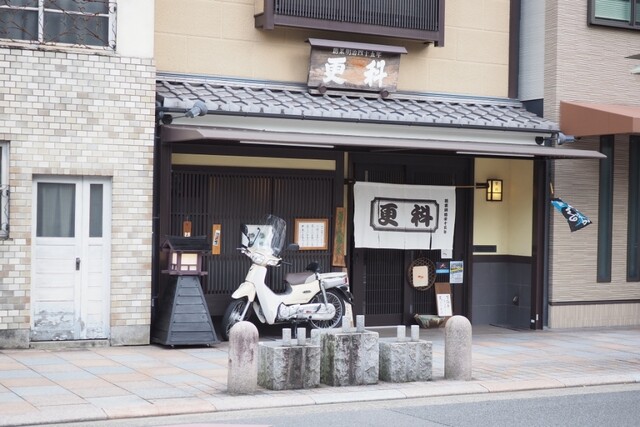
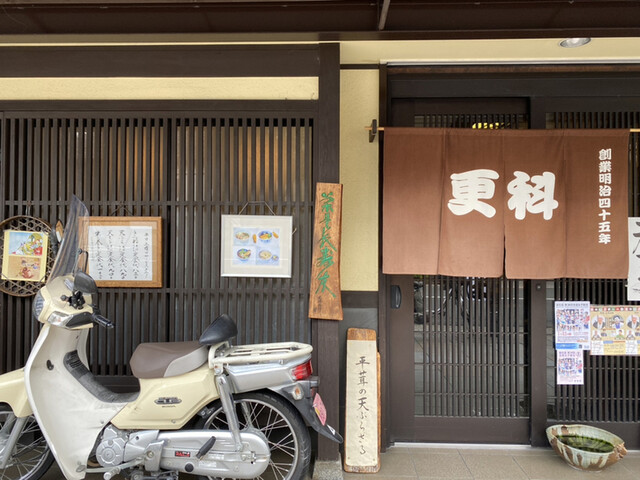
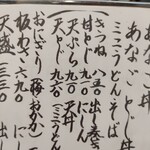
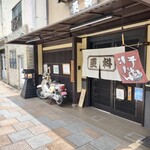
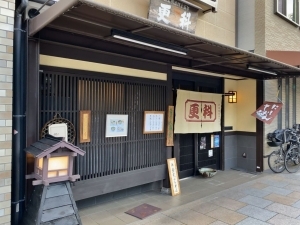
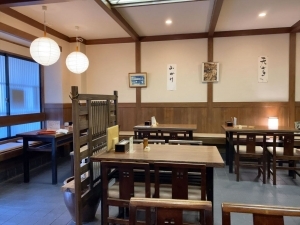
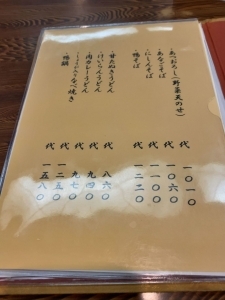
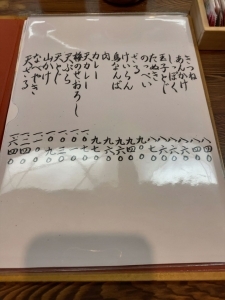
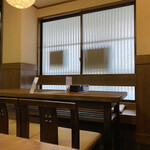
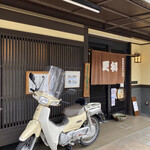
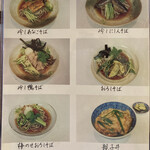
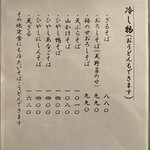
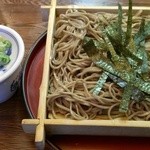
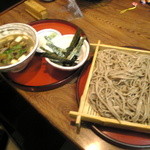
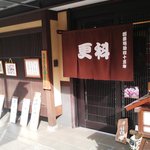
Today's lunch was at "Teramachi Sarashina," a soba restaurant located in Teramachi Takeyacho. It has a traditional appearance and the sign indicates that it was established in Meiji 45 (1912). The restaurant has spacious table seating and a variety of recommended soba dishes, including unique Kyoto originals like Keiran and Amatunuki. They also offer classic soba and udon options, as well as various rice bowl dishes. Anago (conger eel) is a rare find on the menu, and there are different tempura options available. I decided to go with the "Tempura Zaru (flat mushrooms)" for 1070 yen, as I wanted to enjoy the soba on its own. The dish came with a simple set of condiments on the table. The tempura zaru was served in a unique style, with a separate tray for the dipping sauce and condiments. The sauce was presented in a soba bowl, not a small dish. The flat mushrooms were crispy and juicy, offering a delightful texture and flavor. They tasted great with both salt and dipping sauce. The addition of cucumber was a bit unexpected. The zaru (sieve) typically comes with a raised bottom, but here it was placed on a wooden board with walls around it. The soba noodles were beautifully presented and delicious, with a light yet flavorful dipping sauce. Overall, I thoroughly enjoyed the experience of trying soba from this long-standing restaurant.

yama-log
3.50
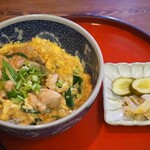
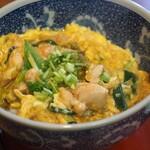
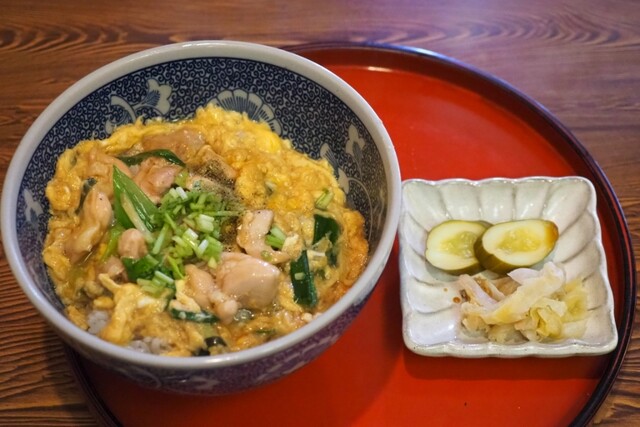
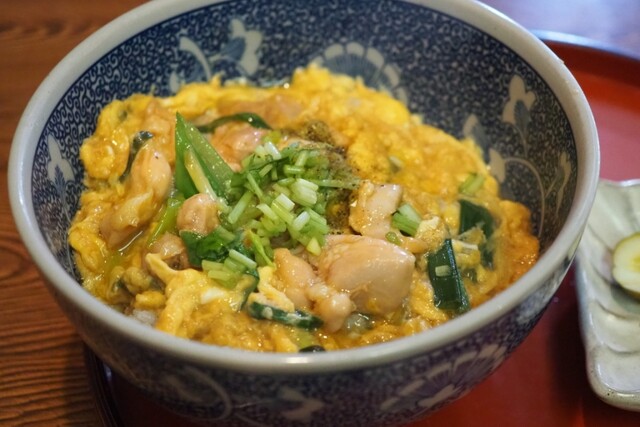
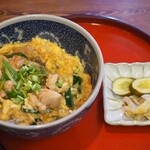
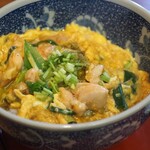
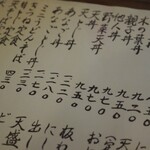
At Soshina in Teramachi Street, I had the oyakodon. In addition to rice bowls, they also offer udon and soba, as well as set meals like tempura set and rolled omelette set. What I had:
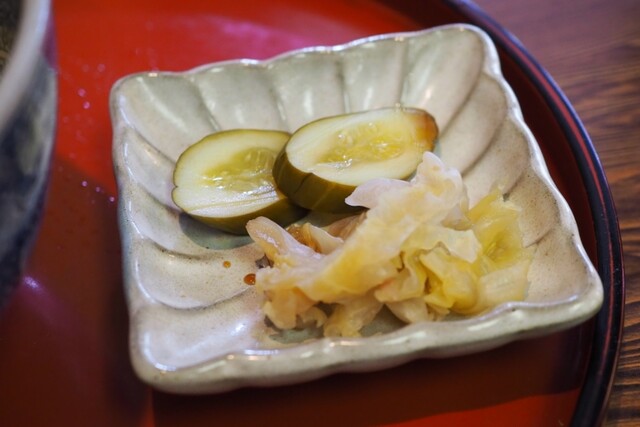
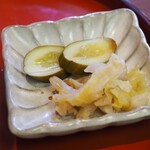
- Oyakodon (970 yen): Comes with a side of pickles. The default seasoning includes powdered sansho pepper. The egg was perfectly half-cooked, and the broth had a nice flavor. The chicken pieces were plentiful and delicious. The price is a bit on the higher side.

yossy1
3.30
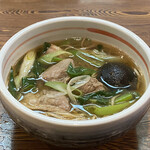
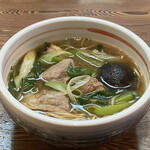
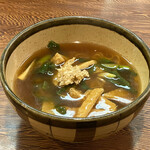
In the past, during lunchtime, there used to be a full house and customers had to wait outside. After a long time, I decided to take a look. I found an empty seat right away and thought about ordering the parent and child bowl, but ended up ordering the nostalgic duck soba instead. The duck broth had a good flavor and was quite delicious! The soba noodles were of the more common variety. The duck meat was firm with a good texture. As a palate cleanser, I ordered the tanuki soba. In Kyoto, tanuki soba usually comes with fried tofu and sweet sauce. The fried tofu here was sweet and the broth had a slightly sweet taste as well, but it was delicious! I found the tanuki soba to be much tastier than the duck soba!

kuro201
3.50
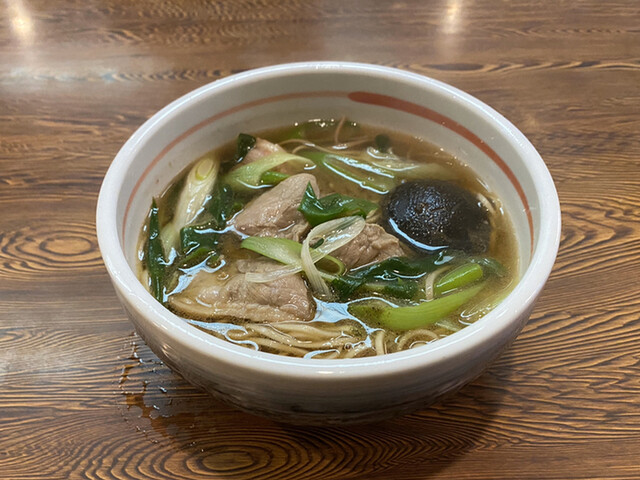
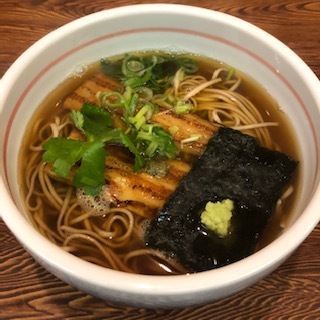
I was looking for a place to have lunch around here, and happened to come across a restaurant. I was intrigued by the menu item called "anago soba," so I decided to try it. It was soba noodles with eel on top, something I had never seen before. I wonder if it's a common dish in Kyoto? The restaurant had a modest appearance, but there were a few maiko (apprentice geisha) fans displayed, so I wonder if it's a popular spot. The prices seemed a bit on the higher side for a regular soba restaurant, but it was delicious, especially on a cold day.

千本桜はんひち
3.50
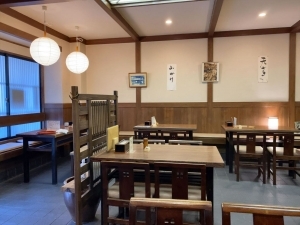
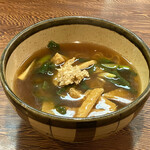
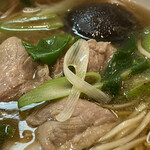
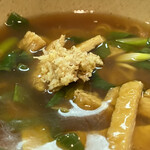
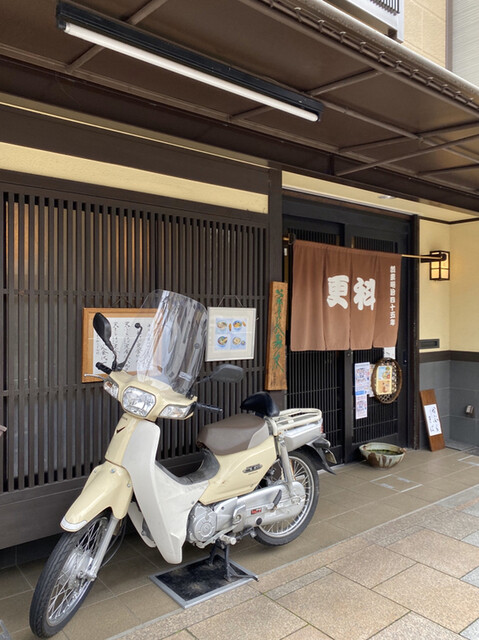
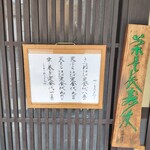
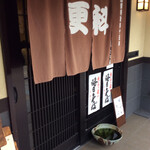
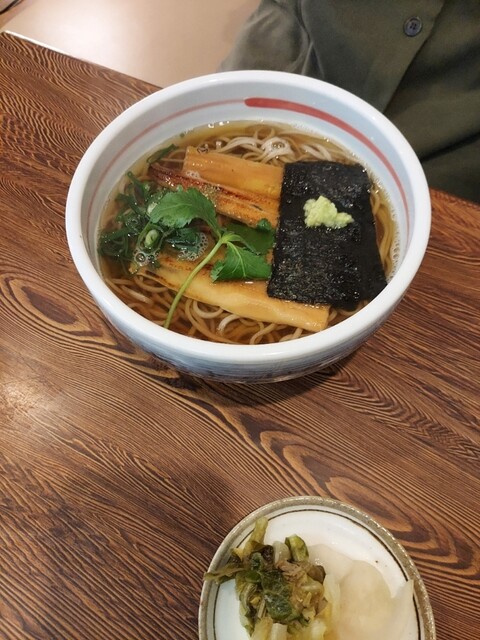
I've been passing by this old-fashioned, modest-looking soba restaurant for probably a decade. The menu outside is written beautifully, so I knew it must be a delicious soba place. After thinking about it for years, I finally had a chance to visit during lunchtime in Teramachi. I decided to try the seasonal soba, but ended up ordering my favorite anago soba instead. The anago pieces were large and fluffy, topped with both negi and leeks, which was quite unique. There was wasabi on top of the nori as well. The green leafy vegetable was probably turnip leaves, slightly sweet but overall a solid soba dish from a traditional, cozy soba restaurant. The staff was friendly and the atmosphere was pleasant. The walls were decorated with old children's books, which I found charming.

Brillat‐Savarin
3.30

こっこっこ。
3.50
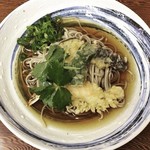

satoyam
3.40
Delicious with a mild flavor. The broth is tasty, and the portion size is small so ordering two dishes is okay.
kouno1969
4.00
Duck soba has a good broth. The duck meat is a bit small, but the soba noodles have a firm texture which is good. The rice ball has seaweed that is hard to chew and falls apart easily. The rolled omelette is served hot, but the flavor is weak.

○○あき
0.00
Anago soba for 1,100 yen.

海苔1761
2.80
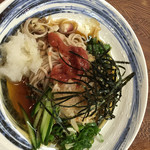
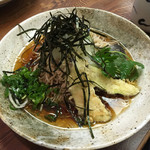
I also do the Thirty-Three Kannon Pilgrimage. I have been going around for three years, and I visited Gyogan-ji Temple in Kyoto city for the first time in a while. It was lunchtime, so we decided to go to the nearest soba noodle restaurant. The restaurant had an old-fashioned exterior but the inside felt like a casual dining hall, which was interesting. I had vegetable soba noodles, and my partner had plum soba noodles. The soba noodles seemed to be not hand-made, but the texture was okay. The broth was not too strong or too light, just right. The price was a bit high, but that's expected in a tourist area. Thank you for the meal.

おいちゃん24
1.00
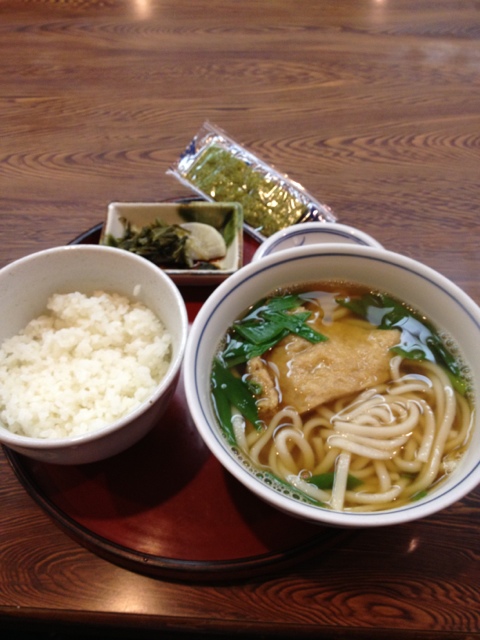
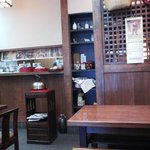
I knew about this restaurant because I live nearby. The name is "Sarashina" and the exterior looks normal, so I thought I would give it a try. However, when I entered at 11:40 am, there was no one else there. I felt a bit worried, but I decided to order the udon set meal. As shown in the picture, it came with kitsune udon, a small portion of rice, pickles, and seasoned seaweed. The small dish hidden behind the udon is a soy sauce dish. The udon was just average, and the rice portion was small. There were no side dishes to speak of. It cost 790 yen, which is way too much for what you get. Maybe they are trying to attract tourists because of their location on Teramachi Street, but nowadays tourists do their research and won't go to a subpar restaurant. I happened to pass by during the day and went in, but I definitely won't be going back.

ゲッター1
1.00
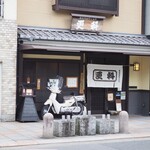
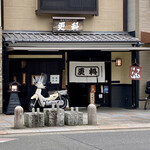
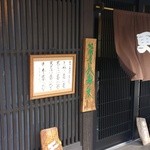
Visited Teramachi and Sarashina in Nakagyo-ku. Located right next to Gyogan-ji, this long-established restaurant was founded in 1912. The exterior of the restaurant has a traditional Kyoto townhouse feel, with signs advertising Ten-Zaru Soba and Kamo-Zaru Soba. Inside, there are only table seats and you can see the kitchen in front of you. The atmosphere is more like a simple cafeteria rather than a place with attention to detail or style. Looking at the menu, I saw they offered soba and udon, both homemade. I decided to go with the simple Zaru Soba. However, from the moment the soba arrived, my suspicions were confirmed. This soba was... disappointing. It tasted exactly like the soba I had at a restaurant in Fukuchiyama City, Kyoto Prefecture. The noodles were slimy and lacked flavor and aroma. The soba dipping sauce was lukewarm, not cold. And it was just plain bad. Even the wasabi was not the real deal. Is this really the soba from a long-established restaurant founded in 1912? I couldn't bring myself to finish it and just wanted to leave as soon as possible. I left more than half of it uneaten, paid the bill, and left the restaurant feeling angry.

グラウチョ
3.50
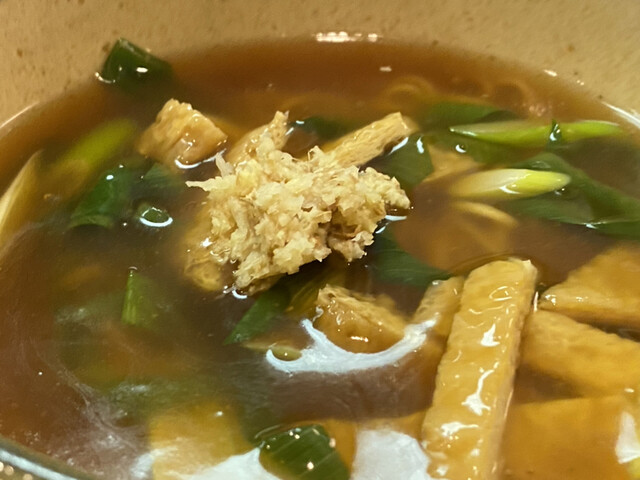
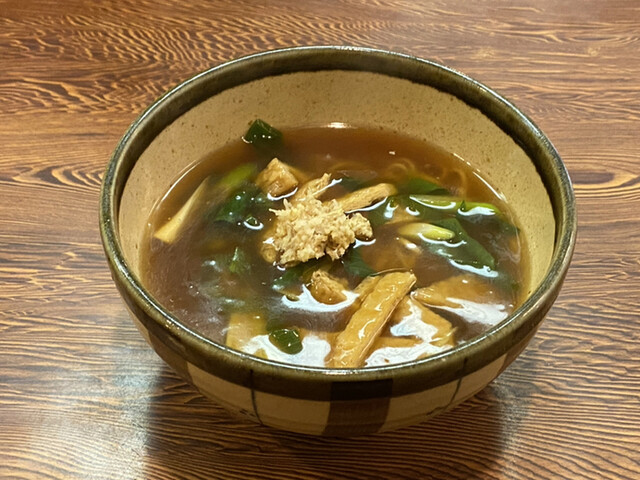
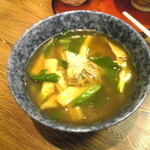
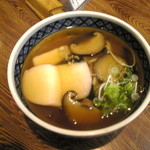
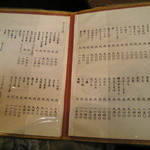
This is a soba restaurant located near the Kyoto City Hall, heading north on Teramachi Street towards Marutamachi Street. It is right next to the famous Kodo Temple (officially known as Gangan-ji), a temple dedicated to Jurojin, one of the Seven Lucky Gods of the capital. Jurojin is said to be a deity of Taoist origin, deifying the first-class star Canopus in the constellation of Lepus. Often confused with Fukurokuju, Jurojin is a deity with a different origin, as Fukurokuju symbolizes worldly benefits according to Taoist beliefs (Fuku = many descendants, Roku = abundant assets, Ju = health and longevity). But I digress. This restaurant, "Sarashina," is highly recommended for tourists visiting Kyoto. It offers a peaceful escape from the hustle and bustle of Kawaramachi and Nishikyo and is conveniently located within walking distance of Oike Street in the north. Here, you should try the "tanuki" soba first. In Kanto, "tanuki" refers to soba or udon with tempura flakes. In Osaka, however, "tanuki" is known as "kitsune soba" (noodles in broth topped with fried tofu). In Kyoto, "tanuki" means noodles topped with diced aburaage (fried tofu). Quite different! Despite being only 50 km apart, Osaka and Kyoto have such differences in their food culture. Don't miss out on experiencing both the "Osaka tanuki" and the "Kyoto tanuki." The menu also features other interesting dishes unique to Kyoto, such as the "Yukasa-don," which is similar to the "aburaage-don" in Osaka. There is also the intriguing "Shinoda" menu, which is similar to "kitsune" but mainly found in the Chubu region. The location next to the auspicious temple, the variety of menu options, and the delicious taste make Sarashina a great choice, despite the slightly higher prices typical of Kyoto. Why not enjoy some soba noodles for longevity after visiting the Kodo Temple and praying for a long life?

oh-tabe-point
3.00
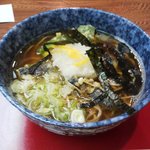
After walking down Teramachi Marutamachi, passing Omiya Shrine and Kakudo Gyoganji Temple (with a prominent sign for the 19th stop on the Saigoku Kannon Pilgrimage), you will come across Teramachi Fushimi, established in 1912. This restaurant is well-located as a tourist spot, fitting in perfectly with the surrounding atmosphere. Upon entering, you will be greeted warmly by the owner and possibly the hostess, who will serve you green tea. On a cold day, I opted for the warm soba with grated daikon, a seasonal menu item. The dish arrived steaming hot, with a slightly darker broth and a generous amount of grated daikon and yuzu in the center, surrounded by eggplant, shishito pepper, and nori tempura. The soba was not the expected thin white noodles, but a slightly darker variety, possibly simmered in the broth. The broth, while slightly sweet, was piping hot and provided a unique experience as it warmed the body from the inside. Despite the deviation from traditional soba, the dish was delicious and satisfying. The menu offers a variety of options, albeit slightly pricey, with generous portions. Teramachi Fushimi is a memorable spot for tourists and international visitors alike. Next time, I plan to try the simpler kake or zaru soba to further explore the flavors of this establishment.
osapo488
3.00
There seems to be a lot of harsh criticism, but the food is actually quite delicious. I found this restaurant near my workplace and decided to have a late lunch there after finishing work. The entrance had a sign saying "Soba Noodles" in large letters, giving off a traditional feel. When I visited around 2 PM, there were 4 other groups of customers, mostly individuals. The owner, who seemed to be the host, took our order and I ordered the tempura soba. The owner was very polite and I liked that. The food was served at a normal pace, not too fast or too slow. The soba noodles had a decent aroma and were not bad at all. The broth was slightly sweet, which I personally enjoyed. The tempura consisted of 2 shrimp and 4 vegetables, quite a generous portion. While there are other famous soba restaurants in the area, if you just want to have a simple and satisfying soba meal, I would consider revisiting this place.

ぴっこらあい
1.00
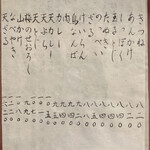
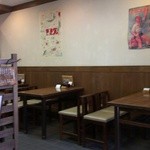
It was well past lunchtime and I was feeling hungry, so I decided to stop by a random restaurant. The atmosphere was like a common cafeteria, with some inexplicable retro Showa era posters on the walls. I asked for "nishin soba" but instead of just the nishin soba dish, they brought me a "nishin soba set meal" for some reason. I was fine with the set meal since I was hungry, but I wish they had confirmed my order first. Looking around, it seemed like there was a strange rule where men got set meals and women got individual dishes. There was no mention of this rule anywhere though. The set meal included rice, a small pack of seasoned seaweed that looked like it came from a ryokan breakfast, and a tiny portion of pickles. The individual nishin soba dish costs 1,040 yen, but the set meal was 1,370 yen!!! The soba noodles were dry and tasted like they were cooked in instant dashi stock. They lacked any distinctive flavor or texture typical of soba noodles. Overall, the set meal for 1,370 yen was not worth it except for filling my stomach. Even the individual seasonal recommended dishes were all a bit pricey, don't you think? Well, this restaurant is more for those who are hungry and don't care much about taste or price. Goodbye.

ADJVM
2.20
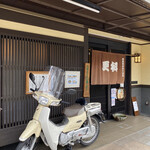
Near Kyoto Imperial Palace, located on Teramachi Street. It's one street west from Kawaramachi Street. It's a nice location that feels very Kyoto-like. The exterior of the restaurant has an old-fashioned soba shop vibe. When I entered, there was only one other group of customers. It seems like this is not a place frequented during weekday lunch breaks. Is it targeted towards tourists then? However, it's just a typical soba shop. I ordered the sliced soba. The soba didn't have much fragrance. Was it made from bagged noodles with added wheat flour? The dipping sauce lacked depth and had a sharp taste on the tongue. I regretted not just getting standing soba instead. I finished eating quickly and since the restaurant was still empty, I spent the rest of the time exchanging emails while taking a break. They did serve tea, though.
Email Login