
丸山海苔店 築地本店
Maruyamanoriten
3.04
Tsukiji
「Other」
--
--
Opening hours: 8:30-17:30
Rest time: Sundays and holidays Business hours and holidays are subject to change, so please check with the store before visiting.
東京都中央区築地4-7-5 築地共栄会ビル 1F
Photos
(20)




Details
Reservation Info
No Reservations
Payment Method
(credit) card accepted
Number of Seats
(There is a counter for tea tasting.)
Private Dining Rooms
None
Smoking and Non-Smoking
No smoking at the table
Parking
None
Comments
(17)

ホッピー野球
3.40
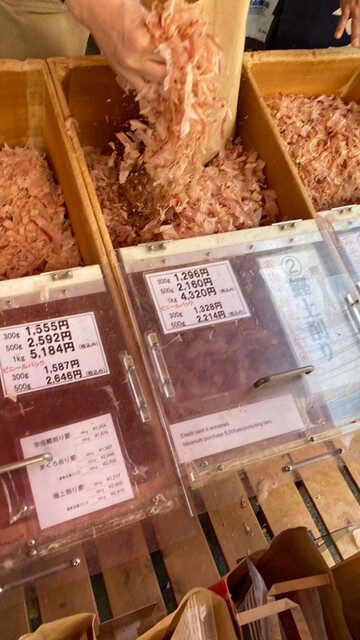
During my visit in April 2023, I stopped by the early morning auction at Tsukiji with 5 bundles of dried bonito for 2,400 yen. After having breakfast at Kohken and buying some bonito flakes at Akiyama Shoten, I headed to this branch nearby. I usually follow this route, but I was running low on cash this time, so I asked the staff if I could use a card, and they directed me to the main store. It was my first time at the main store, and it was quite comfortable with fewer people. They even served cold tea. We eat a lot of seaweed at home, especially as a snack with drinks. However, seaweed can be expensive, even at supermarkets. That's why I usually buy some when I visit Tsukiji. The seaweed here ranges from high-end for restaurants to household use. I bought a cheaper pack today, but it still cost 480 yen for 10 sheets. Even at supermarkets, a pack of 10 sheets can cost around 600 yen. I'm looking forward to trying this seaweed once we run out of the current one. I was able to pay with my card without any issues, but many shops in the outer market of Tsukiji don't accept cards, which may be unfamiliar to foreigners. It's the same for Japanese people in this day and age. Next, I will buy some chicken meat at Miyagawa Shokudo and head to Chidorigafuchi to see the cherry blossoms in full bloom.


amadana007
3.30
Service ★★★★ Cleanliness ★★★★ Atmosphere ★★★★

京夏終空
4.00
The seaweed shop that is continuously used in so-called "famous restaurants". I love sushi. Basically, I eat nigiri, but of course, I also have battleship sushi. In nigiri, there are shellfish such as scallops and red clam strings, as well as squid, octopus, and tamagoyaki that are sometimes wrapped in seaweed. In battleship sushi, the taste of seaweed plays a big role. Various sushi restaurants have seaweed that outshines the main ingredients... Sometimes, I think paradoxically about that. When I asked the sushi chefs, they said that the seaweed they find delicious is often from this shop. I had the opportunity to visit this shop, which has multiple locations inside the market and also some in the outskirts of Tokyo. I am not an expert on seaweed, more like a complete amateur. In that sense, I visited the shop based on the recommendation of a professional who accompanied me. First, I tried their specialty product, "Gokujou Saga Hashiri" (1,080 yen for 5 sheets of all types) which is described as "Carefully selected from the abundant Ariake Sea, matured in the severe cold of Saga, only the best of the season is selected. The melting sweetness and fresh aroma are the ultimate taste of the first harvest. A top-notch product that has been highly valued since ancient times due to the small amount that can be harvested with the first net. Please enjoy this exquisite luxury." Next, I tried the most commonly used seaweed, "Gokujou Kontobi" (850 yen for 5 sheets of all types) which is described as "A masterpiece that has been called "mix" or "fly" among connoisseurs for a long time, harvested together with nori sprouts from the sea in December. It has a strong aroma and a slightly bitter sweetness that reminds you of the traditional taste of seaweed. Maruyama's craftsmen have carefully selected and baked the high-aroma grass sprouts from Ariake." Indeed, there is a difference. You can taste it even when eaten as it is, but lightly grilling it, or rather, applying heat while keeping it away, brings out a different aroma. The atmosphere that emerges from "Saga Hashiri" evokes words like high-quality and elegant no matter how you describe it. On the other hand, "Kontobi" seems to be closer to the essence of the ingredients, preserving both the good and bad parts as they are. This is just my amateur opinion, but when these are served in a sushi restaurant, discussions about which one is better often arise. As I mentioned at the beginning, there are seaweeds that threaten the role of sushi toppings. Not only threatening but sometimes even overpowering the taste of the toppings. I have written about this in many reviews of sushi restaurants, but personally, I have never really sought out the goodness of seaweed. I felt this way when I was taken to so-called top-class sushi restaurants during the bubble era. If the seaweed is too good, it distracts from the taste of the sushi toppings. To feel the harmonized taste, maybe I was still too young. I thought that battleship uni, for example, was out of the question. I always had uni served as nigiri. In Japan's finger food culture, sushi and onigiri stand out. I strongly oppose the recent trend of only focusing on crispy textures. The soft and delicious taste, reminiscent of maturation, undoubtedly exists. Everyone has their own preferences, but I feel a sense of malice in statements that unilaterally exclude others. Saying "unthinkable" about seaweed that is not crispy... This shop has been preserving the tradition passed down from a dried seaweed wholesaler that opened in Nihonbashi in the first year of Ansei (1854). It seems that they cherish this tradition. It will continue to be used in many more shops in the future. ??? "Used in?" No, actually, "used by?" Suddenly, I felt that way... (Responsible for the text: Kyonatsu Shuusora, January 10, 2017) (First review, 462nd store) (New store registration) (※Photos will be posted later.)


千本桜はんひち
3.70
I love seaweed and often go shopping at Tsukiji with my friend, Myrebi-san, who introduced me to this shop. Since then, I have ordered from them several times. Seaweed tends to get humid once the bag is opened, so I store it in the refrigerator. This product comes in small packs of 4 different types, with options for 4 or 12 packs, making it convenient for single-use. It's perfect for hand-rolled sushi, but I sprinkle seaweed on everything! Lately, I've been too busy for hand-rolled dinners, so I opt for easy meals like mixing flaked salted salmon with cucumber and sushi rice for chirashi sushi, topped generously with seaweed. I also sprinkle plenty of seaweed on yakisoba for that crispy, oceanic aroma. At home, I use one pack for myself and give the rest as gifts. I recently gave one pack to my friend's family in Nara, who have many members and would likely finish it in one go if they made hand-rolled sushi. Another pack went to the coach of the Kabocha-go in Kyoto as a thank you for always providing transportation and refusing parking fees. I often buy take-out sushi or onigiri from them, so I suggested adding this seaweed to supermarket tekka maki for a luxurious touch. I still have one pack left, wondering who else I should give it to. The shipping cost is the same regardless of the quantity, so I should have bought more!



raccostar
3.50
On the special opening day of Golden Week, Maruyama-san visited Tsukiji to stock up on additional nori for hand-rolled sushi, as the stock of "Miyakoichi" at Takashimaya was running low. He stumbled upon bottled Yoshinogawa seaweed and uncut blue threads next to it. Without hesitation, he purchased them and tried making hand-rolled sushi with Aomori seaweed that same night. Munch, munch, munch. Hm? It's a bit thick. The aroma is also faint. Checking the back, it seems to be outsourced. I guess it's inevitable for mass production. Two days later, in broad daylight, he made cold sea urchin pasta. He topped it with blue threads as a garnish. The aroma of this seaweed goes well with sea urchin. Maybe I'll try it with a tomato flavor next time. Ah-ha. And that was a delicious meal.


raccostar
3.50
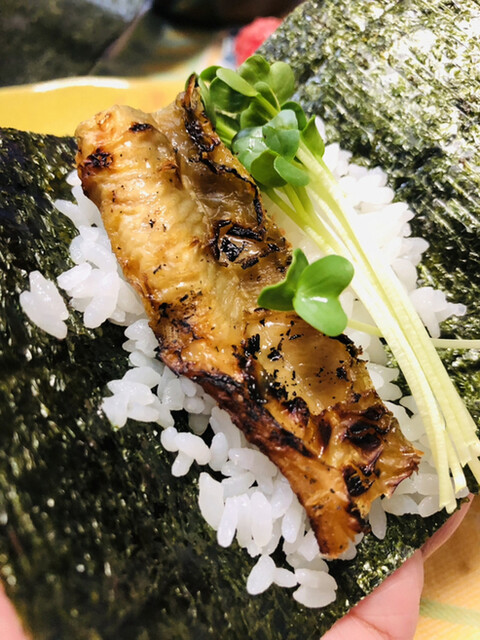
It's a holiday night. I decided to make hand-rolled sushi using a variety of ingredients I received. I got chutoro and anago from Yokohama Takashimaya, and ikura from my sister-in-law in Hakodate. I prepared the chutoro by slicing it with a knife, and simply thawed the ikura. For the anago, I prepared grilled and simmered versions. The anago sushi turned out perfectly this time, unlike my previous attempt. Perhaps, like a sea otter, I needed that initial failure to succeed. As for the Maruyama seaweed, I started with "Saga Hashiri," the first harvest of seaweed from Ariake. It had some gaps, likely a discounted product, but the aroma and how it melted on the tongue were top-notch. Then there was "Kontobi," probably a trademark of Maruyama. When the sushi chef asked if I wanted "ao-maze" (mixed with blue seaweed), I would nod in anticipation of the unique aroma. And when he confirmed it was "tobi," I would know it was Maruyama. This seaweed has a distinct blue aroma that I love. Lastly, there was the standard sushi nori used by many sushi restaurants in Tokyo. The combination of vinegared rice and seaweed is always delicious. Sea otters often visit sushi restaurants because they love the tangy rice and seaweed. Overall, it was a delicious meal.


Torio009
3.80
Maruyama Nori Shop in Tsukiji, used by many famous sushi restaurants, offers delicious sushi nori. My favorite is their seasoned nori, flavored with Italian extra virgin olive oil and French salt. These nori sheets are meant to be enjoyed as a snack, not rolled with rice or sushi. They go well with beer or champagne and can also be enjoyed on crackers with cheese. Give them a try!


たけだプレジール
3.80
The other day, I purchased a set of seaweed from the sushi restaurant where I had the most delicious sushi. The seaweed used at that restaurant is from this shop, known for its quality even recognized by professionals. When I tried it, the seaweed was indeed delicious. It has a moderate aroma without any unpleasant smell, and it is crispy without needing to be seared, with a good balance of umami and sweetness. However, when you pay close attention to the taste, there is a slight bitterness that can be a bit distracting. Although it is very subtle, I was hoping for a seaweed of top quality to be completely free of any hint of bitterness. I got the impression that there may be more refined seaweed out there.


YR
4.00
Wow, such elegant shabu-shabu that tingles with excitement! The beef, tofu, and sansho pepper are a perfect combination! The pickled sansho pepper with seaweed is exceptionally delicious. The fresh sansho pepper and pickled sansho pepper are so tasty. They even sent me some as a gift! I appreciate the detailed instructions on how to make it. The card I received is from my favorite artist, Keisuke Serizawa. It's a luxury to be able to enjoy the sansho pepper shabu-shabu, thanks to the hard work of my friend. I am grateful for the thoughtful gesture. Thank you, Chanchan, for your love and effort. It's a rare treat to be able to enjoy the sansho pepper shabu-shabu. From Osaka's Kinako-san, I received Hanayama Aoi, and from Kyoto's Chanchan, I received Hanayama Sansho. Both of them never fail to impress with their delicious dishes.


千本桜はんひち
3.50
The nori ran out, so I asked Mairebi-san for recommendations and ordered the limited edition Hane nori. It's 10 sheets per pack, 5 packs for 1950 yen. Quite a good deal! The 10-sheet pack is only 400 yen! For those who can't wait, there's also Aji Sanshi and Yotsuba-giri in 5 sheets, 12 bags for 1900 yen. Also, there's dashi kombu for 1950 yen and organic Japanese black tea for 820 yen. I tried Hane Mon, of course, for hand-rolled sushi. The sea bream kombu-shime, scallop kombu-shime, and fresh mountain pepper were all delicious! When I compared it with the nori in Aji Sanshi, it was completely different. The Hane nori has holes but is thin and lacks aroma, so it might be good for rolled sushi. But at this price, it's worth it. It may not be suitable for enjoying the aroma of nori in hand-rolled sushi. When you get fresh fish or octopus, be sure to make hand-rolled sushi! Nori is essential. It's cheap, so you can use it generously without worrying. That's a plus!


千本桜はんひち
3.70
It looks delicious! I saw a review of someone making hand-rolled sushi at home and I couldn't resist ordering some seaweed. I love seaweed, so I ordered the following: premium Konotobi (5 sheets for 870 yen), Saga's Hatsudumi Gold (10 sheets for 650 yen), and Aji Sanshi small packs (12 bags for 1900 yen). The Konotobi seaweed is a mix of black and green seaweed, with a crisp texture and a sweet and slightly bitter taste. Saga's Hatsudumi is the first harvest from the cold waters of Ariake Sea, while Aji Sanshi comes in three different flavors. I made hand-rolled sushi with these seaweeds, using frozen mackerel and kimchi tuna. The seaweed was thin but crispy, with a nice aroma. The professional-grade Sushinori was the best, with a crispy texture and a hint of sweetness. I couldn't stop eating the premium Konotobi seaweed, it was so addictive! I had to wait for my daughter to come home before finishing it all.


raccostar
3.50
At the end of the year, I received a gift of "kontobi" from A in Ginza and S in Azabu. "Kontobi" is actually a registered trademark of Maruyama Nori Shop, which has its main store in Tsukiji. Many high-end sushi restaurants with Michelin stars use the top-grade seaweed from Ariake that this shop provides. With the sudden stay-at-home order starting on Tuesday, January 5th, due to the PCR test results not being confirmed negative, I felt hesitant to go out. I ended up only interacting with the building manager and the delivery person during the six days from Tuesday to Saturday. Feeling lonely, I decided to indulge in food to lift my spirits. I ordered the premium tuna from Ine, Kyoto, through dancyu's website, and enjoyed three days of hand-rolled sushi with different cuts of tuna and the flavorful seaweed from Ariake. The combination of delicious sushi and my favorite Japanese sake made me feel content. I can't wait to receive my PCR test results. I hope they come back negative soon.


ダッシュワールド
4.50
Established in 1854 (the first year of Ansei), this long-standing establishment offers a product called "Saga no Hashiri." I had the opportunity to try it and was amazed by its deliciousness after just one bite. The aroma, texture, and mouthfeel were all perfect! I usually enjoy eating natto rice wrapped in seaweed, but I had always used seaweed from gift sets or cheap seaweed from the supermarket. When I tried Maruyama Nori, I was shocked. It is truly delicious. I can't go back to supermarket seaweed anymore (laughs). Other seaweed just doesn't compare to food. It's not an exaggeration, it's really different. I also sent some to my parents, and they were impressed by the deliciousness as well. I hope it becomes more widely known. By the way, they were selling Aonori for 100 yen per gram the other day. They only harvest the highest quality products, so there are years when they don't release any.

uchino_neko
3.30


ムササビヒンソー
0.00
"When I went to my regular hair salon, the owner gave me some salmon roe. There was a lot, so do you want some?" This was a phone call from my mother, who is not a native speaker of the Etigo dialect, but was born in Tokyo. It may be hard to understand why someone would go to get their hair done and come back with fish eggs, but in the countryside, relationships are often close-knit and intimate. In the region where I grew up, fresh fish wasn't widely available until a few decades ago, and seafood was mainly consumed in the form of salted or fermented products. So, for someone who spent part of their childhood in this area during the Showa era, salmon roe is more familiar than caviar, and as they get older, they tend to appreciate it more. Salmon roe, taken from salmon before the immature skin hardens and salted, has a rich and smooth texture that is highly valued. The next morning, I cooked the salmon roe with rice and enjoyed a delicious meal. It was truly a delicacy that couldn't be surpassed.


ムササビヒンソー
5.00
Every morning at 4:00 a.m., my alarm goes off and I head to the bath to turn on the "reheating" function. From 4:30 a.m., I leisurely soak in the tub for an hour and a half, reading the electronic version of the Nikkei newspaper on my smartphone or browsing through visit reports of my favorite restaurants on "Tabelog." After finishing my bath, I get ready and head to the kitchen to open a large seaweed can made of tin-plated steel SPTE*2. I received this as a gift when I congratulated a food shop on its opening, and they sent it back to me. I have been savoring the "Saga Hashiri" with reluctance. I have tried various ways of eating it, but dividing the entire 210mm x 190mm sheet into eight pieces by hand, dipping it in a little soy sauce on a saucer, and wrapping it around freshly cooked rice seems to be the best way to enjoy it, according to KYT Paisen. Alongside, I have a cabbage salad with Shizuoka's freshly caught baby sardines and a miso soup with six pieces of daikon radish. Is there anything more to ask for in a breakfast? No, there isn't. As I mutter the old saying "double negation implies strong affirmation," I enjoy my meal with gusto, feeling no increase in motivation for labor throughout the day. Thank you for the meal, I'm off. *1 Please refer to the photo or the comments section for the photograph mentioned. *2 http://www.jfe-steel.co.jp/products/usuita/catalog/b1j-006.pdf


RouieH
5.00



Email Login